When seasonal influenza transmission doubles over a three-week window, public health guidance typically defaults to a binary directive urging immediate vaccination. That advice is directionally sound, yet operationally incomplete. Evaluating whether a late-season flu shot remains worthwhile requires modeling two competing timelines against one another: the exponential growth rate of community viral spread and the fixed physiological lag required for adaptive immunity to mature. In virtually all mid-season surge scenarios, getting vaccinated remains a net-positive risk reduction play, provided the recipient understands the exact window of vulnerability and the distinction between infection prevention and severity mitigation.
The Mechanics of Exponential Transmission Curves
A doubling of influenza cases within twenty-one days signals that the effective reproduction number ($R_t$) has moved well above the epidemic threshold of 1.0. Under these conditions, transmission ceases to behave linearly. Each infected host generates more than one secondary case, compressing the time between localized clusters and widespread community saturation. Read more on a related subject: this related article.
In epidemiological modeling, a three-week doubling time indicates an early-to-mid phase ascent rather than a terminal peak. Most respiratory virus waves exhibit an asymmetric bell curve or a multi-modal plateau, where the descent phase lasts significantly longer than the initial vertical climb. Even after case growth decelerates, absolute viral prevalence remains elevated for weeks. Assuming a surge is "nearly over" because cases have already doubled mistakes the first derivative of transmission—the rate of growth—for the total volume of circulating virus.
Three primary drivers dictate why a rapid three-week surge sustains high exposure risk long after the initial spike is reported: Additional analysis by Medical News Today delves into related perspectives on this issue.
- Reporting Latency: Surveillance data relies on clinical visits, laboratory confirmation, and public health aggregation. A reported doubling reflects transmission events that occurred seven to fourteen days prior. By the time headlines register the surge, real-time community prevalence is already higher than the published baseline.
- Household Secondary Attack Rates: Once influenza penetrates multi-person households, schools, or dense workplaces, transmission shifts from sporadic community contact to sustained indoor aerosol and droplet exposure. Secondary attack rates within households frequently exceed 20% to 30%, creating localized micro-epidemics that persist independent of broader regional trends.
- Strain Co-Circulation: Seasonal influenza epidemics rarely involve a single viral lineage. As an initial wave of Influenza A (such as H1N1 or H3N2) begins to exhaust its pool of susceptible hosts, a secondary wave driven by a distinct subtype or Influenza B frequently emerges. A late-season spike often marks the transition between dominant strains rather than the end of the season.
The Fourteen-Day Immunological Lag
The central friction in late-season vaccination is biological latency. Unlike pharmacological interventions that achieve peak plasma concentration within hours, an inactivated or recombinant influenza vaccine functions as an antigenic training protocol. The immune system requires approximately fourteen days to process viral hemagglutinin proteins, activate naive B-cells, undergo clonal expansion, and synthesize neutralizing immunoglobulin G (IgG) antibodies at protective titers.
During days zero through ten post-injection, the recipient operates with virtually zero vaccine-derived protection. If exposure occurs on day four, the virus replicates unchecked before the adaptive immune response reaches operational capacity. This physiological reality explains why individuals frequently contract influenza shortly after receiving a late-season shot and mistakenly attribute the illness to the vaccine itself. The failure is not a defect of the antigen, but a timing collision between viral incubation—typically one to four days—and antibody maturation.
From an analytical standpoint, the decision to vaccinate during an active surge is a bet on exposure timing. If an individual avoids infection during the fourteen-day maturation window, they enter the remainder of the epidemic curve with upregulated mucosal and systemic defenses. Given that seasonal influenza waves routinely span twelve to sixteen weeks from initial acceleration to baseline return, sacrificing a multi-month protective window to avoid a two-week latency period represents a flawed risk calculation.
Separating Sterilizing Immunity from Severity Attenuation
Evaluating vaccine utility solely on whether a recipient tests positive for influenza misses the primary clinical objective of seasonal immunization. Respiratory vaccines rarely achieve durable sterilizing immunity, particularly when circulating viral strains undergo antigenic drift away from the selected vaccine formulation. Instead, the intervention shifts the probability distribution of clinical outcomes downward.
To assess the true value of late-season immunization, the protective mechanism must be broken into two distinct physiological tiers:
- Upper Respiratory Neutralization: High titers of strain-matched antibodies block viral entry into epithelial cells of the nasopharynx. When antigenic match is strong and antibody levels are high, infection is prevented entirely. This tier degrades fastest as viruses mutate and is most sensitive to timing.
- Cellular and Cross-Reactive T-Cell Defense: Even when drifted viral variants evade initial antibody neutralization and establish an upper airway infection, vaccine-primed CD4+ and CD8+ T-cells recognize conserved internal viral epitopes. This cellular response accelerates viral clearance, prevents replication from descending into the lower respiratory tract, and dampens the dysregulated cytokine cascade responsible for severe pneumonia, acute respiratory distress, and cardiovascular decompensation.
When a surge is already underway, Tier 1 protection becomes a probabilistic toss-up based on immediate exposure. Tier 2 protection remains overwhelmingly reliable. For high-risk cohorts—adults over sixty-five, pregnant individuals, immunocompromised patients, and those with underlying cardiopulmonary or metabolic conditions—preventing hospitalization and secondary bacterial pneumonia outweighs the diminished odds of avoiding mild symptomatic infection.
Quantifying the Risk-Reward Matrix During a Surge
In decision theory, an intervention under uncertainty is evaluated by weighing the cost of action against the expected loss of inaction across remaining time horizons. When applied to late-season influenza vaccination, the variables heavily favor immediate execution.
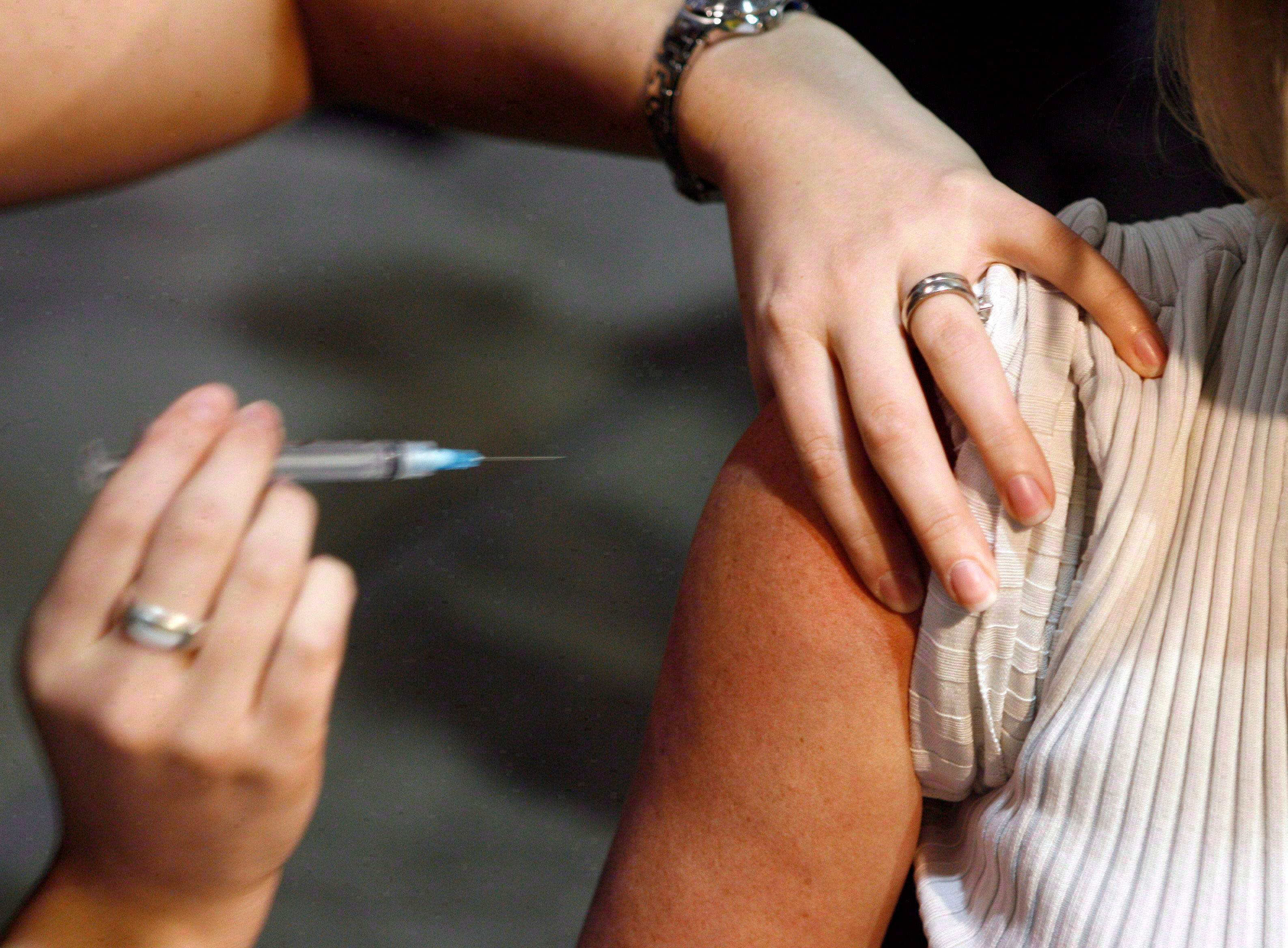
The cost of action is fixed and minimal: minor administrative time, transient local reactogenicity such as deltoid soreness or low-grade malaise lasting twenty-four to forty-eight hours, and negligible systemic risk. The vaccine cannot cause influenza infection, as standard intramuscular formulations contain non-replicating viral proteins or inactivated virions.
The cost of inaction scales directly with remaining seasonal duration and individual vulnerability. Leaving an unvaccinated host exposed during a high-prevalence plateau subjects them to unmitigated viral load dynamics. High initial viral inoculum correlates with more severe symptomatic trajectories and prolonged shedding periods, increasing the likelihood of transmitting the pathogen to vulnerable household contacts.
The Strain-Shift Hedge
A critical structural variable often overlooked in mid-season assessments is antigenic diversification. Public health surveillance regularly documents sequential dominance within a single winter cycle. An early surge dominated by Influenza A/H3N2—historically associated with higher morbidity in older adults—often recedes only to be replaced by a late-winter wave of Influenza B/Victoria. Standard trivalent and quadrivalent vaccines incorporate antigens targeting multiple distinct lineages simultaneously. An individual who delays vaccination because they assume the current wave will pass before their antibodies mature leaves themselves entirely unshielded against the second-wave strain arriving four to six weeks later.
Limitations of Late-Season Immunization
Rigorous analysis requires acknowledging the hard boundaries of what late vaccination can achieve. It is not an acute post-exposure prophylaxis. If an individual has already experienced a high-risk household exposure within the preceding forty-eight hours, administering an inactivated vaccine will not outrun the viral incubation clock; in that specific scenario, neuraminidase inhibitors or cap-dependent endonuclease inhibitors prescribed by a clinician serve as the appropriate pharmacological barrier.
Furthermore, immunosenescence—the gradual deterioration of the immune system brought on by natural aging—blunts the magnitude and speed of antibody generation in elderly populations. In these cohorts, standard-dose vaccines may require slightly longer than two weeks to yield optimal titers, making high-dose or adjuvanted formulations mandatory rather than optional when vaccinating mid-surge. Finally, vaccine effectiveness fluctuates annually based on manufacturing lead times and viral mutation rates; a mismatch reduces protection against mild outpatient illness, though protection against severe morbidity remains statistically durable.
Executing an Immediate Risk-Reduction Protocol
Waiting for a surge to stabilize before seeking immunization guarantees maximum exposure with minimum defense. If you remain unvaccinated while transmission rates are doubling, treat the next fourteen days as a bridged transition period rather than assuming immediate invulnerability.
- Eliminate Scheduling Friction: Secure an inactivated, recombinant, or age-appropriate adjuvanted formulation within the next twenty-four to forty-eight hours through high-throughput retail clinics or primary care networks. Delaying by even five days pushes your immunological maturation date deeper into peak community prevalence.
- Deploy Non-Pharmaceutical Barriers During the Two-Week Lag: For the fourteen days immediately following injection, enforce strict exposure controls in high-density indoor environments. Utilize well-fitted N95 or KN95 respirators in crowded transit, healthcare facilities, and poorly ventilated workspaces to prevent viral acquisition while B-cell clonal expansion is underway.
- Establish an Antiviral Contingency Plan: For high-risk individuals or those living with vulnerable dependents, confirm telehealth access and pharmacy availability for prescription antivirals before symptoms appear. Antiviral therapy requires initiation within forty-eight hours of symptom onset to meaningfully truncate viral replication; having a diagnostic and prescription pathway pre-arranged eliminates critical delays if exposure breaches your defenses during the maturation window.
Treat the vaccine not as a magic shield that instantly halts an active epidemic, but as a structural hedge that caps catastrophic downside risk across the remaining months of viral circulation.