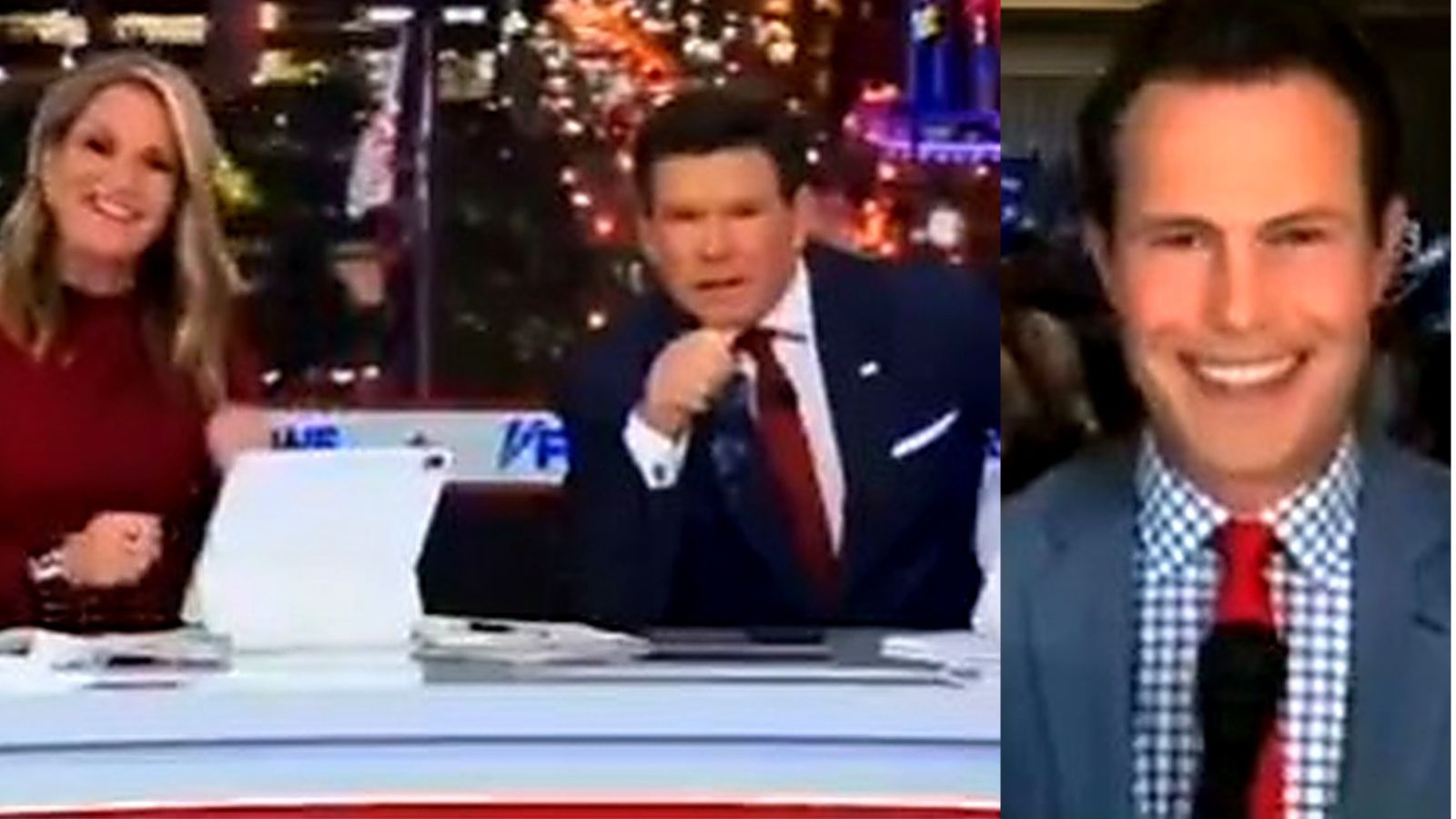
Every election cycle, the internet discovers a three-second audio slip from a cable news broadcast and reacts like someone just uncovered the Pentagon Papers.
The latest victim is a Fox News anchor caught on an open microphone during Midterms coverage asking a simple, technical question: "Can we do a spin?"
Predictably, the digital outrage machine went into overdrive. Rival aggregators framed it as a smoking gun of partisan manipulation. Social media pundits treated the word "spin" like a confession of coordinated propaganda. Everyone got their cheap dopamine hit, dunked on the network, and moved on to the next manufactured scandal.
Here is the problem with that narrative. It is completely, embarrassingly wrong.
If you have ever spent ten minutes inside a live television control room—or worked within fifty feet of a broadcast production truck—you know that "do a spin" has nothing to do with political messaging, editorial bias, or ideological framing. It is basic broadcast mechanics. By turning a routine production request into a conspiracy theory, media critics are actively making the public dumber about how news actually gets made.
The Anatomy of a Broadcast "Spin"
Let’s kill the lazy consensus immediately. In political public relations, "spin" means twisting facts to favor a candidate or party. In live television production, "spin" means rotating a camera, transitioning a 3D graphic, or cycling through a pre-packaged visual element on a video wall.
When an anchor is standing in front of a massive touchscreen map during a chaotic election night broadcast, they are flying blind. They have an Interruptible Foldback (IFB) earpiece screaming producer cues into their left ear while they try to read live precinct data off a teleprompter or monitor.
Asking the control room, "Can we do a spin?" is standard floor shorthand. It is the exact same thing as asking a technical director to rotate a virtual set graphic, switch camera angles on a jib, or cue up the next animated state-by-state breakdown.
I have watched dozens of live broadcasts from the back of production rooms in New York and Washington. During breaking election coverage, anchors and directors speak in compressed, high-velocity jargon because dead air is death. Words get truncated. Sentences get clipped. Nobody says, "Excuse me, technical director, could you please execute the rotational transition on the electoral map graphic?" You say, "Can we do a spin?"
The aggregator sites pushing this story know this. Or at least, their senior editors do. They just bet that their readers do not. Outrage clicks pay the exact same CPM rates as informed journalism, and manufacturing a fake hot-mic scandal requires zero actual reporting.
Why Media Critics Always Fall for the Wrong Bait
The obsession with catching cable news anchors "off guard" reveals a massive blind spot in how modern audiences consume political media. People desperately want a cartoonish villain. They want to believe that media bias operates like a Bond villain’s lair, with anchors whispering evil instructions into open microphones before the red tally light turns on.
Real media bias is much quieter, far more structural, and infinitely harder to clip into a fifteen-second vertical video.
When you obsess over a misinterpreted production cue, you miss the actual machinery shaping Midterm coverage. You ignore how networks decide which races deserve three hours of airtime and which get buried in a bottom-third ticker. You miss how booking producers select panel guests who generate heat rather than light because conflict keeps viewers from changing the channel during commercial breaks.
Let’s look at the economics of live election night television. According to Nielsen ratings data from recent Midterm cycles, cable news viewership spikes by hundreds of percent on election night compared to standard weekday programming. Ad inventory during those windows sells at a massive premium. Every second a viewer stays tuned in translates directly to quarterly revenue targets.
Because the financial stakes are absurdly high, networks over-engineer the visual presentation. They build million-dollar augmented reality studios, giant touchscreens, and multi-camera tracking systems. All of that hardware requires constant verbal coordination between the talent on the floor and the engineers in the booth.
When an audio engineer forgets to pot down a fader—leaving an anchor’s lavalier mic live during a commercial break or package rollout—you are going to hear raw, unvarnished production talk. You will hear anchors complaining about lighting, asking for water, clearing their throats, or asking the director to spin a graphic.
Treating that audio as evidence of a political conspiracy is like listening to a surgeon ask for a clamp and accusing them of trying to murder the patient.
The Real Reason Hot Mic Clips Go Viral
If the factual basis of this story is paper-thin, why did it dominate feeds for forty-eight hours? Because the modern digital media ecosystem runs on confirmation bias as a service.
Think about the incentives at play.
- The Partisan Feedback Loop: Audiences already predisposed to hate Fox News do not want nuance about broadcast engineering. They want validation. A clip that sounds like an anchor admitting to "spinning" the news confirms every pre-existing belief they hold about the network.
- The Aggregation Assembly Line: Junior writers at digital outlets are often paid based on traffic volume or daily post quotas. When a clip starts trending on X or TikTok, they have twenty minutes to write 400 words summarizing the tweets reacting to the clip. Nobody has time to call a veteran television director to verify what the terminology means.
- The Platform Algorithm: Social networks reward high-arousal emotions—specifically anger and moral superiority. A post explaining the mundane reality of control room terminology gets twelve likes. A post screaming "CAUGHT RED HANDED!" gets twelve thousand reposts.
Imagine a scenario where a rival network anchor—say, at MSNBC or CNN—had the exact same hot mic slip. Suppose they asked their director, "Can we kill the graphic?" or "Shoot the panel." Out of context, those phrases sound violent or manipulative. Within the industry, "killing" a graphic means taking it off-screen, and "shooting" a panel means pointing a camera at the guests.
If that audio leaked, the exact same outrage cycle would play out in reverse, just with different partisan accounts leading the charge. The mechanics of the outrage are identical; only the tribal jersey changes.
What Actually Happens Inside a Live Election Control Room
To understand why these slips happen—and why they rarely mean what you think—you have to look at the sensory overload of live news production.
During a major political broadcast, an anchor is rarely just reading words off a screen. They are managing a live data stream that changes by the second. Let’s break down what is happening simultaneously during a typical five-minute election segment:
- The Teleprompter Operator is scrolling text that is actively being rewritten by a producer sitting ten feet away, adjusting to new county-level vote dumps from the Associated Press.
- The Line Producer is counting down time in the anchor’s ear ("Thirty seconds to hard break, wrap it up, toss to the desk").
- The Technical Director is switching between four to eight different video feeds, lower-third banners, and live remote boxes.
- The Graphics Operator is loading real-time data visualizations onto the studio touchscreen.
In that environment, communication has to be instantaneous. Every syllable costs time. If an anchor notices that the visual display behind them is stuck on a static view or needs to transition to show a different angle of the electoral map, they will bark a two-to-four-word command during a pause in their monologue.
Usually, the audio engineer cuts the anchor's mic the split second a pre-recorded video package or commercial rolls. Occasionally, someone hits the wrong switch, a fader sticks, or a secondary backup mic stays hot on the master audio bus.
That is it. That is the entire mystery. Not a grand ideological blueprint. Just human error in a high-stress technical environment.
The Danger of Chasing Fake Media Scandals
You might think that dunking on a cable news network over a misinterpreted phrase is harmless fun. It is not. It actually insulates powerful media institutions from legitimate criticism.
When critics cry wolf over non-stories like a control room cue, they destroy their own credibility with anyone who actually understands the industry. Worse, they train audiences to look for secret, conspiratorial smoking guns instead of analyzing the overt editorial choices happening right in front of their eyes.
If you want to critique how Fox News—or any major cable network—covers Midterm elections, you do not need a hot mic. Everything you need is broadcast in high definition, twenty-four hours a day, with the microphones turned all the way up.
Look at the framing of the chyrons at the bottom of the screen. Look at the statistical baselines used when presenting polling data. Look at how long a network stays live with one candidate’s victory speech compared to their opponent’s. Those are deliberate, institutional editorial decisions made by executives and senior producers. They have real-world consequences on voter perception and public discourse.
Chasing a phantom hot-mic scandal is the media literacy equivalent of staring at a magician’s left hand while their right hand steals your watch.
How to Read Cable News Like an Industry Insider
Stop consuming political television—and the social media commentary surrounding it—like a passive spectator. If you want to actually understand what you are watching during an election cycle, apply a few basic filters before you share the next viral outrage clip.
1. Check the Audio Environment
Whenever a "leaked" clip surfaces, listen to the ambient sound. Is the anchor speaking in their polished, resonant "broadcast voice," or is their tone flat, clipped, and conversational? Conversational, abbreviated phrasing during a transition almost always indicates technical coordination with the floor director or booth, not an editorial monologue.
2. Look at the Visual Transition
Watch what happens on screen two seconds after the audio slip. In almost every hot-mic incident, the visual feed immediately cuts to a commercial, a full-screen graphic, or a remote correspondent. That tells you the audio slip was a timing error on the audio board during a routine segment handoff.
3. Follow the Incentive of the Messenger
Ask yourself who clipped the video and what they sell. If the account sharing the clip relies on partisan rage for engagement, assume the context has been stripped out. Real media criticism requires explaining how a narrative is constructed over weeks and months, not isolating four words out of a six-hour live broadcast.
4. Separate Technical Jargon from Editorial Intent
Broadcast television has its own dead-language vocabulary built over seventy years of live production. Terms like "spin," "kill," "burn," "package," "talent," and "feed" sound bizarre or sinister to outsiders. They are purely operational. Do not project political meaning onto studio mechanics.
Stop Falling for Cheap Outrage
The next time a viral clip promises to expose the "secret truth" behind how a news network operates, pause for ten seconds. Ask yourself whether you are looking at genuine journalistic malpractice or just a tired audio engineer missing a cue during a chaotic live broadcast.
Cable news has plenty of real, systemic flaws worth dismantling. Pretending that a routine camera or graphic cue is a smoking gun does not hold the media accountable. It just proves how easily you can be manipulated by a ten-second video clip.