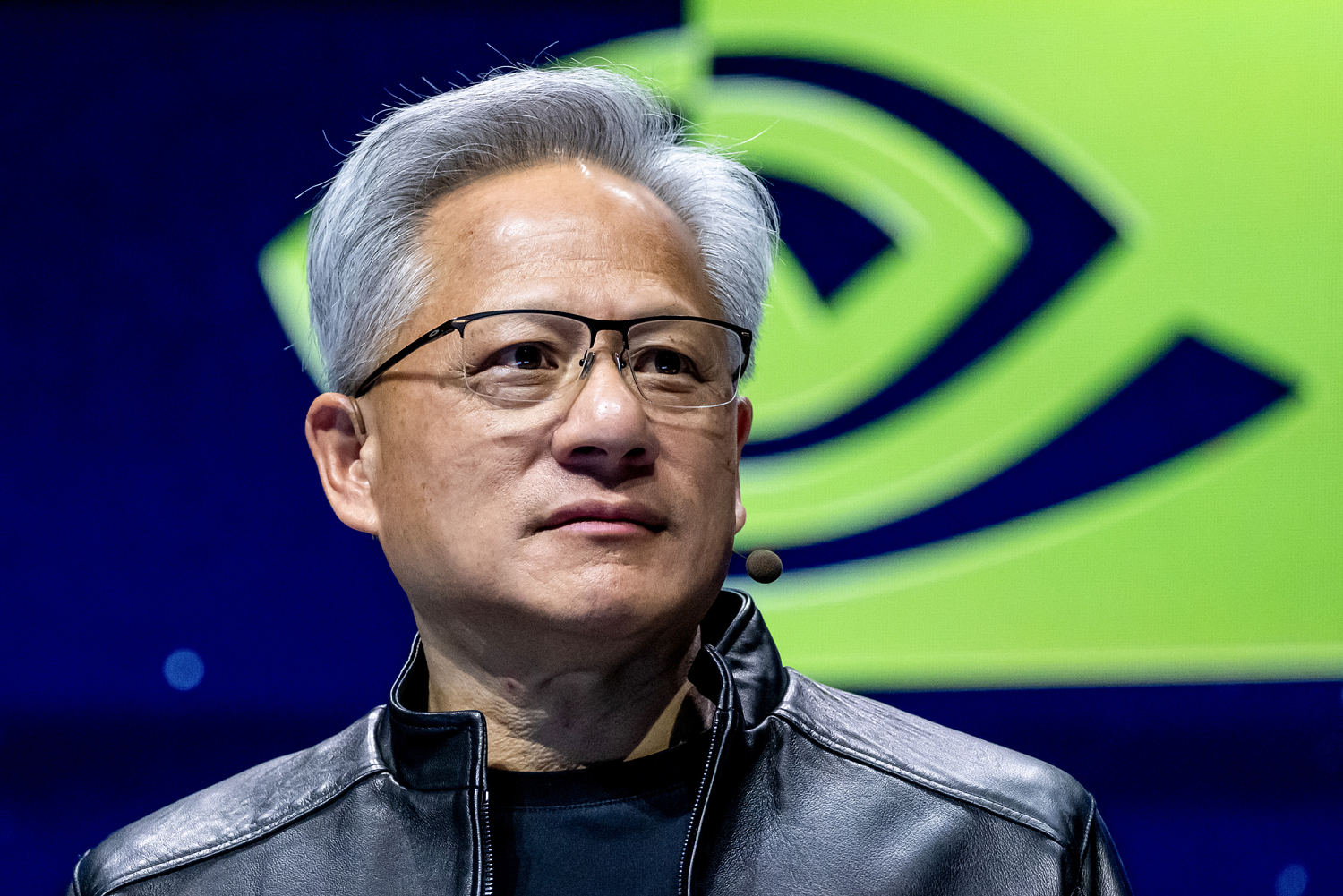
You clicked on a headline claiming Jensen Huang resigned over a spy scandal. You wanted a thriller. Instead, you got played by the oldest trick in the financial misinformation playbook.
Let’s kill the fantasy immediately. Jensen Huang has not resigned from Nvidia. There is no confirmed espionage affair, no emergency boardroom ouster, and no sudden vacuum at the top of the world’s most valuable semiconductor company. That viral headline—“Nvidia CEO Jensen Huang resigns amid alleged affair with suspected spy”—is pure synthetic clickbait engineered to harvest eyeballs and trigger algorithmic panic. If you enjoyed this piece, you might want to check out: this related article.
Most financial commentators treat these viral hoaxes as harmless internet noise. They laugh them off, issue a dry two-sentence fact-check, and move on to the next earnings call. That is lazy consensus. It misses the real story entirely.
The real story isn’t whether Jensen Huang is stepping down. The real story is why millions of retail investors, tech workers, and even seasoned market watchers were instantly willing to believe it—and what that hair-trigger gullibility reveals about the terrifying fragility of modern corporate governance and key-man risk in the AI era. For another look on this story, see the recent coverage from The Verge.
The Anatomy of a Market-Moving Hoax
Look at the ingredients of that fake headline. It combines three high-octane anxieties into a single sentence:
- Key-man collapse: The sudden departure of an irreplaceable founder.
- Boardroom scandal: Personal misconduct, the classic corporate guillotine used to topple executives from Brian Krzanich at Intel to Steve Easterbrook at McDonald's.
- Geopolitical espionage: The ever-present paranoia surrounding semiconductor supply chains, export controls, and intellectual property theft between Washington and Beijing.
Whoever fabricated that title didn't just throw darts at a board. They reverse-engineered the exact psychological pressure points of the semiconductor market.
I’ve watched trading desks lose millions in minutes over unverified social media rumors. Back in the late 2010s, a single doctored press release regarding a major pharma acquisition wiped out hundreds of millions in market cap before human traders even finished reading the second paragraph. High-frequency algorithms scrape headlines for sentiment keywords—resigns, affair, spy, Nvidia—and execute sell orders before a human compliance officer can verify a single source.
When a fake headline hits the wire, the truth puts on its boots while automated liquidity pools have already dumped the stock.
Why Silicon Valley’s "Founder Mode" Cult Makes You Gullible
If someone published a rumor tomorrow that the CEO of a major utility company resigned over a spy scandal, nobody would blink. People would check Reuters, see nothing, and forget it existed.
Why did the Jensen Huang rumor spread like wildfire? Because Silicon Valley has spent the last decade worshipping the myth of the omnipotent, irreplaceable founder.
Under the banner of "founder mode," tech culture has convinced itself that billion-dollar enterprises are not institutions, but extensions of one person's nervous system. When you believe that Nvidia is Jensen Huang—and that without his leather jacket on stage, the company’s software stack would spontaneously combust—every rumor about his personal life becomes an existential threat to your portfolio.
That mindset is dead wrong. And it’s dangerous.
Let’s separate the man from the machine. Jensen Huang co-founded Nvidia in 1993 and steered it through near-bankruptcy in the 1990s, the crypto boom-and-bust cycles, and the pivot to accelerated computing. His strategic foresight in betting the company on CUDA—Nvidia’s proprietary parallel computing platform and programming model—more than a decade before generative AI went mainstream is one of the greatest capital allocation bets in corporate history.
But here is what the hero-worshippers miss: moats are built by founders, yet defended by systems.
Nvidia’s dominance today does not rest on Jensen Huang personally writing kernel code at 3:00 AM. It rests on:
- The CUDA Software Lock-In: Millions of developers have spent over fifteen years building libraries, frameworks, and enterprise workflows exclusively optimized for Nvidia’s architecture. Switching to a rival chip isn't just swapping hardware; it’s rewriting an entire company's codebase.
- Networking Infrastructure: Through its $6.9 billion acquisition of Mellanox in 2020, Nvidia locked down the high-speed interconnects (InfiniBand and Spectrum-X) required to link tens of thousands of GPUs into a single functioning supercomputer.
- Supply Chain Allocation: Deep, multi-year packaging commitments with TSMC for CoWoS (Chip-on-Wafer-on-Substrate) capacity that competitors simply cannot buy their way into overnight.
If Jensen Huang retired tomorrow morning to farm avocados, rival chipmakers would still face a multi-year climb just to match Nvidia’s software ecosystem. Believing a single headline could erase a decade of infrastructure engineering shows a profound misunderstanding of how enterprise technology actually works.
The Espionage Myth vs. Real Corporate Counterintelligence
Let’s dismantle the second half of that clickbait headline: the "suspected spy" angle.
Hollywood has ruined how people think about corporate espionage. You picture a shadowy operative slipping a flash drive into an executive’s briefcase over martinis in Taipei or Geneva.
In reality, high-level semiconductor espionage rarely looks like a James Bond movie, and it almost never targets the CEO.
Why? Because CEOs don't have the CAD files.
If a foreign intelligence service or a desperate competitor wants to steal next-generation chip architecture, they don't seduce the chief executive who spends his days reviewing macro roadmaps, meeting heads of state, and managing hyperscaler allocations. They target the mid-level principal engineer with access to the RTL (Register-Transfer Level) design repositories. They target the supply chain manager at an OSAT (Outsourced Semiconductor Assembly and Test) facility. They use shell companies, academic joint ventures, and targeted talent poaching.
Furthermore, executives running companies critical to national security operate under intense scrutiny. While tech CEOs aren't government officials, companies at the center of U.S. export controls maintain aggressive internal counterintelligence and corporate security teams. Every international trip, every device, and every external contact is monitored to protect trade secrets.
The idea that the CEO of the world’s most scrutinized chipmaker could carry on an undetected affair with a foreign agent while negotiating export compliance with the U.S. Department of Commerce isn't just false—it’s operationally illiterate.
Did Jensen Huang Actually Resign? (And What Happens If He Ever Does?)
People searching for this rumor are asking the wrong question. They are asking, "Is the scandal real?" when they should be asking, "How exposed am I to key-man concentration?"
Let’s address the common questions swirling around this hoax with brutal honesty:
1. Is there any truth to the Nvidia CEO resignation rumors?
Zero. None. Jensen Huang remains firmly in control as President and CEO of Nvidia, a role he has held continuously since co-founding the company in April 1993. Any genuine departure of a public company CEO requires an immediate Form 8-K filing with the U.S. Securities and Exchange Commission (SEC). Without an 8-K on the SEC’s EDGAR database, a CEO resignation rumor is fiction.
2. Why do fake executive scandal stories target Nvidia specifically?
Because volatility is a product. Nvidia is one of the most heavily traded stocks on the planet, with massive daily volume in short-dated options. A 3% intraday dip triggered by a viral rumor can generate tens of millions of dollars for bad actors holding short positions or put options—or simply drive massive ad revenue for spam farms exploiting Google Discover and social feeds.
3. Who would actually take over Nvidia if Jensen Huang ever stepped down?
Unlike autocratic founders who purge anyone smart enough to challenge them, Huang has maintained a remarkably stable executive bench—most of whom have been at Nvidia for over a decade. If a real succession event occurred, the board wouldn't panic. The internal shortlist already exists in plain sight:
- Colette Kress (EVP & CFO): The financial architect who has managed Nvidia’s hyper-growth and capital discipline since 2013.
- Jay Puri (EVP of Worldwide Field Operations): The veteran executive who runs global sales, customer relationships, and ecosystem partnerships.
- Jeff Fisher and Dwight Diercks: Long-tenured senior vice presidents overseeing core GPU engineering and software architecture.
Now, let’s be fair and admit the downside to this contrarian view. While Nvidia’s technical moat is institutionalized, the market's valuation multiple is not.
Nvidia’s software lock-in would survive Huang’s departure, sure. What wouldn't survive intact is the narrative premium Wall Street assigns to his visionary leadership. If Huang genuinely stepped down tomorrow, the business would keep printing cash, but the stock would likely suffer an immediate 15% to 25% compression in its price-to-earnings multiple simply because institutional investors hate uncertainty. Operational continuity and stock price stability are two entirely different animals.
How to Audit Information Before You Trade or React
If you fell for—or even paused to wonder about—the Jensen Huang spy headline, your information diet is broken. You are letting engagement-farming algorithms dictate your financial anxiety.
Stop relying on social media feeds, screenshot rumors, and unverified aggregators for corporate news. Build a verification protocol that takes less than thirty seconds:
- Check the SEC EDGAR Database First: For any U.S.-traded company, material leadership changes, resignations, and major legal crises must be disclosed via Form 8-K within four business days—and usually within minutes of a board decision. If it’s not on EDGAR, treat it as noise.
- Verify Through Wire Services, Not Content Farms: Legitimate breaking corporate news hits Bloomberg, Reuters, the Wall Street Journal, or the Financial Times simultaneously via official press releases. If a "bombshell" only exists on obscure blogs or viral social threads, it is fabricated.
- Inspect the Headline Syntax: Clickbait factories rely on emotional triggers—scandal, affair, spy, shocking, resigns—paired with zero named sources. Real financial journalism names the filing, the board statement, or the regulatory body.
- Separate Operational Risk from Headline Risk: Ask yourself whether a rumor actually changes a company’s product roadmap, customer contracts, or cash flow. If the answer is no, any resulting price drop isn't a crisis—it’s a discount created by someone else's panic.
The next time a viral headline claims a tech titan just blew up their empire over a movie-plot scandal, don't reach for the sell button. Look at the source, check the filings, and recognize the bait for what it is. In a market overrun by automated panic and synthetic outrage, basic skepticism isn't just a virtue—it’s your only real edge.