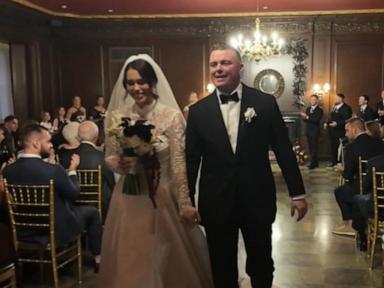
Watching a police officer who survived six gunshot wounds walk down the aisle isn't just another feel-good internet clip. It's a stark reminder of what survival actually looks like once the news trucks pack up and leave.
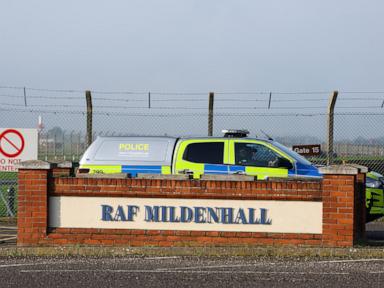
Most viral hero stories follow a predictable script. You get a dramatic headline, a thirty-second video clip of a milestone moment, and a flood of heart emojis in the comments. What you almost never get is the brutal reality sandwiched between the hospital trauma bay and the wedding reception. When a viral story circulates about an officer shot six times celebrating his wedding—a scenario that has played out in real life for officers like NYPD Detective Dalsh Veve, who survived multiple gunshot wounds to the head and body before reaching major life milestones, or Detroit Police Officer Glenn Doss Jr.'s peers who fought through catastrophic line-of-duty injuries—viewers see the triumph. They miss the years of grueling physical therapy, the quiet panic of trauma recovery, and the sheer stubbornness required just to stand upright for a first dance. Also making waves in related news: What Most People Get Wrong About the US Evacuating Aircraft From RAF Mildenhall Over Iran Threats.
Let's be honest about how we consume these stories. We love a neat ending. We want the wedding toast to erase the memory of the body camera footage.
The Reality Behind Line-of-Duty Survival Stories
Surviving multiple gunshot wounds changes every single routine in a person's life. It's not like the movies where a character takes a bullet to the shoulder, wears a sling for two weeks, and goes back to kicking down doors. Six gunshot wounds mean shattered bone, severed nerves, multiple surgeries, and months—sometimes years—of relearning how to walk, grip a fork, or sit through a dinner without debilitating nerve pain. Additional information regarding the matter are covered by The Washington Post.
According to data tracked by the FBI Law Enforcement Officers Killed and Assaulted (LEOKA) program, tens of thousands of officers are assaulted in the line of duty every year in the United States, with thousands sustaining serious injuries from firearms. While public attention rightly focuses on fallen officers, the survivors live in a strange gray area. They're alive, so the public assumes they're fine.
They aren't fine. Not for a long time.
When an officer steps onto a dance floor or stands at an altar after surviving a shooting, every step represents thousands of hours of unglamorous, painful rehab. Physical therapists who specialize in ballistic trauma will tell you that the hardest part isn't even the initial muscle atrophy. It's the secondary complications. Scar tissue restricts movement. Metal rods and plates ache when the weather drops. Chronic fatigue sets in after twenty minutes of standing.
So when you watch a wedding video of a wounded officer smiling beside their partner, you're looking at the end result of a massive, invisible team effort. Doctors, trauma nurses, occupational therapists, and a partner who likely spent months acting as a full-time caregiver all made that ten-second clip possible.
What Viral Clips Leave Out About Law Enforcement Recovery
Short-form video algorithms reward emotion, not nuance. A thirty-second clip of a groom wiping away tears or dancing with his bride triggers an immediate dopamine hit for the viewer. That's why these stories explode across social feeds.
The problem? Stripping away the context turns real people into one-dimensional symbols.
The Financial and Bureaucratic Grind
Nobody films the paperwork. Nobody makes a viral TikTok about arguing with workers' compensation boards over whether a specific nerve-block injection is covered. Yet for injured officers and their families, navigating municipal bureaucracy is often just as exhausting as the physical rehab. Medical retirement battles, disability ratings, and lost overtime pay put immense strain on a relationship long before wedding planning even begins.
The Invisible Weight on the Partner
We rightly praise the officer's grit, but the spouse-to-be carries a completely different kind of trauma. Imagine getting that phone call—the one every law enforcement family dreads—and spending weeks in an ICU waiting room not knowing if your partner will recognize you when they wake up. Choosing to build a marriage after that requires a level of resilience that doesn't fit neatly into a hashtag.
Psychological Aftershocks
Bullet wounds heal faster than hypervigilance. Loud noises at a wedding reception—a dropped plate, a champagne cork popping, a sudden burst of bass from the DJ booth—can trigger an immediate physiological fight-or-flight response in someone who survived a gunfight. Many wounded officers have to work closely with trauma psychologists just to feel comfortable in a crowded room again.
Why These Wedding Milestones Resonate With the Public
If the backstory is so heavy, why do millions of people stop scrolling to watch an injured officer celebrate a wedding?
It comes down to contrast. We live in a media environment saturated with bad news, cynicism, and division. Law enforcement stories in particular are almost always framed around conflict, tragedy, or controversy. A wedding celebration cuts right through that noise. It offers proof that violence doesn't always get the final word.
There's also something deeply human about witnessing a public servant reclaim their personal life. Police officers spend their careers stepping into other people's worst days. Seeing a community—fellow officers, hospital staff, neighbors—rally around one of their own to celebrate a purely personal milestone flips the script. For once, the person who usually shows up to help is the one being supported.
If you've ever watched a fellow first responder go through catastrophic injury recovery, you know how rare pure celebration becomes. Every doctor's appointment feels like a test. Every milestone is measured in millimeters of range-of-motion or minutes spent out of a wheelchair. A wedding day is the first time in a long time that the calendar isn't dictated by a surgeon's schedule.
How to Actually Support Wounded First Responders Beyond Sharing a Video
Liking and sharing a viral wedding clip costs nothing, which is why everybody does it. If you actually care about the people behind these headlines, your support has to look a little more practical than a comment section platitude.
- Look into verified line-of-duty support organizations. Groups like the National Law Enforcement Officers Memorial Fund and local police foundation relief funds provide direct financial assistance for uncovered medical expenses, home accessibility modifications, and family travel during extended hospital stays.
- Pay attention after the six-month mark. Community support is always loudest in the first two weeks after a shooting. Meal trains and GoFundMe pages flood with donations immediately, then dry up completely six months later—right when the hard, tedious phase of outpatient rehab begins.
- Support mental health parity for first responders. Advocate locally for departments to fund confidential, specialized trauma counseling not just for officers, but for their spouses and children too.
- Respect the boundary between public symbol and private person. When wounded officers share a glimpse of their wedding or recovery, appreciate the moment without demanding they perform constant inspiration for the internet.
The next time a video of a wounded officer celebrating a wedding crosses your feed, watch it for what it really is. Don't just see a miraculous recovery. See the months of grueling physical therapy, the quiet endurance of a partner who stayed through the worst nights in the ICU, and the deliberate choice to build a future after surviving something meant to end it. If you want to honor that kind of grit, skip the generic comment, find a local first responder relief fund, and put ten dollars toward the next officer still fighting their way back to the aisle.