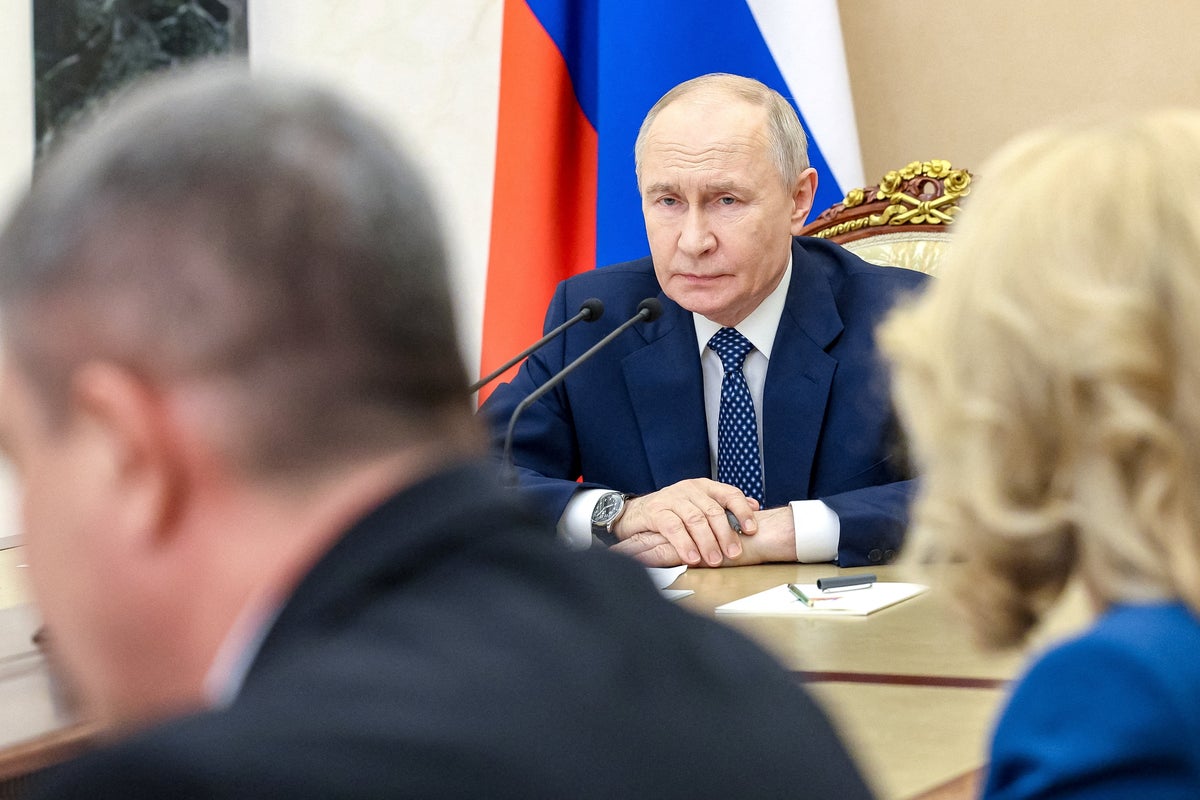
Vladimir Putin isn't getting the full picture on the ground in Ukraine, and it's making the war even more dangerous. Western intelligence agencies and military analysts have pointed out a glaring flaw in the Kremlin's war machine: the Russian president's own generals are hiding the truth from him. They're sugarcoating catastrophic losses, downplaying logistical failures, and inflating battlefield successes to save their own skins.
This information echo chamber leaves Putin making massive strategic decisions based on flawed data. Meanwhile, Ukrainian President Volodymyr Zelensky isn't sitting back. He just issued a stark warning that Russia is actively positioning its forces for another massive wave of strikes. The disconnect between Putin's corporate-style Kremlin reports and the brutal reality on the ground creates a highly volatile flashpoint. When a nuclear-armed leader operates on bad data, the entire global security framework shudders. Don't forget to check out our previous coverage on this related article.
The Echo Chamber Inside the Kremlin
Military command structures under autocratic regimes have a built-in defect: truth is often treated as a liability. In Moscow, the situation has devolved into a classic "yes-man" trap. Generals and defense officials know that delivering bad news to Putin can end a career—or worse.
Western defense officials, including assessments from the US State Department and British Defense Intelligence, consistently show that Putin's inner circle filters out negative reports. When a Russian offensive stalls in the Kharkiv region or an ammunition depot gets obliterated by Ukrainian strikes, the reports moving up the chain of command get scrubbed. Defeats are rebranded as "tactical regroupings." High casualty rates are minimized. To read more about the background of this, BBC News provides an in-depth summary.
This isn't just about hurt pride. It directly alters how Russia conducts the war. If Putin genuinely believes his forces are on the verge of a breakthrough, he's far more likely to double down on failing strategies, throw more poorly trained conscripts into the meat grinder, and reject any realistic path toward diplomacy. According to data tracked by the Institute for the Study of War (ISW), Russia's contract recruitment numbers have steadily declined despite massive signing bonuses. Yet, the Kremlin continues to order aggressive, small-group infantry frontal assaults as if its human resources were infinite.
Zelensky Warns of an Impending Strike Package
While Putin navigates a haze of doctored intelligence, Ukraine is bracing for immediate impact. President Volodymyr Zelensky recently confirmed that Ukrainian intelligence has tracked significant Russian movements indicating a new, massive coordinated strike package.
This isn't an empty warning. Zelensky accurately predicted the massive late-May bombardment that saw over 90 missiles and hundreds of drones target Ukrainian infrastructure. The upcoming wave is expected to follow a similar playbook, combining ballistic missiles, cruise missiles, and Iranian-designed Shahed loitering munitions to overwhelm Ukraine's air defense grid.
Ukraine's energy infrastructure and decision-making centers in Kyiv remain the primary targets. The Russian Ministry of Foreign Affairs even took the unusual step of publicly warning foreign diplomats to leave the capital, a psychological warfare tactic meant to stoke panic and weaken Western resolve.
What Russia's Strike Strategy Looks Like
The Kremlin's strategy has shifted from territorial conquest to raw attrition and intimidation. They use a specific mix of weaponry to drain Ukraine's resources:
- Drones as Bait: Cheap Shahed drones are sent in first to force Ukrainian air defense systems to reveal their positions and burn through expensive interceptor missiles.
- Hypersonic and Ballistic Missiles: Once the air defense grid is distracted or depleted, Russia launches high-speed weapons like the Iskander or the newer Oreshnik missile to hit high-value targets.
- Exploiting the Foliage: On the ground, particularly along the northern border, Russian forces are using the heavy summer foliage for concealment, attempting small-team infiltrations to stretch Ukrainian lines thin before the missiles rain down.
The Cost of the Information Gap
The real danger of a misled Putin is the potential for catastrophic miscalculation. If Russian generals are hiding the extent of their vulnerabilities, Putin might push his forces past their breaking point, leading to a sudden collapse on a specific front. Conversely, he might miscalculate Western red lines, believing his military is strong enough to withstand a broader escalation.
We're already seeing the friction points. Reports indicate that China's People's Liberation Army secretly trained Russian military personnel in drone operations at facilities in mainland China. This shows that despite the rosy reports Putin receives, the Russian military is desperate for external tactical upgrades to keep up with Ukraine's rapid battlefield innovation.
Ukraine has responded to the threat by expanding its own target list. Kyiv is no longer just playing defense; Ukrainian long-range drones and missile systems are actively striking deeper into Russian territory. They are targeting fuel convoys, oil refineries, and logistics hubs in places like the Belgorod and Voronezh regions to choke off the Russian war machine before it can launch its planned offensives.
What Needs to Happen Next
The current phase of the war leaves no room for hesitation. To counter Russia's upcoming strike packages and exploit the Kremlin's internal information failures, specific actions are required from Ukraine and its international allies.
First, Western partners must accelerate the delivery of advanced air defense systems, specifically Patriot and SAMP/T batteries. Zelensky has openly communicated to international leaders that the current shortage of interceptor missiles is creating dangerous gaps in the sky that Russia is eager to exploit.
Second, intelligence sharing between NATO and Ukraine needs to remain seamless and instant. Since Putin's generals won't tell him the truth, Ukraine must use accurate, real-time satellite imagery and signals intelligence to predict Russian movements and strike their assembly points before offensives can materialize.
Finally, the international community must maintain strict enforcement of technology sanctions. Russia's reliance on foreign microchips to build its precision missiles is its Achilles' heel. Preventing these components from entering Russia via third-party countries directly limits how many advanced weapons the Kremlin can produce for its massive strike packages.