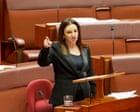
The marble corridors of Parliament House in Canberra are built for acoustics that project authority. High ceilings, polished stone, and heavy timber doors were engineered to carry the measured cadence of democratic debate across decades. Yet on a hot afternoon inside the House of Representatives, those acoustic chambers caught something else entirely: a precise, sharp, unparliamentary profanity spat across the aisle.
The Hansard reporter sitting at the center table did not flinch. Her fingers moved across the steno machine with trained, rhythmic speed. She had heard it all before. But when the official transcripts were tallied at the end of the sitting calendar, a line had been crossed. Australia’s 47th Parliament had officially set a record for the highest volume of unparliamentary language, interjections, and formal withdrawals in the nation's legislative history.
It is easy to dismiss this as colorful Aussie larrikinism—a classic, cheeky refusal to bow to pretense. We love to frame our politicians as rough-and-ready street fighters who call a spade a bloody shovel. But beneath the crude insults and the laughter in the press gallery lies a far colder reality. The coarsening of parliamentary speech is not an accident of language. It is a symptom of a collapsing system of political incentives.
The Anatomy of an Insult
To understand how the floor of Parliament became a tavern, you have to watch what happens off-camera during Question Time.
Imagine a backbench MP named Marcus. He represents a marginal outer-suburban electorate. He is tired, overworked, and deeply aware of his own political mortality. He sits in the chamber while a cabinet minister delivers a carefully polished, five-minute answer on housing supply metrics. The speech is technically accurate, completely bloodless, and entirely unmemorable.
Marcus knows that if he sits quietly and nods, zero people in his electorate will ever see his face today. No evening news broadcast will air a clip of him paying attention. No algorithm will push his quiet diligence to voters on TikTok or X.
So Marcus waits for a pause. He leans across his desk, cups his hands around his mouth, and hurls a vicious, profane barbs directly at the minister’s character.
The Chamber erupts. The Speaker’s gavel strikes the desk three times in quick succession.
"The member will withdraw," the Speaker demands, pointing a stern finger across the chamber.
Marcus rises slowly, hides a slight smirk, and says the required magic words: "I withdraw."
The record reflects the withdrawal, but the damage—and the victory—is already complete. Within twenty minutes, a video snippet of the altercation, complete with dramatic jump-cuts and bold captions, is uploaded to social media. It gathers fifty thousand views before dinner.
Marcus did not lose control of his temper. He executed a transaction. He traded parliamentary decorum for digital attention, and the exchange rate has never been more favorable.
When the Rules Lose Their Teeth
The Australian parliamentary system relies on a delicate fiction: that members are "honorable" by default, and that respect for the institution supersedes partisan warfare. The standing orders of Parliament explicitly ban unparliamentary language—words that insult, impute improper motives, or lower the dignity of the house.
Historically, being forced to withdraw a comment was a stain on an MP's record. A formal naming by the Speaker could result in suspension from the chamber, bringing public shame to the member’s electorate.
Yet over recent parliamentary terms, the threshold for what constitutes acceptable behavior has continually drifted. The list of banned words reads like a historical catalog of Australian slang, ranging from archaic insults to modern four-letter expletives. But as the volume of interjections has skyrocketed, Speakers of the House have been forced into an impossible corner.
If a Speaker strictly enforced the rules every single time an MP hurled a vulgarity or an abusive interjection, the chamber would be empty within an hour. Question Time would collapse entirely.
As a result, presiding officers are forced to manage the floor through endless compromise. They demand swift withdrawals and issue soft warnings, creating a environment where politicians push the boundary just far enough to get the clip, knowing the actual punishment will be nothing more than a formal slap on the wrist.
Language shapes thought, and thought shapes culture. When the men and women tasked with drafting the laws of the nation treat their primary workplace as a mud-wrestling arena, the corrosion spreads outward into the broader electorate.
The Cost of Cheap Noise
There is a quiet irony in all of this. While MPs trade insults on the floor to prove how "authentic" and "tough" they are, the public’s trust in parliamentary institutions continues to slide to historic lows.
Voters do not look at a profanity-laden shouting match in Canberra and think: There is a leader fighting for my family. They look at it and see a privileged class of political actors playing a juvenile game while real-world crises—skyrocketing living costs, housing shortages, and decaying public infrastructure—are relegated to the background.
Swearing in Parliament is not a sign of passion. It is a sign of intellectual bankruptcy. It is what happens when complex policy debates are stripped of their substance and reduced to theatrical outrage designed for a thirty-second news cycle.
When we allow the highest debate in the land to devolve into a competition of schoolyard profanities, we lose the ability to discuss complex, nuanced problems. Vulgarity is loud, but it is ultimately cheap. It demands nothing of the speaker and offers nothing to the listener.
The Echo in the Empty Hall
Late in the evening, after the cameras are turned off and the press gallery has cleared out to the bars, the chamber falls completely silent.
The Hansard reporters finalize their logs, carefully cataloging every shouted insult, every forced apology, and every sharp rebuke from the chair. The leather benches stand empty under the dim yellow light.
The record of the 47th Parliament will show unprecedented numbers: hundreds of withdrawals, dozens of warnings, and a relentless tide of vulgarity that shattered previous benchmarks. But the official transcripts cannot capture the quiet erosion of faith taking place outside those walls.
Every time an MP chooses a cheap slur over a reasoned argument, the authority of the leather chairs fades just a little more. The architecture remains majestic, built for giants who understood the power of language. The people inside them, however, continue to shrink.