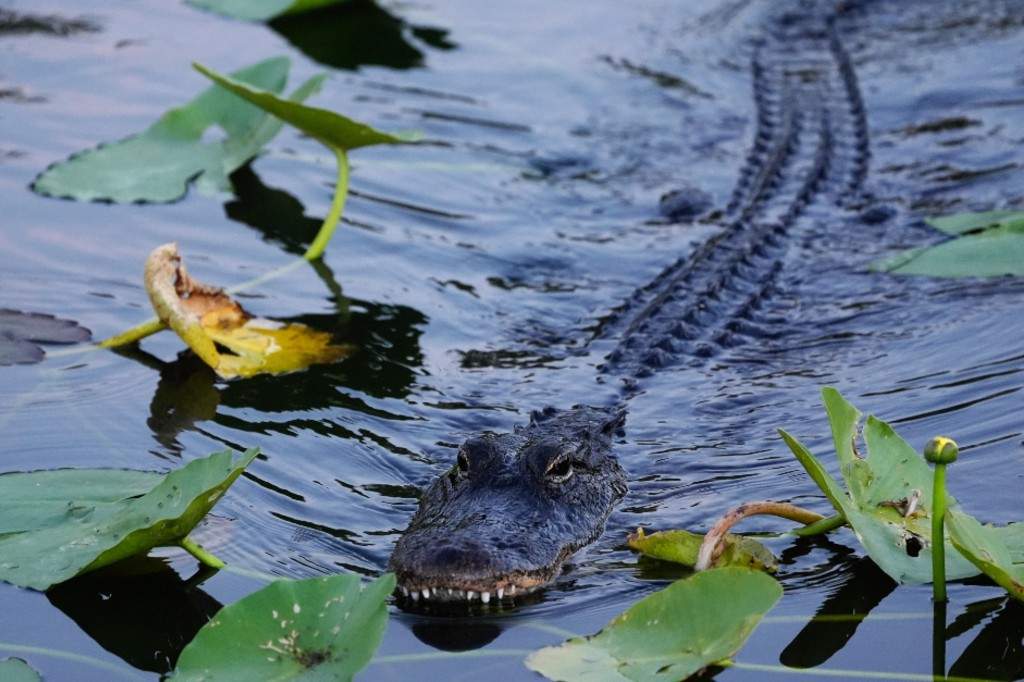
You don't expect a hike to end in a rescue boat. You definitely don't expect a quick dip in a river to cost someone their life. But that's exactly what happened on a Sunday afternoon in central Florida, turning a casual weekend trek into a living nightmare.
A 31-year-old Orlando woman was hiking with her boyfriend and best friend through the Little Big Econ State Forest. It was hot, around 1:30 p.m., so they stepped into the Econlockhatchee River to cool off. They weren't swimming laps. They were simply kneeling in about three feet of water. You might also find this related coverage interesting: The Cost of the Silent Phone.
Within seconds, a massive alligator struck.
The animal clamped down on the woman, inflicting catastrophic injuries. Her boyfriend fought desperately, trying to pull her from the alligator's jaws. He managed to drag her away after the reptile let go, but the damage was done. The 911 audio reveals a chaotic scene of panic, with callers shouting that her arms were severed. She died on the way to the hospital. As extensively documented in recent articles by Reuters, the implications are significant.
Florida officials have since trapped and euthanized two massive alligators from the area—one 12 feet long, the other 13 feet. They are running DNA tests to confirm which reptile attacked, though the 13-foot animal caught directly at the site is the primary suspect.
This isn't just a freak accident. It's part of a dangerous pattern developing in Florida right now due to a specific combination of weather and seasonal biology.
The Convergence of Drought and Territorial Timing
If you live in Florida or visit regularly, you know alligators are everywhere. They inhabit all 67 counties. Usually, they ignore humans. Unprovoked attacks are statistically rare, averaging about eight serious bites a year across a state with an estimated 1.3 million gators.
But right now, the rules are changing.
Florida Fish and Wildlife Conservation Commission (FWC) officials pointed out two critical factors driving alligator behavior at this exact moment:
- Extreme Low Water Levels: A prolonged drought across central Florida has dried up shallow wetlands. This forces large apex predators out of their usual remote hiding spots and concentrates them into deeper, permanent river channels—the exact places humans go to swim and cool off.
- The Tail End of Mating Season: June marks the transition from breeding to nesting. Male alligators are incredibly territorial right now, pumped full of hormones, and highly aggressive toward anything entering their space.
When you crowd massive, territorial reptiles into shrinking pools of water, conflict is inevitable. This fatal attack didn't happen in a vacuum. It was the third alligator encounter in central Florida within a single week. Just 24 hours earlier, a boy fishing with his father was bitten on the hand in Marion County. A week before that, a snorkeler was bitten in the Rainbow River.
Understanding the Three-Foot Water Illusion
Many people assume that staying in shallow water keeps them safe. They think alligators only attack in deep lakes where they can submerge completely.
That's a deadly misconception.
An alligator doesn't need deep water to strike. They are ambush predators built for explosive speed in the shallows. A 13-foot alligator can hide effortlessly in mud, weeds, or murky river water that is only a few feet deep. By kneeling in three feet of water, the hikers inadvertently put themselves at eye level with a predator, completely eliminating their ability to see an approach or react.
If you are standing or kneeling in natural Florida fresh water, you are in the strike zone.
How to Manage the Reality of Florida Waterways
You don't need to live in fear, but you do need to stop treating natural Florida waterways like backyard swimming pools. If you hike, camp, or spend time outdoors in the state, change how you interact with the environment.
Assume Every Body of Water Houses a Predator
It doesn't matter if it's a pristine spring, a slow-moving river, or a retention pond behind a grocery store. If it contains fresh or brackish water, assume a gator is watching.
Keep Out of the Water Outside Designated Areas
Unless a park explicitly marks an area as a cleared, supervised swimming zone, stay on the dry trail. Never wade into murky river bends, especially during drought conditions when animals are concentrated.
Protect Your Pets and Kids
Alligators look for easy prey. Small dogs and children are at the highest risk because their size matches the alligator's natural prey profile. Keep dogs on a short leash and never let them splash near the water's edge.
Never Feed Alligators
This is the single biggest cause of gators losing their natural fear of humans. When people toss food to a gator, the animal associates humans with an easy meal. Eventually, that gator stops waiting for handouts and actively approaches the next person it sees. It’s illegal for a reason.
Florida's wildlife makes the state unique, but it requires strict boundaries. Treat every riverbank with the deference you would show a loaded weapon. Stay on the trail, keep your distance, and understand that during a drought, the water belongs entirely to them.