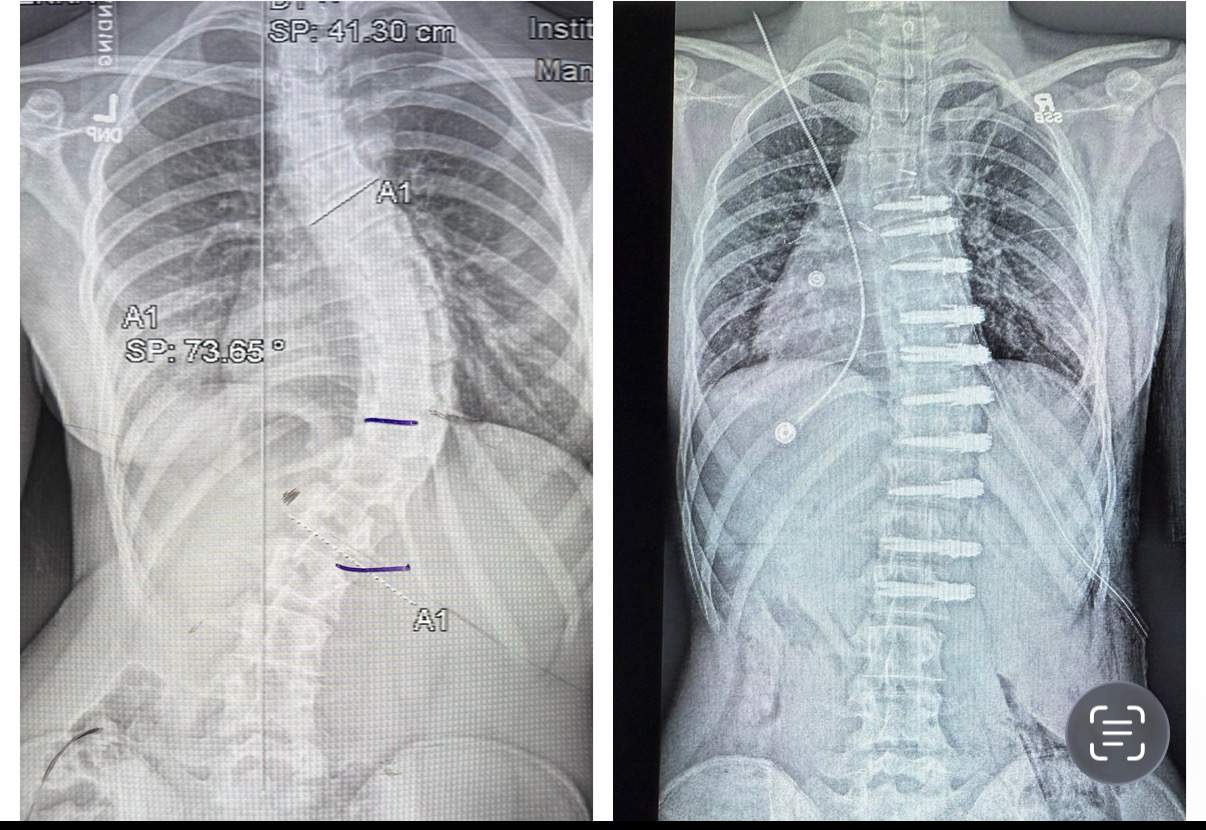
You are thirteen years old, and your spine is slowly twisting into the shape of an S. You do what the doctors say. You strap yourself into a rigid brace for most of the day. You push through physical therapy. Then, you watch in horror as your body ignores the treatment and your condition gets significantly worse.
That was the terrifying reality for Vienna Pedatella. Diagnosed with idiopathic scoliosis, she entered a waiting room queue in the Canadian healthcare system that stretched on for more than two years. Pediatric spinal surgery guidelines generally recommend a six-month window. Vienna waited four times longer than that.
Her family did what any desperate parent would do. They looked outside Canada’s borders, found a specialized surgeon in the United States who could operate within weeks, and applied to Alberta’s Out-of-Country Health Services Program for funding.
The government committee said no.
The Breaking Point of a Monopolized System
Most Canadians believe the safety net will catch them when they fall. It is the sacred promise of medicare. But when specialized care requires leaving the country because wait times have blown past medically safe limits, that promise fractures.
The Out-of-Country Health Services Program exists precisely for situations where treatment is unavailable locally, including due to excessive wait times. Yet, the committee denied Vienna’s funding request. Why? The internal review logic basically argued that she could have kept waiting in Canada for an inferior domestic procedure.
An inferior procedure in this context meant a massive spinal fusion involving fourteen levels of vertebrae—from the base of her neck down to her lower back. That kind of extensive hardware severely restricts mobility, limits flexibility, and can crowd internal organs as the patient grows.
Faced with a choice between permanent physical compromise in a domestic queue or modern corrective surgery down south, the Pedatella family chose Vienna's future. They took her to New Jersey for surgery in August 2025.
The procedure was a success. Vienna’s scoliosis was cured. She returned to skiing, weightlifting, and graduated high school with honours.
The cost of saving her spine? Nearly two hundred thousand dollars.
Fighting Back Through the Courts
When the family appealed internally, the bureaucracy doubled down. They were rejected on the grounds that domestic options technically existed—even if those options meant accepting a lower quality of life and permanent disability.
That is when the Canadian Constitution Foundation (CCF) stepped in. Backed by legal charity support, the Pedatellas filed for a judicial review in early 2026.
This legal challenge is about more than just a reimbursement check. The CCF argues that the province violated Vienna's rights to life and security of the person under Section 7 of the Canadian Charter of Rights and Freedoms. Forcing a teenager to languish on an extended waiting list while her body distorts is cruel, and it exposes the structural cracks in provincial health monopolies.
When asked for comment, provincial health representatives standardly noted they cannot discuss specific cases before the courts. They also emphasized that funding committees consist of medical experts, not politicians. Alberta Health claims they are reviewing the out-of-country program to ensure it evolves with patient needs.
Reviewing a program after families are forced into financial ruin is too little, too late.
What This Means for Patients Facing Healthcare Dead Ends
If you or someone you love is navigating a severe medical diagnosis in Canada, the system assumes you have infinite patience. You do not. Conditions like progressive spinal curves, neurological compression, and rare vascular malformations do not pause just because a hospital lacks staffing or operating room hours.
If you are forced to look outside the public monopoly, keep these hard realities in mind:
- Do not rely on retroactive approvals. The out-of-country committee rarely grants funding after the fact if they denied it beforehand. Expect a legal battle if you self-fund and seek reimbursement.
- Document every single delay. Get your primary physicians to write explicit letters stating that wait times are threatening long-term functional outcomes, not just causing temporary discomfort.
- Engage advocacy groups early. Charities like the CCF and disease-specific foundations often track systemic blockages and can point toward legal or financial precedents.
Vienna Pedatella got her life back, but her parents got a crippling invoice. No patient should have to choose between bankruptcy and physical preservation. Until provincial health authorities face real legal consequences for unreasonable delays, families will keep paying the price.
:max_bytes(150000):strip_icc()/AprilbyKunbi-ac7999afd721433e9c73e191cd311248.jpeg)