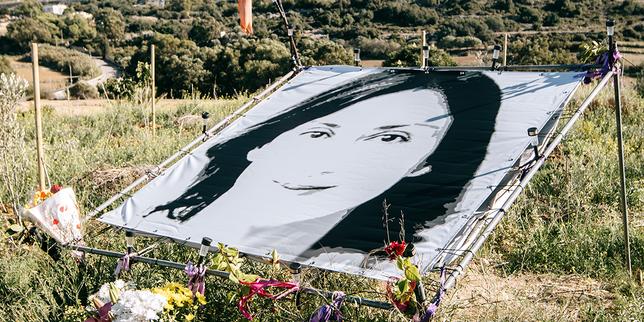
Justice in Malta is not slow by accident. It is slow by design.
Read the standard coverage of Daphne Caruana Galizia's three sons—Matthew, Andrew, and Paul—and you get the same neat, sentimental script. Brave heirs. Grueling court dates. A noble fight for accountability after their mother was killed by a car bomb near Bidnija in October 2017.
That framing feels clean. It is also lazy.
When commentators treat the aftermath of Daphne Caruana Galizia's murder as a simple story of grieving sons waiting for a broken court system to catch up, they miss the real battleground. Courtrooms in small, tightly networked states rarely punish the political architectures that protect entrenched power on their own. Prosecutors get bogged down in procedural delays. Appeals stretch across years. Public outrage cools between headlines.
If you measure progress solely by courtroom verdicts, you hand the architects of impunity the exact timeline they want.
The Lazy Consensus Around Courtroom Closure
Most coverage treats "justice" as a single finish line: a sentencing hearing, a conviction, a formal apology from the state.
That idea sounds comforting. In practice, it confuses legal process with political accountability.
Criminal trials focus on specific acts, evidentiary thresholds, and individual defendants. They are poorly built to dismantle a patronage network where political loyalty, licensing decisions, regulatory blind spots, and media pressure reinforce one another. Even when low-level hitmen or intermediaries face prosecution, the wider ecosystem that tolerated years of hostility toward an investigative journalist often remains intact unless external and public pressure forces structural reform.
I have spent years watching how institutional investigations play out in high-stakes political cases across Europe. The pattern repeats with depressing regularity. Committees get formed. Reports get praised abroad. Laws get amended on paper. Then routine politics quietly resumes while families spend years chasing slow-moving dockets.
Treating a slow trial as a tragic delay misses the deeper mechanism. Delay itself is a form of attrition. Every adjournment drains energy, shifts public attention, and tests whether citizens care enough to stay focused when the cameras move on.
Redefining What Accountability Actually Requires
People searching for updates on Daphne Caruana Galizia's sons usually ask a narrow question: when will the courts finally finish?
That is the wrong question.
A better question is: what shifts power when domestic institutions move at a crawl?
Legal proceedings matter. Evidence preserved in court records and public inquiries establishes facts that spin cannot easily erase. Yet courtrooms are only one lever among several. Real leverage comes when three things happen at once:
- Relentless documentation: Keeping exact records of delays, missed deadlines, and unanswered questions so institutional stalling cannot hide behind legal jargon.
- Cross-border scrutiny: Ensuring that international bodies, press freedom groups, and European institutions treat rule-of-law weaknesses as shared governance issues rather than local squabbles.
- Sustained civic memory: Refusing to let an assassination be reduced to a yearly anniversary post while everyday governance slips back into old habits.
Why "People Also Ask" Questions Miss the Point
When people look up this story, their follow-up questions tend to fall into predictable buckets. Here is where those questions stumble—and what actually happens beneath them.
Why does it take so long to get full accountability after a high-profile assassination?
Because complex cases involving political networks, financial trails, and institutional resistance collide with slow evidentiary rules and layered appeals. Calling it mere inefficiency lets powerful actors off too easily. When institutions benefit from caution or inertia, slowness becomes politically convenient.
Can a public inquiry replace criminal prosecution?
No, and anyone claiming a public inquiry is "enough" is selling a shortcut. An inquiry can examine state responsibility, systemic failures, and the environment that enabled harm. It cannot hand down criminal sentences. Still, dismissing inquiries as toothless is just as wrong—they create an official record that forces governments to confront findings they would rather bury.
What role do the victim's family members play beyond the courtroom?
Their role is often misunderstood. Families are not prosecutors, lawmakers, or state regulators. When Daphne Caruana Galizia's sons press for answers, challenge official narratives, or keep international attention focused on Malta, they are doing civic and advocacy work that no bereaved family should have to carry—yet it often proves indispensable when domestic momentum flags.
The Mechanics of Institutional Stalling
To see why justice feels interminable, look at how pressure works in a small jurisdiction.
In larger countries with sprawling media markets and competing political camps, a major scandal can trigger rapid institutional churn. In a compact state, personal ties, professional circles, and political loyalties overlap tightly. Investigations into sensitive connections require unusual independence, steady funding, and insulation from partisan maneuvering.
Imagine a scenario where a small country faces a severe governance scandal tied to influential figures. Suppose the judiciary is honest in principle, yet under-resourced and swamped by routine cases. Add multi-year pre-trial motions, constitutional challenges, and procedural disputes. Even without dramatic cover-ups, the calendar stretches out for nearly a decade. Meanwhile, every month of delay gives entrenched interests time to regroup, rebrand, or wait out public anger.
That is why counting days on a calendar alone can mislead observers. Time does not automatically move a case toward truth; organized pressure does.
Where My Contrarian View Has Real Limits
Pushing hard against courtroom-centric thinking carries risks of its own, and it is dishonest to pretend otherwise.
First, impatience can turn into cynicism. If people conclude that courts never work, they can slide into apathy—which helps the exact status quo I am criticizing. Preserving the rule of law still requires defending fair trials, due process, and judicial independence, even when those processes move frustratingly slowly.
Second, advocacy outside the courtroom cannot substitute for admissible evidence. Strong commentary, international statements, and public protests do not convict a defendant. A case still has to stand up under strict legal standards, or prosecutions collapse and appeals succeed on technical grounds.
So the tension is real: you have to demand rigorous legal standards without letting slow legal timelines lull society into forgetting why the fight started.
What Actually Moves the Needle
If you care about press freedom, rule of law, or holding power to account after a political assassination, sentimentality will not get you there. Discipline will.
- Track the paperwork, not just the headlines. Pay attention to procedural milestones, inquiry recommendations actually implemented, and reforms left sitting on a shelf.
- Separate sympathy from analysis. Respecting a family's endurance does not mean romanticizing the system they are forced to navigate. Look plainly at incentives, bottlenecks, and power.
- Keep external eyes open. International press coalitions, legal watchdogs, and cross-border investigative reporters remain vital checks when domestic scrutiny narrows.
- Watch the laws after the spotlight fades. Real reform shows up in whistleblower protections, media safeguards, judicial appointments, and anti-corruption enforcement years after the initial shock wears off.
Justice after a targeted killing is never handed over neatly just because time passes. It has to be pried loose, piece by piece, before memory fades.