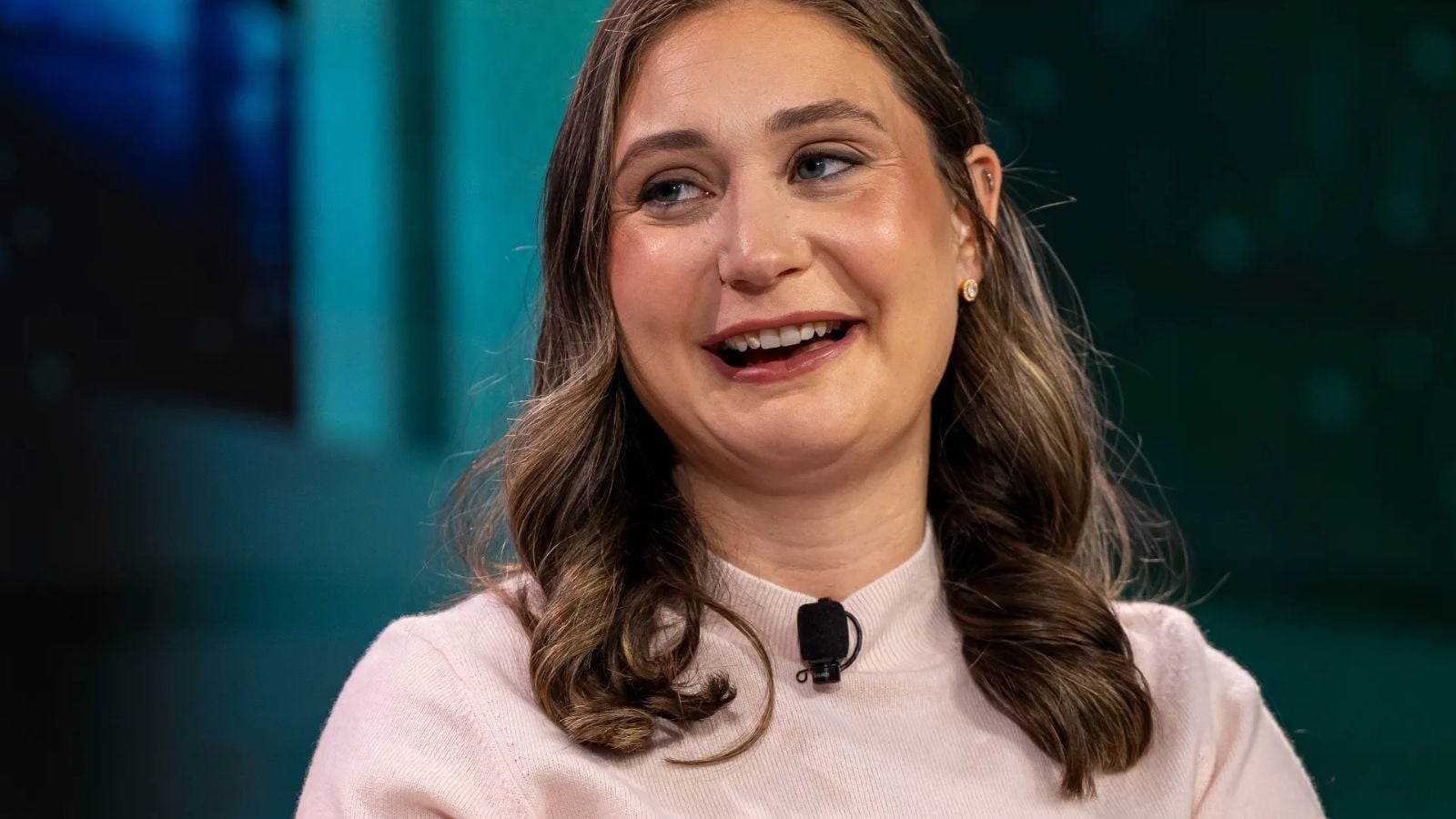
Standing on the podium at Nasdaq while the opening bell rings isn't just a photo op for tech founders. It's a permanent shift in who you answer to. When Anthropic's leadership stepped up to that podium to tout their latest artificial intelligence breakthroughs, the financial press did what it always does—they focused on the valuation, the ticker symbol, and the horse race against OpenAI and Google.
They missed the real story.
For years, Dario and Daniela Amodei built Anthropic around a very specific pitch. They left OpenAI in 2021 because they wanted a stricter focus on AI safety, alignment, and predictable scaling. Now, celebrating major model breakthroughs in front of institutional traders, Anthropic faces the exact tension every high-growth tech lab eventually hits. Public markets reward quarterly revenue acceleration and enterprise lock-in, while foundational AI research demands massive, uncertain capital expenditure with safety guardrails that sometimes slow down product shipping.
If you're watching Anthropic's public market presence or building software on top of Claude, you need to understand what those breakthroughs actually mean—and where the hype ends.
Why the Nasdaq Bell Moment Matters More Than the Hype
Wall Street loves a clean narrative. Right now, that narrative is simple: enterprise AI adoption is exploding, and Anthropic is one of the few companies with the compute infrastructure and foundational models to capture real market share.
When founders tout AI breakthroughs during a high-profile Nasdaq event, they're speaking two different languages at once. To developers and enterprise CTOs, they're signaling capability leaps—better reasoning, lower hallucination rates, and stronger agentic workflows where models can reliably use software tools without breaking things. To institutional investors, they're proving that billions of dollars in data center commitments are turning into defensible annual recurring revenue.
Here's the catch.
Public market scrutiny changes how a research lab operates. Before ringing that bell, Anthropic's primary external pressures came from private backers like Amazon and Google, alongside AI safety researchers watching their Responsible Scaling Policy. Once public equity analysts start dissecting gross margins every ninety days, the math shifts. Running frontier models isn't cheap. Inference costs, custom silicon partnerships, and massive training clusters eat into margins fast.
I've watched plenty of enterprise software teams switch between model providers over the last two years. Nobody stays loyal to a foundational model out of sentiment. They stay because the API is fast, the pricing per million tokens makes unit economics work, and the model doesn't choke on complex, multi-step instructions. Anthropic's breakthroughs have to deliver on all three fronts simultaneously, or Wall Street's enthusiasm will cool off faster than a summer rally.
The Technical Reality Behind Anthropic's Recent Breakthroughs
Strip away the financial theater, and you're left with the actual engineering. Anthropic's rise didn't happen by accident. While competitors chased consumer virality with image generators and voice assistants, Anthropic poured resources into three areas that actually matter to businesses.
Constitutional AI and Alignment That Scales
Most people hear "AI safety" and assume it just means filtering out bad words or refusing sensitive prompts. That's a surface-level misunderstanding. In enterprise environments, safety means reliability and predictability. If you deploy an automated customer support agent or a financial analysis pipeline, you can't have the model inventing policy rules or leaking context across user sessions.
Anthropic pioneered Constitutional AI, a training method where the model critiques and revises its own outputs against a set of explicit principles rather than relying solely on armies of human labelers. Why does this matter for breakthroughs? Because human feedback hits a wall. As models get smarter than the average human annotator on specialized tasks like coding or biochemistry, human-only reinforcement learning breaks down. Constitutional methods let Anthropic scale oversight alongside raw capability.
Context Windows and Document Comprehension
If you've ever tried feeding a 200-page legal contract or an entire codebase into an older language model, you know the pain. The model forgets the middle section, hallucinates function names, and loses the thread. Anthropic made massive context windows—and more importantly, high recall within those windows—a core selling point.
When their founders talk about breakthroughs in reasoning and comprehension, they're talking about the model's ability to hold an entire repository of corporate knowledge in working memory and synthesize answers across dozens of files. That single capability turned Claude from a neat chatbot into a daily workhorse for software engineers, lawyers, and financial analysts.
Tool Use and Computer Control
The biggest shift in artificial intelligence isn't better text generation. It's action. Modern Claude models can read a screen, move a cursor, execute terminal commands, and interact with external APIs.
This is where the real enterprise value sits, and it's also where the highest risk lives. Letting an AI draft an email is low stakes; letting an AI execute code or modify a production database is a completely different ballgame. Anthropic's focus on interpretability—literally looking inside the neural network to see which features activate when a model makes a decision—gives them a legitimate edge when convincing risk-averse Fortune 500 buyers to trust autonomous agents.
What Most Investors Get Wrong About the AI Model Race
Talk to retail traders or listen to financial television, and you'll hear endless debates about who has the "best" model this week. One benchmark drops, a leaderboard flips, and people declare a new winner.
That's a terrible way to evaluate AI companies.
Benchmarks are notoriously noisy. Models get overfitted to public test sets, and a two-percentage-point lead on a graduate-level physics exam tells you almost nothing about how a model performs when parsing messy, real-world customer invoices. What actually matters in the commercial AI market is workflow integration and switching costs.
Anthropic understood early on that owning the consumer app isn't the only path to dominance. By integrating deeply into cloud platforms like Amazon Bedrock and Google Cloud Vertex AI, they met enterprise developers where their data already lived. A healthcare company or a major bank doesn't want to ship sensitive data to a brand-new consumer startup. They want to call an API inside their existing Virtual Private Cloud under compliance agreements they already signed.
Another common misconception is that open-weight models from Meta or Mistral will crush proprietary labs like Anthropic on price. Open models are fantastic for specific, fine-tuned tasks and local deployment. Yet for complex reasoning, orchestration, and zero-shot problem solving, frontier proprietary models still hold a clear lead. Companies gladly pay a premium for frontier intelligence when it saves forty hours of senior engineering time.
The Elephant in the Room Compute Costs and Public Scrutiny
Let's be honest about the risks. Ringing the Nasdaq bell puts a spotlight on unit economics that private companies can keep behind closed doors.
Training next-generation frontier models requires tens of thousands of specialized accelerators running continuously for months. Power constraints, chip supply bottlenecks, and data center construction timelines are real physical limits. You can't code your way around transformer physics overnight, even with algorithmic efficiency gains.
At the same time, competition is compressing API pricing. Every few months, the cost per million tokens drops across the industry while baseline intelligence goes up. For Anthropic to thrive under public market scrutiny, they can't just build brilliant models—they have to prove they can generate high-margin software revenue on top of those models. Products like Claude for Enterprise and specialized coding assistants are designed to capture higher-value seat licenses rather than relying purely on razor-thin API token markups.
There's also the governance question. Anthropic was structured as a Public Benefit Corporation with a Long-Term Benefit Trust specifically designed to prevent pure profit motives from overriding existential safety concerns. Wall Street generally hates governance structures that limit shareholder control or slow down product launches. Watching how the Amodeis balance their founding charter against institutional investor expectations will be one of the defining corporate governance stories of the decade.
How Builders and Investors Should Actually Respond
If you're trying to make sense of Anthropic's milestone—whether you're allocating capital or deciding which AI stack to build your company on—ignore the opening bell theatrics and focus on tangible metrics.
For engineering leaders and founders, avoid locking your architecture into a single model provider. Build an abstraction layer so you can route simple, high-volume tasks to smaller, cheaper models while reserving Anthropic's frontier models for complex reasoning, code generation, and agentic workflows where accuracy actually justifies the cost. Test models against your own internal evaluation datasets, never public leaderboards.
For market watchers and investors, pay close attention to enterprise retention rates, cloud partnership revenue splits, and inference margin improvements rather than splashy product demos. The real test of Anthropic's breakthroughs isn't how good they sound on a Nasdaq stage—it's whether enterprise customers expand their usage quarter after quarter when the novelty wears off.



