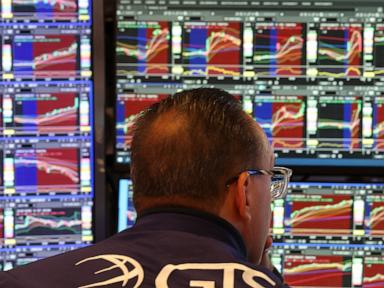
At 9:31 AM on a Wednesday morning in November, Arthur Pendelton sat at his kitchen table in suburban Ohio, staring at a small green triangle on his laptop screen.
Arthur is a composite—a hypothetical retired high school shop teacher whose pension and modest 401(k) sit quietly in an index fund—but his heartbeat that morning was identical to millions of real Americans watching the ticker symbols flash. Just twelve hours earlier, television networks had called the final races of the midterm elections. Power in Washington had fractured. Democrats had taken control of Congress, setting up a fierce legislative tug-of-war with the White House. Learn more on a similar subject: this related article.
Arthur expected dread. He expected red numbers, frantic pundits warning of tax hikes, and the sickening stomach drop of a market panic.
Instead, the Dow Jones Industrial Average erupted. Further journalism by Forbes explores related views on this issue.
Within hours, the index surged past a 1,000-point gain, painting Wall Street in a blinding shade of emerald. Cable news anchors scrambled to explain the contradiction. How could a political shift that promised fierce partisan battles trigger one of the most euphoric single-day rallies in modern financial history? If you listened only to the shouting matches on television, the rally made no sense at all.
To understand why Arthur’s retirement account suddenly jumped by several thousand dollars before he finished his second cup of coffee, you have to stop listening to politicians and start thinking like a bookie.
The Architecture of Relief
Wall Street does not vote with its heart. It votes with a calculator.
For months leading up to the election, institutional investors—the massive pension funds, hedge funds, and algorithmic trading desks that move billions of dollars in milliseconds—had been holding their breath. Markets are resilient creatures. They can survive high interest rates, supply chain bottlenecks, and even geopolitical flare-ups. There is, however, one toxin that poisons every trading floor from Lower Manhattan to Chicago.
Uncertainty.
When one political party holds the White House, the House of Representatives, and the Senate, the legislative highway has no speed limits. Sweeping tax overhauls, massive regulatory rewrites, or sudden shifts in government spending can pass with a single party-line vote. For a corporate chief financial officer trying to plan a five-year factory expansion, total one-party control feels like driving on a mountain road in dense fog. You never know when the rules of the road will suddenly bend.
Consider what happens when Democrats take control of Congress while a Republican sits in the Oval Office—or vice versa. Suddenly, the fog clears, and a concrete wall drops right across the highway.
Gridlock.
To the average citizen watching the evening news, political gridlock sounds like a disease. It conjures images of stalled bills, endless committee hearings, and lawmakers arguing over procedural rules while real problems fester. On Wall Street, gridlock is not a disease. It is an insurance policy.
Think of the American economy as a high-speed train hurtling down the tracks. When Congress is divided against the presidency, neither side can easily yank the emergency brake, and neither side can suddenly reroute the train onto unfamiliar rails. The tax code stays roughly where it is. Major corporate regulations freeze in amber. The rules of the business environment become predictable for at least the next twenty-four months.
When those final midterm votes were tallied, traders did not celebrate a Democratic victory or mourn a Republican loss. They celebrated the return of the legislative stalemate.
The Invisible Hand on the Scale
I remember sitting on a trading desk during a similar midterm upheaval years ago, watching the screens flicker as the night wore on. The air in the room smelled of stale espresso and warm electronics. Around 1:00 AM, when a key Senate race flipped and guaranteed a divided government, the lead bond trader didn't cheer for a candidate. He simply leaned back in his chair, exhaled a breath he seemed to have held since Labor Day, and muttered two words.
"Nothing happens."
In those two words sat billions of dollars in unleashed capital.
When big institutional buyers sit on the sidelines before an election, they park massive amounts of cash in ultra-safe, low-yield corners of the market. They wait. They watch polls. They hedge against worst-case scenarios. The moment the outcome becomes clear—even if that outcome is a fiercely divided government—all that pent-up cash rushes back into equities simultaneously.
A 1,000-point surge in the Dow sounds astronomical, a number designed to make headlines scream. Yet context shrinks the shockwave. When the Dow trades above 35,000 or 40,000 points, a 1,000-point jump represents a move of roughly 2.5 to 3 percent. It is a massive, exhilarating single-day leap, the kind that makes Arthur Pendelton smile over his coffee, but it is rarely an irrational hallucination. It is the financial equivalent of a spring uncoiling after weeks of compression.
But why did the rally happen specifically when Democrats took the gavel?
Let's strip away the partisan noise and look at the cold mechanics of sector rotation. When Democrats gain control of Congress, traders immediately recalculate which industries will thrive and which will face headwinds.
Infrastructure and clean energy stocks often catch an immediate updraft. Investors bet that even in a divided Washington, Democratic leadership will push hard for spending on roads, bridges, broadband, and renewable power—areas where bipartisan deals occasionally survive because every lawmaker loves cutting a ribbon in their home district.
Healthcare stocks, paradoxically, often rally too. Before the election, investors frequently punish pharmaceutical and insurance companies out of fear that sweeping, radical healthcare overhauls might pass. Once government is divided, traders realize that revolutionary healthcare legislation is dead on arrival. Minor tweaks might pass, perhaps some targeted negotiations on drug prices, but the core business model of the American healthcare sector remains intact. Relief buys shares.
Meanwhile, big banks and energy producers might catch a slight chill, bracing for tougher oversight hearings from Democratic committee chairs. Yet because a Republican president still holds the veto pen, investors know those committee hearings are mostly theater. Subpoenas will fly. Executives will testify under harsh fluorescent lights. Cameras will click. And at the end of the day, almost no binding legislation will reach the president’s desk without massive compromise.
The Trap of the Election-Day Trade
Here is where the story takes a dangerous turn for people like Arthur.
Watching the Dow rocket upward by 1,000 points creates an intoxicating illusion. It whispers a seductive lie into the ear of every retail investor watching at home: Politics drives the stock market, and if you guess the election right, you will get rich.
History shows the exact opposite.
If you look back across nearly a century of American market data, from the administration of Herbert Hoover to the modern era, a startling pattern emerges. The stock market has posted positive returns under Democratic presidents with Republican Congresses, under Republican presidents with Democratic Congresses, and under unified governments of both stripes.
In fact, some of the strongest historical periods of stock market growth have occurred during periods of fierce political division. During the late 1990s, a Democratic president sparred relentlessly with a Republican Congress, while the Dow tripled in value. In the early 2010s, a Democratic White House faced a hostile Republican House, triggering debt-ceiling standoffs and government shutdown threats, yet the S&P 500 marched steadily higher year after year.
Why? Because politicians take far too much credit when the economy booms and receive far too much blame when it stumbles.
The true engines of that 1,000-point surge—and the true drivers of your financial future—rarely sit in the Capitol building. They sit inside the marble halls of the Federal Reserve, in the research laboratories of technology companies, and in the everyday spending habits of three hundred million consumers buying groceries, paying mortgages, and booking flights.
When the market surged following the Democratic takeover of Congress, traders weren't just reacting to ballot boxes. They were reacting to the sudden elimination of a tail risk. Once that single-day sugar rush fades—usually within forty-eight to seventy-two hours—Wall Street turns its cold gaze right back to the numbers that actually govern corporate profits.
Inflation rates. Federal Reserve interest rate decisions. Quarterly earnings reports. Labor market tightness.
If the central bank signals that interest rates will stay higher for longer, a 1,000-point election rally can evaporate faster than morning fog on asphalt. If corporate profit margins shrink because raw materials cost too much, no amount of congressional gridlock will save a company’s stock price.
The Emotional Whipsaw
It is deeply human to attach our financial anxiety to political tribe. We are wired for stories of heroes and villains. When our preferred party wins, we expect prosperity; when the opposition takes power, we brace for ruin. Financial news networks feed this instinct endlessly because fear and outrage keep eyes glued to advertisements.
I have watched smart, hardworking people make catastrophic mistakes with their life savings because they let political dread override mathematical discipline.
Imagine a hypothetical investor named Elena, a forty-five-year-old small business owner in Texas. Suppose Elena felt terrified when Democrats took control of Congress, convinced that new regulations and spending bills would crush the economy. Driven by sheer gut instinct, she logged into her brokerage account the night before the election and sold all her stock index funds, moving every penny into cash.
The next morning, she watched the Dow surge 1,000 points without her.
Now Elena faces an agonizing psychological trap. If she buys back in now, she locks in her loss and admits she was wrong, buying shares at a significantly higher price than she sold them just twenty-four hours earlier. If she stays in cash, waiting for the crash she is sure will come, she risks watching the market climb another ten or twenty percent over the next year while inflation quietly eats away at her uninvested dollars.
That single emotional trade—born from confusing political headlines with economic reality—can cost an investor tens of thousands of dollars in lost compounding over a decade.
The market does not care who we voted for. It does not care which cable channel we watch, nor does it care about the righteous anger echoing through social media feeds. The stock market is a cold, unsentimental discounting mechanism. It looks six to twelve months into the future, weighs the probability of corporate earnings growth, prices in the certainty of divided government, and moves on.
Beyond the Green Numbers
Back in Ohio, Arthur Pendelton closed his laptop. The initial thrill of seeing that 1,000-point jump had settled into something quieter, steadier.
He realized that the green numbers on his screen weren't a celebration of harmony in Washington. Quite the opposite. Over the coming months, the newly empowered Democratic majority in Congress would launch investigations, draft ambitious bills that would die in committee, and clash publicly with the White House over budgets and judicial appointments. The headlines would grow louder, angrier, and more exhausting.
Yet beneath all that political friction, American companies would continue doing what they have always done. Engineers would write code. Logistics managers would route cargo ships across oceans. Doctors would treat patients, and factories would stamp steel.
Arthur didn't touch his portfolio. He didn't chase the rally by buying risky stocks at their peak, and he didn't panic when pundits warned that the newfound gridlock would paralyze the nation. He understood the quiet secret that drives Wall Street's wildest days: chaos on Capitol Hill often breeds calm on the trading floor.
He picked up his coffee mug, walked out onto his porch into the crisp November air, and left the ticker symbols to flash on their own.