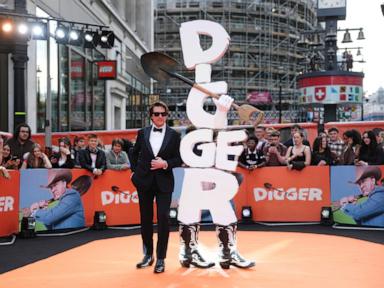
Hollywood is full of expensive gambles, but few recent weekends have laid bare the shifting tides of the film industry quite like the box office showdown between Alejandro G. Iñárritu's Digger and the Colleen Hoover adaptation Verity. One side of the ledger represents a stunning miscalculation for a legacy studio on the brink of structural transformation, while the other proves that built-in reader loyalty remains an absolute juggernaut.
The Costly Miscalculation of Digger
Let's look at the numbers. Digger, directed by Alejandro G. Iñárritu and starring Tom Cruise, limped into theaters with a domestic opening of just $8 million. With an estimated production budget north of $125 million—and some industry reports pegging it closer to $150 million—plus another $100 million dumped into marketing, the film is staring down catastrophic financial losses. International markets offered no shelter either, adding a meager $12 million across 74 territories for a global launch of roughly $20 million.
For Tom Cruise, this marks a historic low point, standing as one of the weakest opening weekends of his career. Warner Bros. tried everything to salvage the project. Reviews were so polarized that the studio even ran "decide for yourself" advertisements in a desperate bid to turn the tide. It didn't work. Audiences stayed away from the sprawling, eccentric satire, proving that star power alone cannot rescue a high-concept gamble that fails to connect with mainstream moviegoers.
The Timing Couldn't Be Worse
What makes this disaster sting even more for Warner Bros. is the timing. Digger served as the final theatrical release for Warner Bros. as a standalone studio before the massive $110 billion acquisition by Paramount Skydance. Closing out an era with a massive box office bomb is a bitter pill for executives who hoped the prestige-heavy project would position them as an awards-season powerhouse. Instead, it became a cautionary tale about ballooning budgets and mismatched audience appeal.
Verity Claims the Throne
While Warner Bros. scrambled to contain the damage, Amazon MGM Studios quietly laughed all the way to the bank. Verity, adapted from Colleen Hoover's bestselling psychological thriller and directed by Michael Showalter, took the No. 1 spot in North America with a solid $32.6 million debut. Starring Dakota Johnson as a ghostwriter tangled in a web of dark secrets with an incapacitated author played by Anne Hathaway, the film capitalized on the unstoppable cultural footprint of Hoover's readership.
Global numbers brought the opening to a healthy $62.5 million, reinforcing a lesson Hollywood relearns every few years: intellectual property driven by a ferocious existing fanbase will routinely outperform auteur-driven risks that alienate general audiences. While critics might debate the literary merits of the source material, the box office results don't lie. Hoover's cinematic pipeline continues to print money, cementing a formula that traditional studios keep trying to bypass with expensive, unpredictable gambles.
The moral of this weekend's box office carnage is brutally simple. Audiences are done paying premium ticket prices for sprawling experiments that lack clear emotional hooks. When given the choice between a polarizing, high-budget auteur piece that nobody understands and a slick adaptation of a page-turner they already love, moviegoers vote with their wallets every single time.