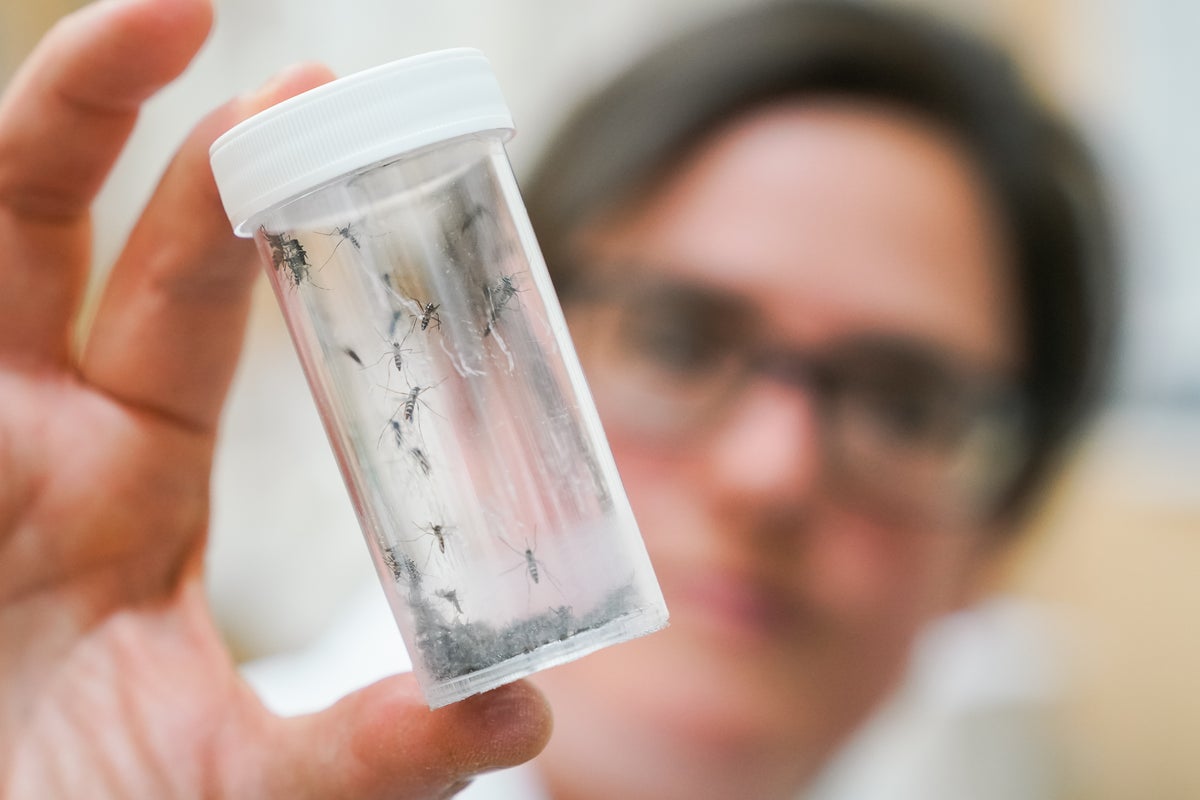
Washington DC is swarming with mosquitoes every summer, and the city is finally fighting back with a strategy that sounds totally backwards. They are releasing hundreds of thousands of extra mosquitoes right into the neighborhood streets.
It sounds like a horror movie plot. If you live in the District, you already spend from May to September covered in itchy red welts. The last thing you want is a truck or a drone dumping a fresh batch of blood-suckers near your backyard. But there is a massive catch that changes everything. Every single one of these 600,000 released insects is male. If you found value in this piece, you should read: this related article.
Male mosquitoes do not bite. They do not have the mouthparts to pierce human skin, and they live exclusively on plant nectar. Their only job in life is to find wild females and mate. Because these specific males carry a specialized biological tweak, those matchups lead to a complete reproductive dead end.
The Science Making Local Swarms Explode From Within
The District is primarily battling Aedes albopictus, commonly known as the Asian tiger mosquito. You know them by their aggressive daytime biting habits and distinctive black-and-white striped legs. Unlike native species that prefer dusk, these invasive pests hunt all day long, making backyards and parks unusable for months. For another angle on this development, see the recent update from The Washington Post.
Traditional chemical spraying does not work well against them. They breed in tiny pockets of water, like a bottle cap hidden under a bush or the lip of a clogged gutter. Truck-mounted foggers spraying pesticides rarely hit these hidden spots. Heavy pesticide use kills off beneficial bees, butterflies, and spiders while allowing the target pests to develop rapid genetic immunity.
The massive release relies on the Sterile Insect Technique or targeted biological incompatibility. Scientists raise millions of mosquitoes in specialized laboratories. Before release, they sort the males from the females with incredible accuracy using automated imaging and physical size filters.
These males are exposed to a specific strain of Wolbachia, a naturally occurring bacteria, or they are subtly modified so their offspring cannot survive past the larval stage. When these lab-grown males mate with the wild females in Washington neighborhoods, the resulting eggs never hatch. The female wastes her entire reproductive cycle laying duds.
Over a few weeks, the local population collapses. You are essentially using the pest's own biological drive to wipe out its family tree.
Why Traditional Pest Control Fails in the District
Washington presents a nightmare scenario for public health officials trying to manage vector-borne insects. The city is a dense patchwork of private backyards, historic brick alleys, overgrown federal parklands, and complex subterranean drainage systems.
Chemical treatments face immediate regulatory and logistical roadblocks. You cannot spray a truck-mounted pesticide into a tight alleyway behind a row of million-dollar townhomes without getting it on patio furniture, vegetable gardens, and pet bowls. Air currents in dense urban environments push chemical mists up and away from the low bushes where Asian tiger mosquitoes hide during the hottest parts of the day.
The geography of the region complicates things further. The humid subtropical climate combined with high summer rainfall creates millions of micro-breeding sites. A single neglected birdbath or a crumpled potato chip bag in Rock Creek Park can produce thousands of new biting insects every single week.
Biological control avoids these hurdles completely. Lab-reared insects do the hard work themselves. They fly into the deep brush, navigate around tight fences, penetrate thick vegetation, and find the exact hidden puddles that human pest control operators could never locate. They hunt down the wild females with a level of precision that no chemical formula can match.
What This Means for Local Public Health
This is not just about stopping the annoyance of itching during a backyard barbecue. The stakes are much higher. Invasive species are efficient vectors for debilitating diseases.
While West Nile virus remains a consistent annual threat in the mid-Atlantic region, public health departments keep a close watch on other tropical diseases. The Asian tiger mosquito can transmit dengue fever, chikungunya, and Zika virus. As global temperatures shift and urban centers grow warmer, the window of time these insects have to breed and spread disease expands each year.
Introducing sterile or incompatible populations reduces the vector density below the threshold required for a disease outbreak to take hold. If a traveling resident returns home with a virus, there simply will not be enough active biting insects around to pick up the pathogen and pass it to the next door neighbor. It creates a shield of biological interruption.
The Logistics of Running a Massive Insect Drop
Managing the rollout of hundreds of thousands of live organisms requires extreme operational precision. You cannot just throw open a box of bugs and hope for the best.
The process starts with intensive local trapping. Public health teams place specialized sentinel traps across various wards to map out exactly where the pest populations are densest. They count the insects, identify the species, and calculate the perfect timing for a release.
[Phase 1: Trapping & Mapping] -> [Phase 2: Sorting Males in Lab] -> [Phase 3: Targeted Field Release]
Releases occur during the early morning hours when the air is cool and damp. If you release lab-reared insects in the blistering midday heat of a DC July, they dry out and die before doing their job. Specialized release vans equipped with temperature-controlled tubes drive slowly down designated residential streets, releasing calculated bursts of male insects into the air. In larger or more inaccessible green spaces, technicians use specialized drones to drop biodegradable pods that open up in the tree canopy.
The program requires a sustained effort over several months. A single drop provides a temporary dip in numbers, but new wild females are constantly emerging from unmanaged water sources. Teams must release fresh cohorts of sterile males week after week to maintain overwhelming numerical superiority over the wild population.
Addressing the Common Fears and Misconceptions
Whenever a city announces it is releasing hundreds of thousands of insects, panic spreads quickly on neighborhood forums and social media groups. People immediately worry about ecological collapse or genetic contamination.
The most common fear is that removing mosquitoes will starve local birds, bats, and frogs. This completely ignores the distinction between native and invasive species. The target here is an aggressive invader from Asia that only arrived in North America in the mid-1980s. Local ecosystems did fine without them for thousands of years. Native predators rely on a massive variety of other insects, like beetles, moths, mayflies, and native non-biting gnats.
Another frequent concern focuses on the long-term safety of the technology. People worry that the modification will somehow mutate or jump to other species. The biology makes this impossible. The mechanisms used, whether via the Wolbachia bacteria or specific genetic traits, are incredibly fragile and self-limiting. Because the offspring of these matings die, the introduced traits disappear from the environment within a few generations if the releases stop. It leaves absolutely no permanent chemical footprint in the soil or water.
Your Blueprint for Defending Your Own Property
While large-scale biological releases do the heavy lifting across the city, they are not a magic wand that excuses property owners from taking care of their own space. A single forgotten bucket behind your shed can pump out enough new biting females to ruin your immediate patio area.
Walk your property line every single week after a rainstorm. Do not just look at obvious things like birdbaths. Check the trays under your potted plants, look inside the folds of plastic tarps covering firewood, and inspect the plastic splash blocks beneath your downspouts. If you have corrugated plastic drainage pipes attached to your gutters, get rid of them or seal the ends with fine mesh. The ridges inside those pipes hold tiny pools of stagnant water that serve as premier breeding hotels.
If you have water features or rain barrels that you cannot empty, treat them with biological larvicides. Look for small, donut-shaped rings containing Bacillus thuringiensis israelensis, commonly called BTI. This is a naturally occurring soil bacterium that specifically targets mosquito larvae when they eat it, destroying their digestive systems without harming birds, fish, frogs, or pets. Drop one in your rain barrel or ornamental pond every thirty days to keep the water completely clean of developing pests. Ensure your window screens are free of small tears, clear away thick ivy where adult insects roost during the day, and coordinate with your immediate neighbors to eliminate shared breeding sites along your property lines.