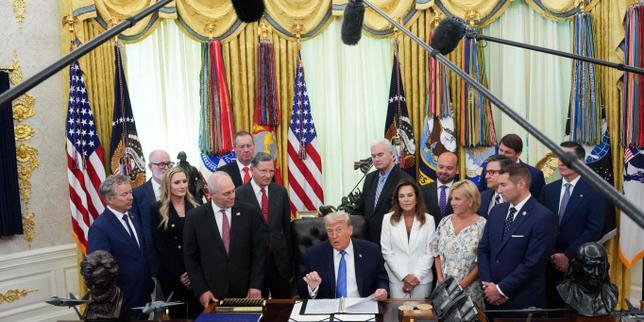
The United States is preparing a sweeping military response in the Middle East following the destruction of an American helicopter, a crisis that has pushed Washington and Tehran to the brink of direct confrontation. President Donald Trump has declared that the U.S. will hit Iran remarkably hard in retaliation for the incident. This sudden escalation transforms localized proxy friction into an immediate national security crisis, forcing global markets and military commands to recalibrate for a broader conflict. The core tension centers on whether Washington can restore deterrence without triggering a regional war that drags in multiple state actors.
Behind the immediate political rhetoric lies a deeply calculated game of asymmetric warfare that has been building for years. The downing of a sophisticated American airframe represents a significant shift in tactical capabilities on the ground. For over a decade, regional militias have relied on low-cost drones and unguided rockets to harass American installations. The destruction of a helicopter, however, suggests the deployment of more advanced anti-aircraft systems, shifting the balance of tactical risk for low-flying Western aviation.
The Shift in Asymmetric Capabilities
Military analysts have watched the steady proliferation of man-portable air-defense systems throughout the region with growing concern. For years, the assumption was that irregular forces lacked the training or the hardware to threaten high-value American aviation assets directly. That assumption is now dead.
The downing of a helicopter requires either a lucky strike with a rocket-propelled grenade or, far more likely, a guided surface-to-air missile. If sophisticated anti-aircraft hardware has moved into the hands of frontline militias, the operational calculus for every rescue, transport, and reconnaissance mission in the region changes instantly. Air superiority is no longer a given; it must be actively fought for in every sortie.
This technological leap points to a breakdown in international interdiction efforts. Despite naval blockades and border surveillance, advanced weaponry continues to flow through established smuggling corridors. The supply chains are resilient, utilizing underground networks and maritime routes that exploit gaps in regional security frameworks to deliver hardware to proxy groups.
Deterrence and the Rhetoric of Total Retaliation
Washington now faces a familiar, punishing dilemma. A weak response invites further attacks by signaling that American assets can be targeted with manageable consequences. Conversely, an overly aggressive strike package risks hitting targets inside sovereign borders, forcing a national government to respond directly to save face.
The current political leadership is leaning heavily into the rhetoric of overwhelming force. The stated objective is to create a psychological barrier, convincing adversaries that the cost of killing American personnel or destroying equipment vastly outweighs any tactical advantage. History shows this strategy yields mixed results. While massive retaliation can pause operations temporarily, it often drives the adversary to refine their tactics, shifting toward even more covert or deniable methods of warfare.
The political stakes at home amplify the military decisions. An administration cannot afford to look weak on national security, especially when state-backed groups challenge American power openly. Every statement issued from Washington is aimed just as much at domestic voters as it is at foreign military commanders.
The Economic Shadow Over Global Energy Corridors
The immediate casualty of any major escalation in this geography is economic stability. The maritime choke points nearby handle a massive percentage of the world's daily oil and liquefied natural gas shipments. Even the threat of kinetic action causes immediate friction in the global economy.
- Insurance Premiums: Maritime underwriting fees skyrocket for commercial vessels operating in the region, driving up the baseline cost of shipping.
- Re-routing Costs: Shipping companies frequently choose to bypass volatile waterways entirely, adding thousands of miles and weeks of travel time around Africa.
- Supply Chain Backlogs: Delayed energy deliveries ripple through industrial sectors worldwide, causing short-term price spikes at the pump and in manufacturing hubs.
These economic levers give regional actors significant leverage. They do not need to win a conventional military engagement with the United States to inflict massive damage; they merely need to make the environment too volatile for commercial commerce to function normally.
The Failure of Proxy Containment
For years, Western strategy relied on the concept of containment, attempting to manage regional friction through targeted sanctions and localized defensive operations. The current crisis exposes the limits of that approach. Sanctions have squeezed economies, but they have failed to stop the funding or development of specialized military wings.
The reliance on local proxy forces has created a layered command structure where intent is frequently obscured. Washington often blames a central state sponsor for every action taken by local actors, while the state sponsor claims these groups act independently. This ambiguity complicates diplomacy. If a militia acts without explicit orders from its backers, a massive retaliatory strike on the backer could trigger a major war over a local command decision.
Strategic Realities of a Multi Front Engagement
The United States military is already stretched across multiple global theaters, balancing commitments in Europe and the Indo-Pacific. A sustained, heavy campaign in the Middle East draws critical resources away from these areas. Intelligence assets, carrier strike groups, and precision munitions are finite resources.
Deploying significant assets back to the desert sands limits Washington's ability to deter adversaries in other critical zones. This interconnected global security environment means that a crisis in one hemisphere directly impacts the balance of power in another. Strategic adversaries understand this dynamic perfectly, recognizing that an American military bogged down in a regional retaliation campaign is an American military with less capacity to respond elsewhere.
The path chosen in the coming days will dictate regional stability for the next decade. Relying solely on the hammer of conventional military might ignores the underlying political and asymmetric realities that created this crisis. True deterrence requires a sophisticated mix of undeniable defensive capabilities, targeted financial disruption, and a clear-eyed recognition that military force alone cannot solve a deeply rooted geopolitical struggle. The pressure is mounting, the assets are moving, and the room for miscalculation has never been smaller.