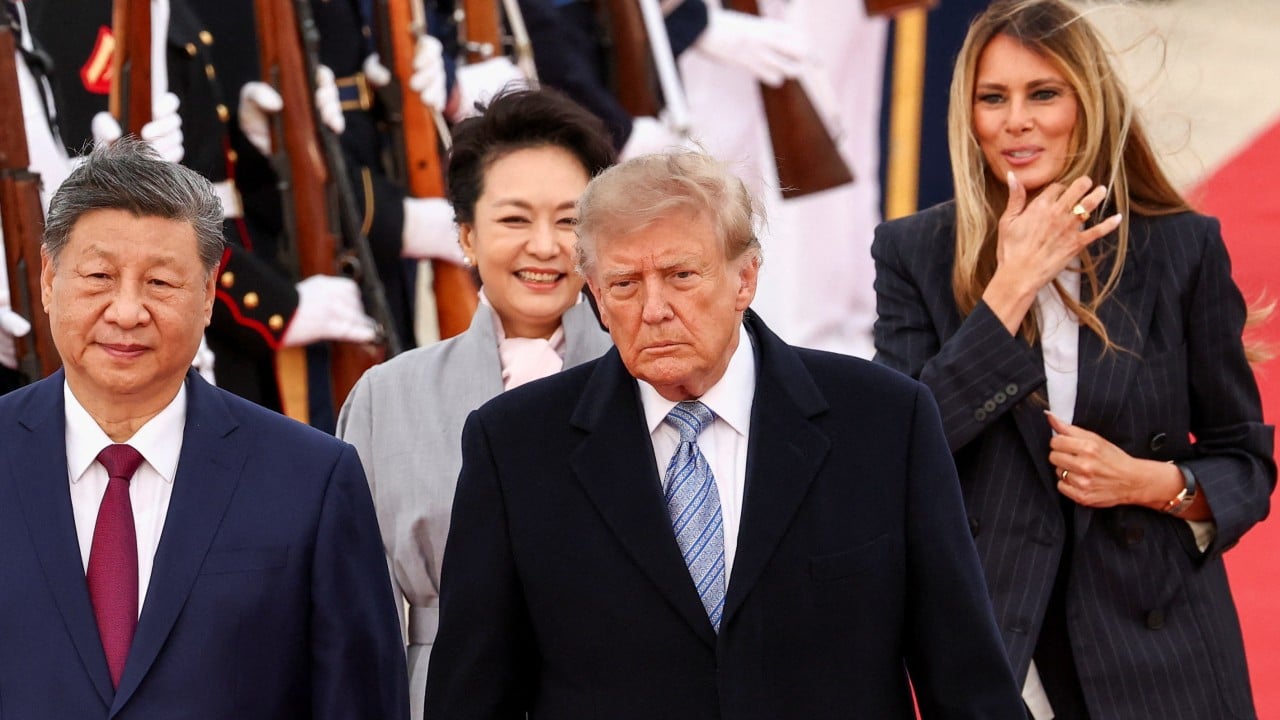
Washington has a summit addiction. Every few months, the foreign policy establishment pops the champagne over another meticulously choreographed handshake between American officials and Xi Jinping, treating photo-ops as substitutes for actual deterrence.
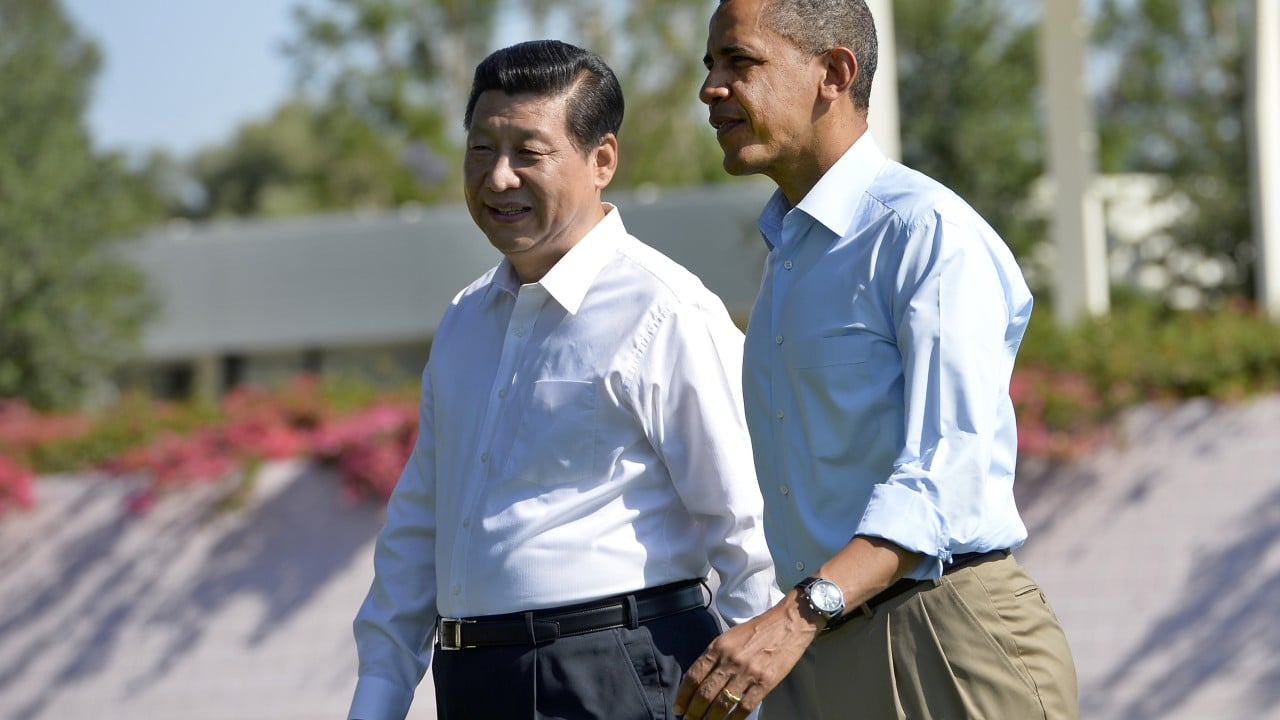
Look at the prevailing Beltway orthodoxy. The mainstream narrative argues that the United States has spent the last several years brilliantly "setting the stage" for Xi Jinping—creating "summits for all diplomatic seasons" to manage competition, install guardrails, and stabilize a volatile superpower rivalry. From the Woodside estate in California to multilateral sidelines across the Indo-Pacific, pundits applaud the sheer frequency of engagement as proof of American diplomatic mastery. Also making waves in related news: How Hong Kong Surrendered Public Land to Elite Golfers While the Housing Crisis Burned.
They are completely wrong.
Setting the stage for an adversary who views diplomacy as an extension of warfare does not stabilize the relationship. It subsidizes Beijing's timeline. While Washington obsesses over the aesthetics of dialogue, Xi Jinping uses those exact stages to fracture American alliances, extract unilateral concessions, and buy time for military modernization and supply chain dominance. Additional details regarding the matter are explored by BBC News.
The Illusion of Diplomatic Guardrails
Let's dismantle the favorite buzzword of modern statecraft: "guardrails."
In theory, guardrails prevent accidental escalation. They keep a cold war from turning hot. In practice, Beijing treats American calls for guardrails as a psychological tell—proof that Washington is more afraid of crisis than China is.
I have watched policy teams and multinational boards burn millions of dollars and thousands of hours preparing for high-level bilateral dialogues, convinced that getting the right people in a room at a scenic retreat will unlock rational compromise. They walk away with a joint statement on climate cooperation or counternarcotics, declare victory, and ignore the fact that the fundamental structural conflicts haven't moved an inch.
Consider what actually happens around these summits:
- The Pre-Summit Freeze: Ahead of a major meeting with Xi, the White House routinely delays defensive arms sales to Taiwan, shelves planned freedom-of-navigation transits in the South China Sea, or pauses export control updates to avoid "poisoning the atmosphere."
- The Summit Spectacle: Xi gets the visual validation he needs for domestic consumption—the leader of the free world meeting him as an absolute equal on his preferred terms.
- The Post-Summit Reality: Once the motorcades leave, the People's Liberation Army resumes gray-zone coercion, Chinese industrial overcapacity continues flooding global markets, and promised working groups become bureaucratic black holes.
When you pay an entry fee just to get a seat at the table, you aren't setting the stage. You are renting it from your competitor.
Why Beijing Loves Washington’s Summit Calendar
To understand why this strategy backfires, you have to stop projecting Western corporate logic onto the Chinese Communist Party. American diplomats view negotiations like a merger or a contract dispute: identify mutual interests, compartmentalize disagreements, and build trust through repeated interaction.
Xi Jinping operates from a Leninist framework of struggle. In his worldview, diplomatic engagement is not an alternative to confrontation; it is a tactical phase within a continuous struggle. Henry Kissinger famously observed in On China that Beijing's diplomatic style relies on patience, psychological pressure, and exploiting the opponent's desire for harmony. Yet modern Washington officials seem to have forgotten the warning embedded in that observation.
Beijing uses the American appetite for summits to achieve three specific objectives:
- Decoupling Washington from Its Allies: Every time the US stages a high-profile bilateral summit with Xi, nervous allies in Tokyo, Manila, and Canberra wonder if Washington is cutting a side deal over their heads. It sows doubt about American reliability while allowing Beijing to present itself as the reasonable adult in the room.
- Enforcing Issue Linkage: Washington loves to compartmentalize—arguing we can compete on semiconductors while cooperating on fentanyl or artificial intelligence safety. Beijing rejects compartmentalization entirely. If the US wants cooperation on a transnational issue, Beijing demands silence on the South China Sea or rollbacks on tariffs.
- Resetting the Clock on Deterrence: Time is the most valuable currency in the Indo-Pacific. Every month spent debating the agenda for the next ministerial visit is a month Beijing uses to expand its nuclear arsenal, harden its financial system against sanctions, and lock up critical mineral processing.
Answering the Questions Beltway Pundits Won't Touch
If you search for coverage of US-China diplomacy, you will find endless variations of the same polite questions. Let's look at what people are actually asking—and why the premises behind those questions are broken.
Are frequent US-China summits reducing the risk of military conflict?
No. High-level summits do not prevent wars; credible deterrence does. Reopening military-to-military communication channels sounds great in a press briefing, until you realize that Beijing cuts those exact lines off the second a crisis actually begins. A phone line that only works when the weather is clear is useless in a hurricane. Real risk reduction comes from denying Beijing the ability to achieve a rapid military fait accompli in the Taiwan Strait, not from having generals exchange business cards in Hawaii or Beijing.
Does setting the stage for Xi Jinping help American businesses?
It gives executives a temporary sugar high followed by a brutal hangover. CEOs love a good summit because it temporarily lowers the political temperature, allowing them to justify keeping supply chains tethered to the mainland for one more quarter. Meanwhile, Beijing uses that breathing room to systematically replace foreign firms with state-backed domestic champions. If your business strategy relies on a bilateral summit to protect your intellectual property or market access, your business model is already obsolete.
What is the alternative to constant diplomatic engagement?
The false binary pushed by the diplomatic establishment is that our only choices are endless summits or immediate kinetic war. That is nonsense. During the height of the Cold War, the United States did not hold annual scenic retreats with Soviet leaders just to prove it was "managing competition." Washington focused on building overwhelming economic, technological, and alliance strength first, forcing Moscow to come to the table only when the structural reality left it no other choice.
The Structural Flaw in "Managed Competition"
The phrase "managed competition" is a contradiction in terms when dealing with a revisionist power. You cannot manage a competitor whose explicit goal is to rewrite the rules of the system you are trying to manage.
Imagine a scenario where two companies are fighting for control of a vital industry. Company A spends half its energy organizing quarterly industry conferences to establish "codes of conduct" and "norms of fair play," regularly pausing its own product launches so as not to offend Company B before the keynote speech. Company B attends the conferences, signs non-binding pledges, and spends every waking hour executing predatory pricing, acquiring patents, and locking down raw materials.
No board of directors on earth would call Company A's CEO a strategic mastermind. They would fire him for malpractice.
Yet in geopolitics, this exact behavior is praised as "adult supervision" and "responsible statecraft."
The Hard Truth About Taking a Harder Line
Let's be intellectually honest about the downside of abandoning the summit treadmill. A posture of quiet, relentless deterrence without the soothing theater of constant high-level summits carries real costs.
First, it unnerves global financial markets. Wall Street hates uncertainty, and a visibly icy relationship between Washington and Beijing triggers volatility in tech stocks, commodities, and cross-border capital flows. Second, it creates domestic political friction; allies in Europe, many of whom are heavily dependent on Chinese trade, will accuse Washington of recklessness if the US stops performing the rituals of diplomatic outreach. Third, there is always a non-zero risk that reduced senior-level contact increases the chance of miscalculation during a localized tactical incident, like a collision between naval vessels or fighter jets.
Those are serious risks. They are also infinitely preferable to the guaranteed strategic erosion of trading tangible leverage for intangible goodwill.
How to Actually Flip the Script on Beijing
If Washington wants to stop playing on Beijing's terms, it needs to invert the current playbook entirely. Stop treating a meeting with Xi Jinping as the ultimate prize of American foreign policy.
- End Pre-Summit Concessions: Never pause an arms sale, delay a tariff, or soften a human rights sanction just to secure a date on Xi's calendar. If Beijing wants a meeting, let them earn it by changing behavior on the ground, not by threatening to withhold their presence.
- Make Summits Boring Again: Strip away the pageantry. Stop inventing bespoke locations and grand thematic framing. Meet strictly on the margins of existing international forums, keep the delegations small, and refuse to issue bloated joint communiqués that pretend consensus exists where it doesn't.
- Lead With Unilateral Strength: Enforce export controls without apology. Harden domestic supply chains for pharmaceuticals, semiconductors, and defense munitions before walking into any negotiating room. Leverage comes from what you can deny your adversary, not how politely you ask them to play fair.
- Empower Allies to Stand Up Front: Instead of positioning Washington as the sole manager of China's rise, put Tokyo, Seoul, Manila, and Canberra at the center of regional architecture. Beijing knows how to manipulate a bilateral stage with the US; it struggles immensely when facing a networked coalition of middle powers acting in concert.
Diplomacy is supposed to be the harvest of strategy, not the seed. Until Washington stops mistaking the stage for the power, Xi Jinping will gladly keep accepting the invitations—and walking away with the prize.