The political commentariat is having a collective meltdown over South Carolina. Pundits are clutching their pearls because Darline Graham admitted out loud what every career politician hides behind a wall of Washington double-speak: she is not well-versed in the esoteric intricacies of foreign military interventions. During a debate against entrenched representative Ralph Norman, she committed the ultimate cardinal sin of modern optics. She told the truth. When pressed on the South China Sea and Taiwan, she stated plainly that national security is not her wheelhouse.
The lazy consensus across the media landscape is that this honest admission makes her unfit for the United States Senate. Editorial boards and beltway insiders are treating her primary runoff victory as a symptom of a broken electorate. They want you to believe that governance requires a specialized class of credentialed hawks who can rattle off acronyms and troop deployments without blinking.
They have got it completely backward.
What the political establishment labels as a disqualifying flaw is actually the single most refreshing qualification to hit Capitol Hill in decades. I have spent enough time watching institutional systems self-destruct to recognize a manufactured crisis when I see one. The people screaming the loudest about expertise are the same architects of endless foreign entanglements and multi-trillion-dollar legislative bloat. We do not need another polished operative who can recite defense department talking points on demand. We need citizens who view the federal apparatus with healthy skepticism and zero institutional conditioning.
Let us define what an expert in Washington actually is. An expert is usually just someone who has spent twenty years learning how to protect a broken status quo from public accountability. When Ralph Norman ran against Graham, his supporters championed his legislative know-how. They touted his nine-year record in the House. What did that legislative know-how buy the taxpayers? More debt, more federal overreach, and a government completely detached from the reality of ordinary citizens. Expertise in a corrupt system is not a virtue. It is an indictment.
Graham’s background is rooted in public administration, specifically managing agencies for the blind and working within state employment structures. She spent her time managing tangible services rather than engineering geopolitical proxy conflicts. When she took over the seat previously held by her late brother, the media expected her to seamlessly adopt the hawkish mantle that defined his decades in office. Lindsey Graham was a quintessential creature of the Senate foreign policy establishment. His sister stepping into that role without an immediate appetite for foreign adventurism is a structural shift, not a bug in the software.
The panic over her debate stumble exposes a deeper establishment anxiety. The donor class and the political machinery hate candidates who refuse to play the game of fake competency. Think about how modern political campaigns operate. Every contender is media-trained to death, coached to pivot away from ignorance, and stuffed with focus-grouped answers designed to offend no one while saying nothing. When someone breaks character and admits they do not spend their dinner hours reading defense think-tank white papers, the system short-circuits.
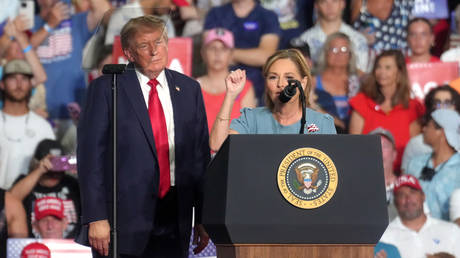
Critics point to the heavy financial backing from Donald Trump and MAGA Inc. as the sole reason for her victory. Trump poured substantial resources into the race and rallied voters in Myrtle Beach to push her across the finish line. That analysis is partially correct, but it misses the cultural undercurrent. The primary electorate did not vote for Graham in spite of her lack of foreign policy pedigree; they voted for her because of it. The base is exhausted by politicians who treat domestic prosperity as an afterthought while writing blank checks for foreign borders.
Imagine a scenario where a senator actually admits limits to their own knowledge instead of bluffing their way into a war. That is not a liability. That is risk mitigation. The greatest disasters in modern American history—from the invasion of Iraq to systemic financial deregulation—were not driven by ignorant outsiders. They were engineered by hyper-credentialed experts who were too arrogant to question their own assumptions. Give me a legislator who admits what she does not know over a polished hawk who is entirely certain about things that are wrong.
The pearl-clutching over foreign policy chops ignores how the Senate actually functions. No single senator dictates military strategy in the South China Sea. Legislation is a collective grift of horse-trading, committee assignments, and staff-driven initiatives. What matters more than an ephemeral grasp of global hot spots is a senator's baseline alignment with the voters who put them there. Graham has made it clear that her focus is domestic accountability and aligning with presidential priorities, leaving the institutional warmongers to sweat out the loss of a reliable vote for endless intervention.
Downplaying her victory also ignores the sheer absurdity of the alternative. Her primary opponent represented the conventional legislative pedigree that voters are actively trying to purge. The establishment wants a return to predictable politics where polite insiders manage the decline of the republic behind closed doors. Graham’s blunt transparency short-circuits that entire playbook.
Stop treating political ignorance as a moral failing when institutional brilliance has consistently proven to be a disaster. The panic in Washington is real because the control grid is failing. When voters stop demanding actors who can fake expertise and start rewarding people who tell the unvarnished truth about who they are, the entire consultant class loses its leverage.
The general election looms, and the narrative will only intensify. Ignore the noise from the commentariat. They are not defending democracy; they are defending their monopoly on insider access.


