The humidity in July over Victoria Harbor sticks to your skin like a wet wool blanket. Standing on the promenade, watching the neon pulse of the skyscrapers bleed into the dark water, you can almost forget the machinery of state operating just beyond the glass towers. Almost.
Then you catch the low, rhythmic hum of a motor cutting through the damp air, or you notice the uniform cut of a silhouette against the city lights.
Ninety-nine years. That is how long the People Liberation Army has existed. It is a number that sounds abstract until you trace its shadow across the cobblestones and glass of Hong Kong, where history is not tucked away in textbooks, but lived out in real time by men and women standing quietly at attention behind closed gates.
The Sound of an Anniversary
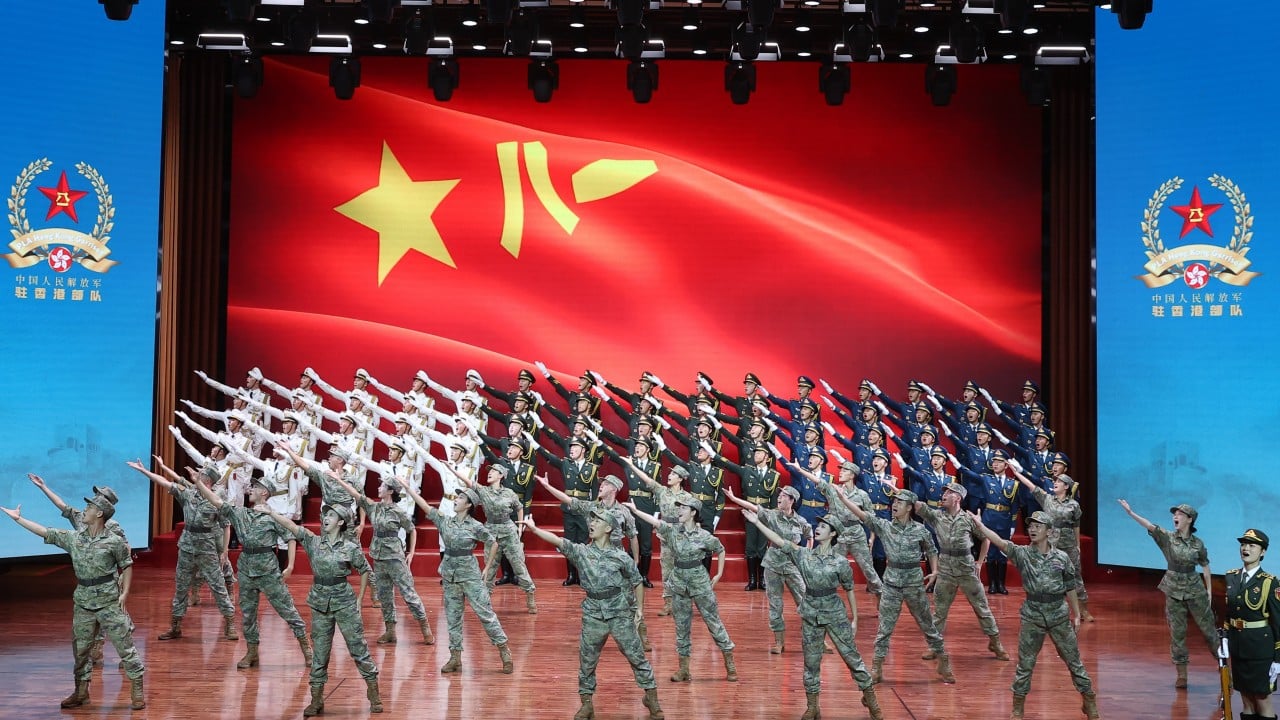
August first arrived with a heavy, overcast sky. Inside the Central Barracks, the air conditioning whirred softly, fighting a losing battle against the summer heat brought in by hundreds of invited guests. Diplomats, local officials, and military commanders gathered under chandeliers to mark the ninety-ninth founding anniversary of China's armed forces.
To the casual observer passing by on Queensway, it was just another evening of blue suits, clinking crystal, and polite applause. Speeches were given. Hands were shaken. Major General Chen Daoxiang, or those holding the reins of the garrison command today, stood before the crowd to reiterate commitments to national sovereignty and the stability of the special administrative region.
Words. Beautiful, practiced, weightless words.
(Note: While the specific names of commanding officers rotate through standard military postings, the institutional presence remains a constant, immovable fixture of the city's geopolitical architecture.)
Consider what happens next when the ceremony ends and the politicians leave. The lights in the grand hall go out. The caterers pack away the silver. But the garrison remains.
Living Inside the Blueprint
To understand what the PLA garrison means to Hong Kong, you have to look past the official press releases and step into the daily rhythm of soldiers who rarely leave their compounds.
Imagine waking up at five in the morning inside the Shek Kong Barracks in the New Territories. The morning mist clings to the slopes of Tai Mo Shan, the highest peak in the territory. While the rest of the city sleeps off the exhaustion of another high-pressure workday, the courtyard echoes with the sharp crunch of boots on asphalt.
Run. Stop. Pivot. Repeat.
These soldiers are young, mostly in their early twenties, plucked from provinces thousands of miles away to serve a tour in a city that speaks a dialect they barely understand. For them, Hong Kong is not a financial capital of gleaming skyscrapers and Michelin-starred restaurants. It is a duty station. It is a series of walls, drills, and restricted zones.
When you talk to residents living in neighborhoods bordering these military sites, like Gun Club Hill Barracks in Tsim Sha Tsui, you find a strange psychological duality. The barracks are protected by high iron fences and security cameras, yet they are stitched seamlessly into the dense urban fabric. You can step out of a bustling shopping mall smelling of roasted duck and coffee, turn a corner, and find yourself staring at a green-painted gate guarded by an unblinking sentry.
Silence is their loudest language.
The Weight of the Past
History does not arrive with a bang; it accumulates quietly, layer by layer, until you can no longer move without hitting it.
Ninety-nine years ago, the PLA was born out of the Nanchang Uprising in 1927—a desperate armed rebellion by the Communist Party against Nationalist forces. It was an army of peasants and revolutionaries fighting with antiquated rifles and raw ideological fervor.
Fast forward nearly a century, and that peasant militia has transformed into a high-tech global powerhouse equipped with stealth fighters, aircraft carriers, and cyber warfare units. Yet, the psychological core of the institution remains rooted in that origin story of survival against overwhelming odds.
When units of this modern military crossed the border into Hong Kong at midnight on July 1, 1997, they did not just occupy British-era barracks. They stepped into a complex psychological space. They became the ultimate physical manifestation of a transition that changed the course of millions of lives.
I remember standing near the waterfront that summer night decades ago, watching the harbor fireworks dissolve into the smog, feeling the palpable nervousness of a populace wondering what tomorrow would bring. The soldiers who marched in then were greeted with a mixture of curiosity, apprehension, and caution.
Today, the garrison is a quiet background hum. People have adapted. Or perhaps, people have simply learned to look away.
Beyond the Reception Hall
A military reception is theater. It is designed to project strength, confidence, and continuity. But the true test of any garrison is not how well it holds a glass of wine at a cocktail party, but how it interacts with the invisible fault lines of a city under stress.
Hong Kong has weathered profound transformations over the past few years. Through economic shifts, public health crises, and intense political restructuring, the garrison has remained a permanent fixture—largely unseen, rarely deployed for public operations, yet always acting as the ultimate anchor of Beijing's sovereign guarantee.
Think of it as a heavy iron anchor resting at the bottom of a busy harbor. Most days, the ships sail right over it without a second thought. The water is calm, the trade flows, the markets open and close with ruthless efficiency.
Yet everyone knows the anchor is there. Its presence dictates how the captain steers the ship, how deep the waters are allowed to get, and how much turbulence the vessel can withstand before dropping line.
The Human Face Behind the Wall
It is easy to turn soldiers into symbols, stripping away their humanity until they are nothing more than extensions of state policy. But spend an afternoon watching the rotation at a garrison gate, and the illusion fades.
You see a young sentry blink against the glare of the midday sun. You notice the slight twitch of a jaw muscles as he tries to maintain absolute stillness while a tourist lingers nearby, taking a selfie with the barracks gate in the background. You wonder what letters he received from home last night. You wonder if he misses the spicy food of Sichuan or the rolling plains of Shandong.
They are actors in a massive geopolitical play, but they are also just kids far from home, bound by strict codes and even stricter isolation.
The ninety-ninth anniversary will pass. Preparations will soon begin for the grand centenary—the monumental one-hundred-year milestone that will undoubtedly trigger massive parades, fiery speeches, and global media analysis.
Until then, the harbor waters will continue to lap against the sea walls of Central. The neon lights will flash their endless cycles of pink and green. And behind the iron gates, shielded from the noise of the city they protect and watch over, the sentry shifts his weight, adjusts his collar, and waits for the next watch to begin.