The rain in Kasumigaseki always feels heavier than it actually is. It slicks the gray asphalt, reflecting the amber glow of vending machines and the cold, white hum of convenience store signs. If you stand outside the subway exit long enough, the crowd becomes a blur of wet umbrellas and bowed heads. Everyone looks the same when they are trying to escape the damp.
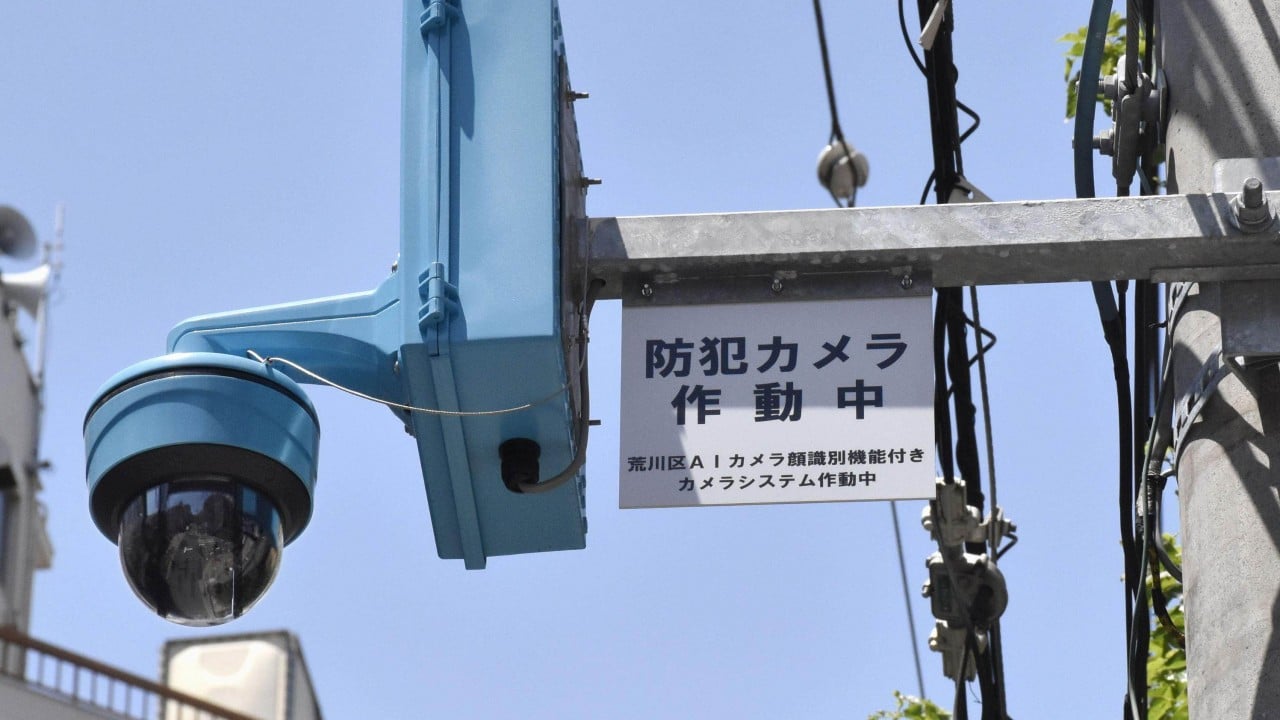
But to the lens mounted on the utility pole, no two faces are identical. Building on this theme, you can also read: The Mechanics of Lunar Laser Power Transmission and the Fallacy of Free Energy.
Japan is aging in a way no society ever has before. It is a quiet crisis, one measured not in sudden catastrophes, but in empty chairs at dinner tables and slippers left untouched in genkan entryways. Every year, thousands of elderly citizens, many carrying the heavy, fogged glass of dementia, step outside their front doors and simply forget how to return. They step into the labyrinth of Tokyo’s transit system or the winding alleys of suburban prefectures, becoming ghosts in plain sight.
The traditional response has been human. Search parties, neighborhood associations, frantic flyers taped to telephone poles. Now, a silent network of glass and silicon is quietly stepping into the void. Experts at ZDNet have shared their thoughts on this trend.
The Anatomy of a Disappearance
Consider a hypothetical citizen. Let us call her Chiyo.
Chiyo is eighty-two. She remembers the taste of summer watermelons from her childhood in Niigata, and she remembers the exact melody of a song her mother sang in 1948. What she does not remember, as she steps onto the platform at Shinjuku Station, is her own address. She doesn't know why she is holding a green plastic umbrella, or why the people around her are moving so fast.
To the passing commuter, Chiyo is just another grandmother in a beige trench coat. To the local police department, she is a ticking clock.
When a person goes missing, the world shrinks. The first hour is filled with phone calls, checked closets, and growing panic. By the third hour, the search radius expands exponentially. In a sprawling megalopolis, finding one specific person among millions is like looking for a particular grain of sand while the tide is coming in.
This is where the trial programs begin. Across several municipalities in Japan, local governments have begun linking public surveillance networks with specialized artificial intelligence algorithms designed for facial recognition.
The mechanics are deceptively straightforward. A family provides a recent photograph of their missing relative. That image is digitized, converted into a string of mathematical coordinates that map the distance between the eyes, the bridge of the nose, the specific contour of the jawline. The system doesn't care about the beige trench coat or the green umbrella. It looks past the clothing, past the hunched posture of exhaustion, searching for the underlying geometry of a face.
Then, the cameras begin to watch.
The Unseen Net
Walking through a Japanese city means being observed. You are captured by the security feeds of department stores, traffic monitors, and railway platforms. For the most part, these feeds are passive. They record history; they do not analyze it. They sit in dark servers, waiting for a crime that justifies their retrieval.
The new pilot programs change the nature of the camera from a passive witness to an active hunter.
As hundreds of thousands of faces stream past the lenses each minute, the software compares each passing visage against the digital signature of the missing person. It happens in milliseconds. The crowd moves, the algorithm calculates, and the machine discards the data of the innocent.
Until there is a match.
A quiet chime on a terminal in a local precinct. A digital pin dropped on a map. An officer is dispatched to a specific street corner, not to arrest, but to guide.
The efficiency is undeniable. During initial testing phases, the time required to locate a wandering senior dropped from days to mere hours. In a winter where temperatures plunge below freezing, those saved hours are the precise margin between life and hypothermia. The technology works. It saves lives. It is a digital shepherd for a vulnerable flock.
Yet, the warmth of that success cannot completely dispel the chill that accompanies it.
The Cost of the Invisible Shield
We are conditioned to fear the eye in the sky. For decades, dystopian fiction has warned us of the panopticon—the state that uses surveillance as an instrument of control, crushing dissent and enforcing a grey conformity.
But the reality we are facing is much more complicated, and far more difficult to argue against. The surveillance state isn’t arriving with iron boots and loud proclamations. It is arriving with a warm blanket and a cup of hot green tea. It is coming out of love, out of a desperate desire to protect our grandparents.
That is what makes it terrifying. How do you say no to a technology that finds a grandfather before he wanders onto a train track? How do you argue for privacy when the alternative is a family mourning an empty grave?
The friction lies in the permanence of infrastructure. Once the cameras are linked, once the algorithms are trained to scan the public square for specific faces, the capability does not vanish when Chiyo is safely home. The system remains. The lenses stay pointed at the sidewalk.
Trust is a fragile currency in the digital age. Even in a society with high institutional trust like Japan, the creeping expansion of facial recognition raises questions that lack easy answers. Who holds the keys to the database? What happens if the definition of "vulnerable" expands? Today, it is an eighty-two-year-old with dementia. Tomorrow, could it be a political dissident? A teenager skipping school? A citizen who owes back taxes?
The technology itself is neutral, a tool of pure mathematics and light. But the hands that wield it are always human, and human hands are prone to grasping.
The Human Geometry
Step back into the shoes of those who live in these monitored spaces. You walk through the station, your mind occupied by grocery lists, work deadlines, the faint ache in your lower back. You do not notice the small black dome affixed to the concrete pillar above the ticket barrier.
You don't want to be watched. No one does. We value the quiet anonymity of the crowd, the freedom to melt into the background and simply exist without being cataloged. It is a fundamental part of the modern urban experience—the liberty of being a stranger.
But then you think of your own father. You think of the afternoon he looked at you with blank, unrecognizing eyes, asking when his son was coming home to visit. You remember the cold knot of terror in your stomach when he wasn't in his garden at dusk.
In that moment of vulnerability, the philosophical arguments about the panopticon begin to feel incredibly distant. They feel like luxury goods, affordable only to those whose families are safe and whole. If a camera could find him, you would cover every inch of the city in glass.
This is the true paradox of the modern technological shift. We are being asked to trade a piece of our collective freedom to buy safety for our most fragile individuals. It is not a transaction forced upon us by a tyrant; it is a bargain we are actively contemplating because we care.
The rain eventually stops in Tokyo. The clouds part, leaving the streets damp and reflective under the morning sun.
At a small police box near the edge of the ward, an elderly woman sits on a metal chair. She is drinking warm barley tea from a paper cup. An officer is speaking to her in low, respectful tones, asking about her favorite foods, keeping her calm while her daughter rides the subway across town to collect her.
She was found three miles from her house, sitting on a park bench, confused by the sunrise. The camera on the corner of the avenue had seen her at 4:15 AM. It had recognized the geometry of her forehead, the specific alignment of her cheekbones, and it had signaled for help.
She is safe. The system worked perfectly.
Outside, the morning commute begins in earnest. Thousands of workers pour out of the station doors, a massive, roaring river of humanity flooding the sidewalks. They walk fast, eyes fixed on their phones, eager to lose themselves in the day's routine. Above them, the little glass lens catches the morning light, silently watching the tide roll in, remembering every face it sees.