The media is fixated on the wrong ledger.
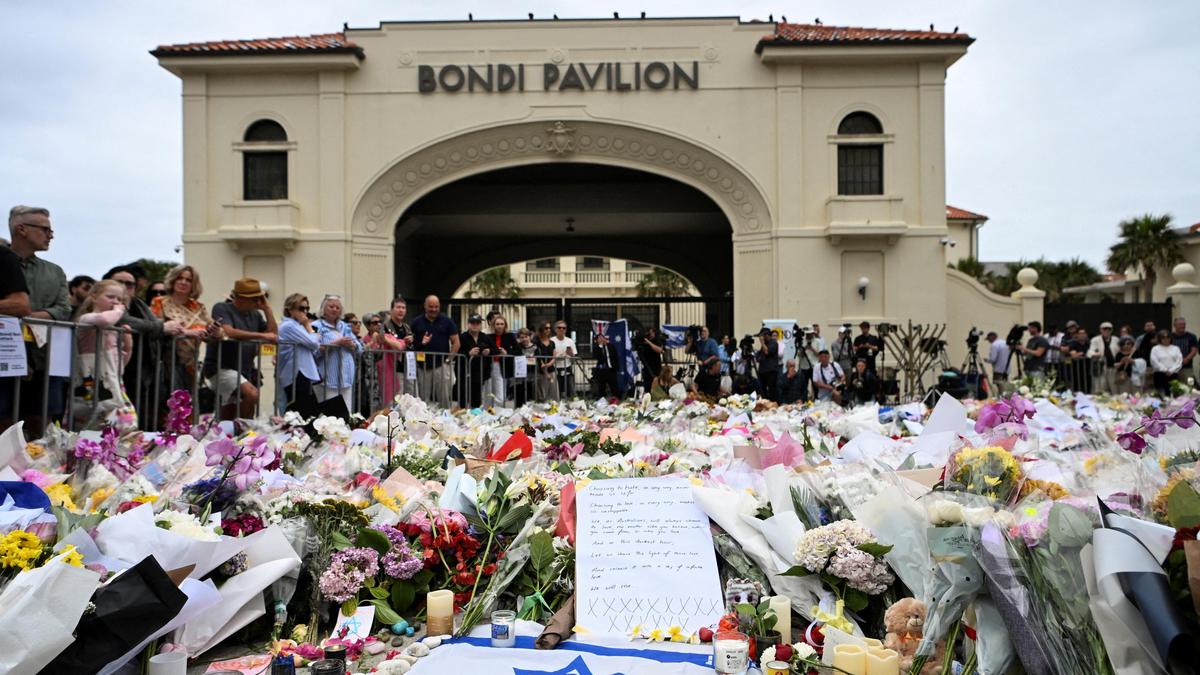
As new weapons charges are filed against the suspect involved in the horrific Bondi Beach Hanukkah festival shooting, the headlines are doing exactly what they always do: obsessing over the hardware while ignoring the software. We are currently watching a masterclass in bureaucratic theater. Police departments stack charges like cordwood—firearms possession, prohibited weapons, intent to cause grievous bodily harm—and the public treats this as progress. It isn't. It is an administrative distraction from a systemic failure that no amount of sentencing can fix.
If you think a few extra counts of "unauthorized possession of a pistol" will prevent the next tragedy, you aren't paying attention. The focus on the specific weaponry used in the Bondi attack is a comfortable diversion. It allows us to talk about laws, permits, and metal instead of the uncomfortable reality of radicalization and the total collapse of preventative surveillance.
The Illusion of the Paper Trail
The "lazy consensus" suggests that if we just tighten the reporting requirements on firearms or add more "aggravating factors" to a charge sheet, we’ve somehow made the streets safer. This is a fantasy.
In Australia, we already have some of the most stringent firearm regulations on the planet. The suspect in the Bondi shooting didn't bypass a system that was "too loose"; he operated in a space where the system simply didn't exist. When a suspect is hit with additional weapons charges weeks after an event, it isn't an act of proactive policing. It’s a forensic cleanup.
Most news outlets are reporting these new charges as a "widening of the investigation." Let’s call it what it is: an admission of initial ignorance. If the authorities are only now identifying the full scope of the arsenal, it means the "gold standard" of tracking prohibited items is effectively a sieve. We are counting the bullets after they’ve been fired and calling it "law and order."
The Problem With Stacking Charges
Prosecutors love to "stack." They pile on every conceivable technical violation to ensure a plea deal or a massive sentence. While this satisfies the primal urge for retribution, it does nothing to address the intent.
- Charge stacking creates a false sense of security. The public hears "ten new charges" and thinks the threat is tenfold neutralized.
- It prioritizes the tool over the ideology. You can ban the weapon, but you haven't touched the motivation that brought that weapon to a crowded Hanukkah festival.
- It obscures the intelligence failure. Every minute spent debating the caliber of a weapon is a minute we aren't asking why the suspect was off the radar in the first place.
The Myth of the Lone Wolf
Every time a shooting occurs at a religious festival, the "Lone Wolf" narrative starts circulating within hours. It’s the ultimate get-out-of-jail-free card for security agencies. If he’s a "lone wolf," then nobody could have seen it coming, right?
Wrong.
In my years analyzing security breaches and extremist movements, the "lone wolf" is almost always a myth. These individuals don't manifest out of thin air. They are products of digital echo chambers, failed mental health interventions, and visible red flags that are ignored because they don't fit a specific, narrow profile.
The Bondi suspect didn't just wake up and decide to attack a Hanukkah festival. That level of targeted violence requires a trajectory. By focusing on the weapons charges, the legal system treats the event as a mechanical failure—a person had a gun who shouldn't have had a gun. But the real failure is the behavioral bypass.
We are obsessed with the "what" (the gun) because the "why" (the radicalization) is too hard to legislate.
Why Gun Laws Won't Save the Next Festival
Australia’s gun laws are frequently cited as the global benchmark. Yet, here we are.
The uncomfortable truth is that for a committed actor, the law is merely a suggestion. When we see new charges for "ghost guns" or "unregistered parts," it proves that the dark market is light-years ahead of the regulators.
- Scenario: A state bans a specific type of semi-automatic.
- Reality: Within six months, 3D-printing blueprints for that exact model are downloaded ten thousand times across encrypted channels.
By the time the police are filing charges for these items, the "crime" has already reached its terminal point. We are fighting a 21st-century ideological war with 20th-century paperwork.
The False Comfort of the Courtroom
People want to see the suspect in the dock. They want to hear a long list of charges read out by a somber judge. It feels like justice.
But true security is boring. It happens in the shadows, months before a shot is fired. It’s the intervention that stops the charge sheet from ever being written. The current media circus surrounding the Bondi weapons charges is the opposite of that. It is loud, reactive, and ultimately hollow.
We are told that these new charges reflect the "complexity of the case." Translated from legalese, that means the suspect had a lot of gear that the police didn't know about until they kicked in his door after the bodies were on the ground. That isn't an "exhaustive investigation." It’s an autopsy of a failure.
Stop Asking "How Did He Get the Gun?"
The question is a trap. It leads to a circular debate about border security and licensing.
The real question—the one that makes people squirm—is: "Why was he allowed to feel that this was his only option?"
We have built a society that is incredibly good at cataloging weapons after a crime and incredibly bad at identifying the rot before it spreads. We monitor the bank accounts of average citizens but miss the digital footprints of extremists. we argue about the "types" of firearms used at Bondi while the underlying tension that fueled the attack continues to simmer, unaddressed, in the background.
If you are waiting for the legal system to "fix" the threat of targeted violence through weapons charges, you will be waiting forever. The law reacts. The law punishes. But the law, in its current bureaucratic form, is incapable of protecting a festival.
The Cost of Retrospective Justice
Every time we focus on the technicalities of a weapons charge, we give the public a sedative. We make them think that the "bad guy" is caught and the "illegal items" are off the street, so the problem is solved.
It isn't. The problem is the vacuum where our proactive intelligence used to be. The problem is the cowardice of leaders who would rather talk about "illicit firearm registries" than the breakdown of social cohesion and the rise of blatant, violent antisemitism.
The weapons charges are a footnote. The tragedy is the main text. And until we stop treating the hardware as the primary issue, we are just waiting for the next "widening investigation" to tell us what we already should have known.
The court case will end. The suspect will likely spend his life behind bars. The politicians will claim the system worked.
But if the system worked, there wouldn't be a charge sheet to read.