An old man sits by a window in the Armenian Quarter of Jerusalem, watching the late afternoon sun ignite the limestone walls into a brief, golden blaze. His hands are mapped with deep lines, the kind carved by decades of quiet endurance. In his pocket, he carries a small, silver coin passed down from a grandfather he never met—a grandfather who disappeared into the Syrian desert in 1915 along with hundreds of thousands of others.
For generations, families like his have lived in a strange sort of limbo. They carried a profound, heavy grief that the world, for complicated political reasons, chose to look past. History is often treated as something solid, carved in granite. But for those who inherit the trauma of unrecognized tragedies, history feels more like smoke. It is everywhere, stinging the eyes, yet constantly denied by the people holding the matches.
Then came a quiet shift in a parliament building less than two miles away.
When a legislative committee in Israel voted to approve a proposal recognizing the World War I mass killings of Armenians as a genocide, it was not just a bureaucratic update. It was a sudden, sharp collision between the frozen world of international diplomacy and the raw, living pulse of human memory. For decades, this specific declaration had been avoided, shelved, and deemed too risky.
Words have weight. Sometimes, the hesitation to speak them tells a larger story than the words themselves.
The Arithmetic of Geopolitics
To understand why a historical truth can take over a century to find its way into official ledgers, one has to look at the invisible ledger of international alliances. Imagine a see-saw. On one side sits the moral imperative to acknowledge the suffering of an entire people. On the other side sits a complex web of modern security agreements, trade routes, and diplomatic relationships.
For decades, the balance leaned heavily toward silence.
Turkey, the successor state to the Ottoman Empire, has long maintained that the tragic events beginning in 1915 did not constitute a systematic genocide. They argue that the deaths were the chaotic casualty of a world war, affecting multiple populations. For any nation navigating the volatile waters of Middle Eastern diplomacy, challenging that stance carried an immediate, predictable penalty: broken ties, canceled defense contracts, and deep diplomatic freezes.
Consider what happens next when a nation decides to re-evaluate that balance. The shift rarely happens in a vacuum. It happens when the existing alliances begin to fray, or when the cost of silence finally outweighs the benefit of strategic compliance.
The debate within Israel has always carried a unique, painful irony. A nation founded in the shadow of the Holocaust understands, perhaps better than any other, the existential vitalness of historical memory. To watch your own government hesitate over the vocabulary of another people's catastrophe created a profound internal friction. It was a tension between the immediate, practical needs of state survival and the foundational values of historical justice.
The Meeting in the Corridor
Picture a hypothetical diplomat walking down a brightly lit corridor during a break in high-stakes negotiations. He is holding a file on regional security. In his mind, he is calculating radar ranges, intelligence-sharing agreements, and energy pipelines. If he acknowledges a century-old atrocity today, the meetings scheduled for next week might dissolve entirely.
To that diplomat, the word genocide is a luxury. It is a tactical piece on a chessboard.
But step out of that corridor and walk into the stone-paved alleys of Jerusalem. Talk to the shopkeepers whose families fled Van, or Erzurum, or Marash. To them, the word is not a chess piece. It is the floor they walk on. It is the reason their family tree has a sudden, violent severing point where dozens of branches simply cease to exist.
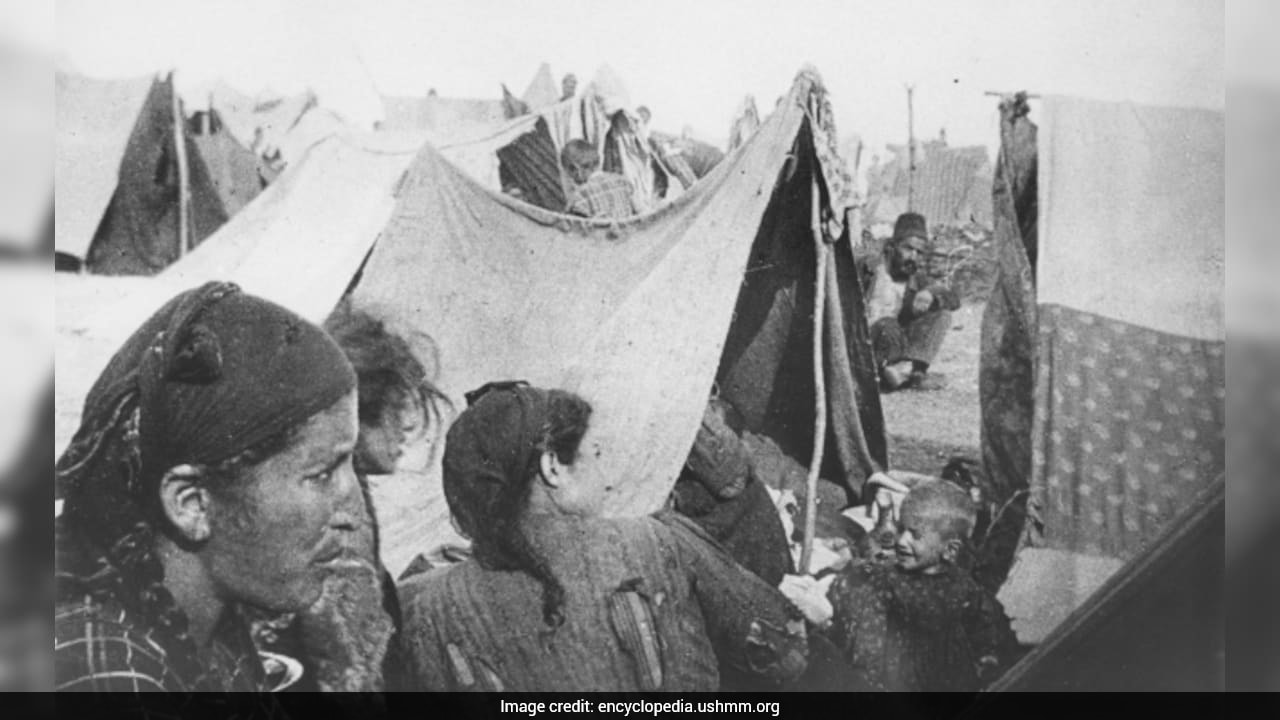
This is the hidden cost of diplomatic pragmatism. It forces ordinary people to live in a world where their family’s defining tragedy is treated as an inconvenient debate. When a government finally alters its stance, it isn't discovering new facts. The archives have been open for a very long time. The telegrams, the diplomatic reports from western observers in 1915, the photographs of columns of starving refugees—they were never missing.
What changed was not the evidence, but the political weather.
The Long Search for Calibration
A recognition proposal passing a committee stage is a significant marker, but it is also a reminder of how slowly the wheels of official truth turn. The process is deliberate, often designed to test the waters, to see how much resistance the declaration will generate before the final ink is dried.
It is a dance of calibration.
But the people waiting for the outcome of that dance do not have the luxury of political timing. They are aging. The generation that could remember the smell of the dust on the march to Deir ez-Zor has already gone. The children of those survivors are now elderly themselves. For them, validation from the state of Israel carries a distinct emotional resonance. It represents an bridge of shared understanding between two peoples who have both looked into the abyss of total destruction.
Truth does not require a parliamentary majority to exist. A fact remains a fact whether a committee votes for it or against it. Yet, human societies run on public acknowledgement. We build monuments, we write textbooks, and we pass resolutions because we know that unacknowledged history behaves like an unhealed wound. It festers. It complicates the present.
The golden light fades from the limestone walls of the Armenian Quarter, leaving behind the cool, blue shadows of evening. The old man by the window closes his hand around the small silver coin. The world outside will continue its loud, chaotic arguments about borders, resources, and alliances. Diplomats will continue to weigh the cost of every syllable.
But for one brief moment, a small piece of paper moving through a parliament building suggested that sometimes, despite the immense pressure of political convenience, the ghosts of the past refuse to be managed out of existence.