The furnace in Tangshan does not care about geopolitics. It cares about heat. It cares about carbon. It cares about the purity of the iron ore arriving from the Pilbara region of Western Australia. Every day, the blast furnace roars, a hungry beast that devours raw material to feed the construction boom of a nation.
Li knows the sound of that furnace better than he knows the voice of his own daughter. He works in procurement for a major steel mill, a role that sits at the intersection of geology and global finance. For years, Li’s life was tethered to a ledger written in green. Every tonne of iron ore, every shipping contract, every negotiation—it all had to be denominated in the US dollar. It was the air he breathed, even though he lived thousands of miles from the banks of the Hudson.
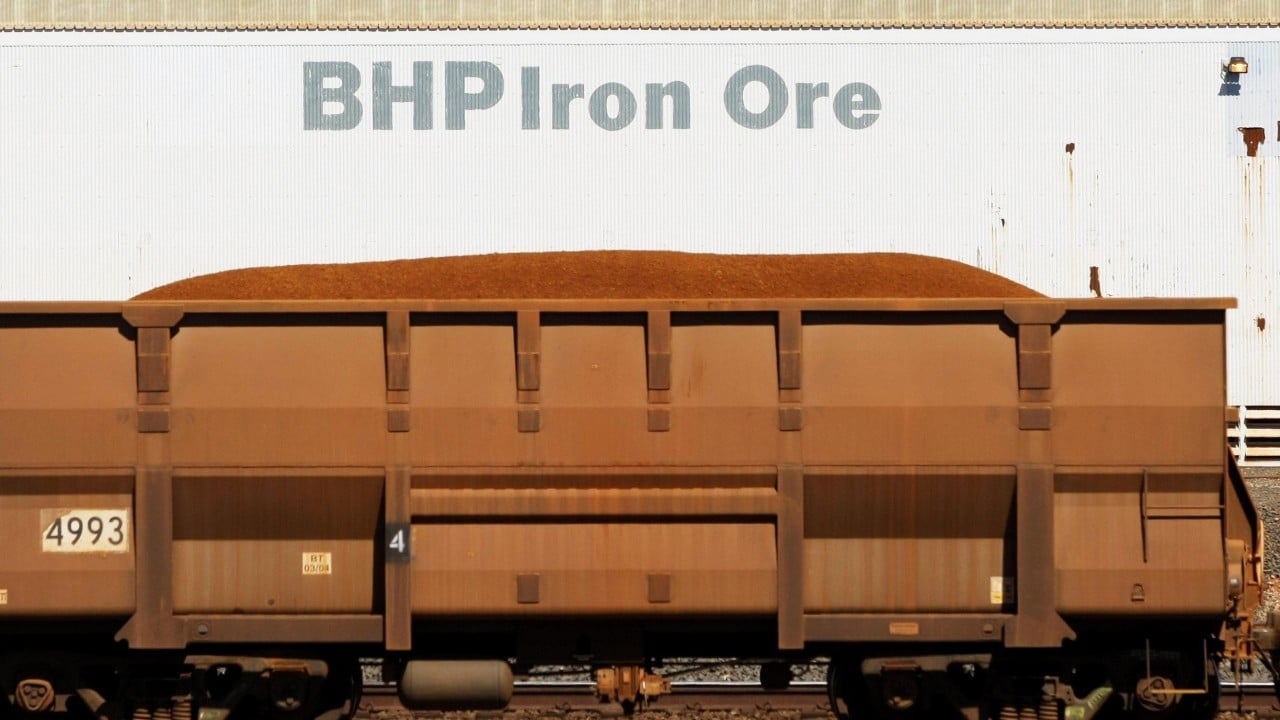
Li grew up believing that the dollar was the universal constant. You bought oil in dollars. You bought copper in dollars. You bought iron ore in dollars. It was a friction he had learned to accept, like the humidity in the summer or the long hours at the mill. But recently, something shifted. It wasn’t a sudden explosion or a grand declaration. It was quiet. It was a change in the fine print of a contract with BHP, the Australian mining titan that digs the red earth of the Pilbara.
They agreed to accept the Renminbi.
For the outside observer, this looks like a mere accounting adjustment. A switch from one currency to another in a digital spreadsheet. But for Li, and for the thousands of traders and bureaucrats in offices from Beijing to Perth, it is a tremor in the foundations of the world.
To understand why this matters, one must look at the invisible friction of global trade. When Li buys iron ore in US dollars, he is forced to dance a complicated two-step. He must acquire dollars, often through a domestic bank, which must then navigate the global clearing system. This system is heavily influenced by the United States. It involves fees, conversion spreads, and, crucially, reliance on a currency that can be subject to the whims of American monetary policy. If the dollar strengthens, Li’s costs skyrocket. If the Fed changes interest rates, his budget destabilizes.
It is a constant, low-level anxiety. He is a hostage to a foreign central bank’s decisions.
Across the ocean, in a glass-walled office in Perth, Sarah, a logistics manager for BHP, watches the same flow of trade. She sees the numbers differently. For her, the priority is efficiency. Her shareholders want stability, and the mining giant wants to keep its customers happy. If the Chinese mills, who represent the single largest buyer of Australian ore, want to pay in Yuan, the question becomes: why not?
The dollar has been the king for nearly a century. It is the currency of choice because it is trusted, liquid, and safe. Yet, that safety comes with a price. The United States has increasingly used the dollar as a tool of statecraft—sanctions, exclusions, and financial blockades. For China, this is a glaring vulnerability. To build an economy that is secure, one must decouple from the central infrastructure of a rival.
This is where the story turns from trade to survival.
The Chinese government has been pushing for the internationalization of the Yuan for years. They want the Renminbi to be a currency that is used, stored, and accepted far beyond their own borders. They want the Yuan to be a medium of exchange that doesn't require a detour through New York or London.
The deal with BHP is not just a commercial arrangement. It is a brick in a wall they are building.
Consider what happens when Sarah accepts Yuan for a shipment of iron ore. That money lands in a Chinese bank account held by BHP. It doesn't disappear. It stays in the system. BHP can use that money to pay for other expenses in China, or they can trade it for other assets. They are holding Yuan. They are invested in the currency. It makes the Yuan a little bit more useful, a little bit more liquid, and a little bit more credible.
The dollar doesn't collapse overnight. It doesn't lose its throne in a single day. Instead, it suffers from a thousand cuts. The BHP deal is one such cut. It represents the slow, methodical erosion of the dollar’s absolute exclusivity.
Li, sitting at his desk in Tangshan, feels this shift in his daily workflow. He no longer has to stress over the conversion rates on the same scale. The trade is cleaner. The bureaucracy is reduced. He is buying ore from his primary supplier using his own country’s money. It is more efficient. It is more direct. It is, in his eyes, common sense.
But there is a deeper, more unsettling reality beneath this.
The global financial order was built on the assumption that everyone would play by the same rules—rules written in Washington. By stepping outside this system, China is signaling that they are no longer satisfied with being a participant in a system they did not build. They are constructing an alternative track.
If this model catches on—if other commodity giants like Rio Tinto or Vale begin to accept Yuan—the ripple effect will be profound. It won't just affect miners. It will affect the global banking sector. Banks will have to hold more Yuan. They will have to create more products denominated in Yuan. The sheer gravity of the Chinese economy will pull more and more of global trade into its orbit.
We often talk about the economy as if it were a game of chess, played by grandmasters in suits. We imagine that there is a master plan, a singular direction. But the truth is more chaotic. It is made of millions of decisions like the one BHP made. It is made of thousands of procurement officers like Li, seeking the path of least resistance. It is made of companies chasing profits and governments chasing security.
The dollar remains the most widely used currency in the world. It is the bedrock of global reserves. It is the gold standard of trust. But trust is not a static object; it is a relationship. And relationships change.
When you look at the raw data—the shrinking percentage of global trade in dollars, the rise of bilateral swap lines between China and its partners, the development of the CIPS (Cross-Border Interbank Payment System)—it is easy to get lost in the abstraction. But try to hold the human element in your mind.
Think of a shipment of iron ore. It is heavy. It is physical. It is essential. It is the stuff of bridges, skyscrapers, and cars. By changing the currency used to pay for that ore, the two nations are quietly rearranging the furniture of the world.
There is a feeling of unease that comes with this. For those of us who have lived through the era of American dominance, the prospect of a fractured financial order is terrifying. We are used to one language of money. We are used to one set of rules. The idea that we might move toward a world where money is fragmented, where it matters where you are buying and who you are selling to, is daunting. It complicates everything.
Yet, we have been here before. Empires rise, currencies reach their zenith, and then they slowly, almost imperceptibly, begin to recede. The pound sterling once held the world’s trust. It was the only currency that mattered. Then, the world moved on.
The shift to the Yuan is not an inevitable triumph of China’s vision. It is a reaction to a world that feels increasingly volatile. It is a hedge against uncertainty.
Li finishes his day at the mill. He logs off his computer. Outside, the sky is grey with the haze of industrial production. The ships are still coming. The ore is still being offloaded. The furnace is still burning. He goes home, perhaps thinking about his dinner or his plans for the weekend. He doesn't think about the global monetary order. He doesn't think about the decline of the dollar.
He just knows that his job is a little bit easier today than it was yesterday.
And that, perhaps, is the most powerful force in the world. Convenience. Efficiency. The desire to simplify a complex life. When you add up millions of those small desires, they become a tidal wave. They become a change in direction.
The BHP deal is a signpost. It points toward a future where the dollar is one of many, not the only one. It points toward a world where trade is determined not just by the market, but by the strategic necessity of insulating oneself from the reach of a superpower.
We are living through a transition that will likely take decades. We will not see a flash of light, but a series of small, quiet steps. The iron ore will keep moving. The money will keep changing hands. But the world, bit by bit, is being rewired.
The furnace in Tangshan will continue to roar. The miners in the Pilbara will continue to dig. The ocean will continue to bridge the gap between them. But the language they use to speak to each other—the language of value, of risk, and of exchange—is beginning to change its accent.
The tide is going out on the old world, and the water rising around our ankles is colder, darker, and entirely new. We are watching the slow, deliberate untethering of the global economy from a single, dominant anchor. Whether this leads to a more balanced world or a more fragmented, chaotic one, is the question that will define the rest of our lives.
The iron is still hot. The deal is signed. The shift is already underway.