Numbers have a funny way of stripping the blood out of a room.
When a press conference podium is wiped down with disinfectant, when a microphone clicks on, and when a leader leans forward to speak about war, human beings are almost immediately converted into statistics. Five hundred here. Zero there. A minor injury list over there. A chart. A ledger. A quick arithmetic exercise meant to reassure a nervous public or shield a political decision. If you liked this article, you might want to look at: this related article.
We have seen this script played out repeatedly across decades of modern governance, but every time a leader compares body counts across different conflicts, something fundamental breaks in our collective comprehension of human loss.
To understand why, you have to leave the briefings in Washington and travel down a gravel driveway in a small Midwestern town. For another look on this development, see the recent update from USA Today.
The Arithmetic of Grief
A porch light stays on all night. Inside, a mother sits at a wooden kitchen table with a cup of instant coffee that went cold two hours ago. She isn't thinking about grand strategic grand bargains, regional stability in the Persian Gulf, or geopolitical power projection. She isn't comparing her son to the thousands who fell at Normandy or the tens of thousands who died in Vietnam.
To her, the number is not a fraction of a larger historical canvas. The number is one. One empty chair at Thanksgiving. One voice that won't answer on Christmas morning. One bedroom that remains exactly as it was on the morning of a deployment.
When political leaders stand before cameras and downplay casualties by placing them side-by-side with grand historical bloodbaths, they are engaging in a very old, very human form of psychological self-defense. If a conflict results in dozens of casualties instead of tens of thousands, the rhetoric frames it as a success. A victory of restraint. A minor cost on the balance sheet of empire.
But mathematics is a cruel instrument for measuring human suffering.
When former President Donald Trump addressed conflict casualties—specifically framing military impacts, brain injuries, or fatal engagements involving Iran and broader Middle Eastern operations as minimal compared to historical wars—it was not an isolated impulse. It belonged to an established tradition of presidential rhetoric designed to minimize political damage and manage public appetite for conflict.
Yet the rhetorical strategy carries an invisible price.
How Statistics Obscure the Human Reality
Consider what happens when a military base comes under fire.
In January 2020, following the strike on Iranian General Qasem Soleimani, Iran launched a volley of ballistic missiles at Al Asad Airbase in Iraq. In the immediate aftermath, initial reports declared there were no American fatalities. Public statements framed the event as a manageable, low-impact exchange. The rhetoric emphasized that nobody had been killed.
Then came the gradual trickle of reality.
Days later, reports surfaced of traumatic brain injuries. First eleven service members. Then thirty-four. Then over fifty. Eventually, more than one hundred service members were diagnosed with blast-induced traumatic brain injuries.
When questioned about these injuries, the response at the highest level was to classify them as "headaches" and "not very serious" compared to the loss of limbs or lives in other historical battles.
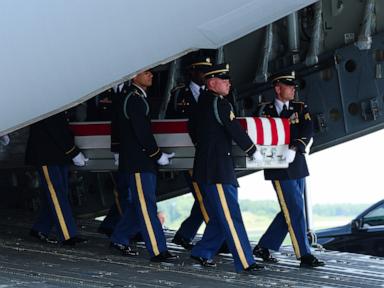
To a strategist looking at a ledger, a severe concussion is indeed preferable to a casket wrapped in an American flag. On paper, the decision to downplay the outcome protects national morale and prevents escalation. But to the blast victim who returns home unable to tolerate bright light, struggling with memory loss, or fighting chronic vertigo, the statistical comparison feels like an erasure.
It poses a fundamental question: At what point does political framing cross from strategic communication into the dismissal of sacrifice?
The Historical Trap of Comparative Loss
Politicians do not invent these comparisons out of nowhere. They draw from a deeply ingrained tendency in human psychology known as comparative minimization.
When WWII saw over forty million civilian and military deaths globally, subsequent leaders began using that unimaginable scale as an anchor. Vietnam cost over fifty-eight thousand American lives. The wars in Iraq and Afghanistan cost thousands of service members and hundreds of thousands of civilians.
Against those staggering figures, a conflict that yields a dozen casualties, or a non-fatal missile strike, looks tiny on a line graph.
- The Grand Scale: World War II and Korea set an impossibly high threshold for what traditional rhetoric labels "high casualties."
- The Modern Shift: Precision warfare and advanced body armor reduced immediate fatalities, but expanded non-fatal, life-altering injuries.
- The Rhetorical Disconnect: Leaders continue using legacy standards of death counts to measure modern military impact, ignoring the invisible wounds of modern combat.
This creates a dangerous blind spot. By constantly comparing today's casualties to yesterday's catastrophes, we normalize smaller losses. We treat human lives as acceptable friction in geopolitical maneuvering.
The Invisible Cost of Strategic Language
War language has always been engineered to soften impact. We say "collateral damage" instead of civilian deaths. We say "surgical strikes" instead of high-explosive bombardments in populated areas. We say "downplay" when a leader minimizes loss.
When leaders compare losses in Iran-related incidents or regional proxy battles to larger wars, they are attempting to project control. They want the public to feel that the situation is contained, that the strategic decisions made were sound, and that the costs were low.
But for the families involved, and for the veterans who bear the physical and psychological marks, low cost is a relative myth.
A non-fatal blast injury alters a marriage. It changes how a father interacts with his children. It alters a career path. It creates a lifetime of reliance on veteran healthcare systems. None of these outcomes show up on a politician's comparative chart during a news conference.
When rhetoric ignores these realities, public trust erodes. Citizens begin to sense that their leaders view sacrifice not as an sacred trust, but as a public relations variable to be managed.
Reclaiming the Weight of Human Life
If we are to understand the true cost of conflict—whether involving Iran, regional proxies, or global superpowers—we have to abandon the comforting lie of comparative body counts.
A conflict is not small simply because a larger conflict happened eighty years ago. A casualty is not negligible simply because it didn't end in a funeral. Every decision to deploy force, every exchange of missiles, and every tactical choice carries a human toll that cannot be discounted for political expediency.
When leaders attempt to reassure us by saying "it could have been worse," they are technically correct. It can always be worse. History proves that without end.
However, leadership requires something deeper than pointing at historical bloodshed to justify present pain. It demands an honest accounting of every single cost—every life lost, every brain injured, every family forever changed—without hiding behind the safe distance of comparative math.
The porch light on that quiet Midwestern street isn't lit for a statistic. It is lit for a person. Until our national conversation reflects that simple truth, the true cost of war will remain buried beneath a mountain of political rhetoric.