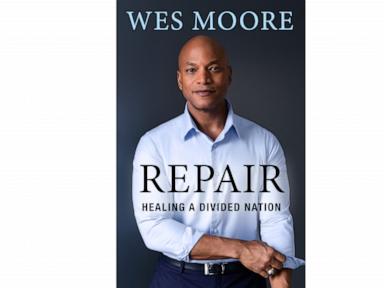
Every politician claims they're writing a book to spark "honest dialogue," and Maryland Governor Wes Moore is sticking to that exact script. On November 11, 2026, Henry Holt & Company announced that Moore will release Repair: Healing a Divided Nation on March 9, 2027.
If you follow American politics, you already know what a spring book release from a two-term governor usually means. Moore keeps insisting he isn't running for president in 2028. Nobody in Washington believes him.
The Real Story Behind the Book Deal
You don't sign a major publishing deal right after winning reelection just to share warm anecdotes about local governance. You do it to build a national fundraising list, lock down cable news interviews, and introduce yourself to primary voters in Iowa and New Hampshire.
Moore's publisher, Henry Holt & Company, confirmed the March 9, 2027 release date. In the official announcement, Moore framed the project as an effort to "rediscover our common humanity and relearn our common purpose" rather than a standard political memoir. He wrote that his goal was to pose hard questions and document stories of service from his life both inside and outside of public office.
That sounds nice on a dust jacket. In practice, Repair lands squarely in the middle of an emerging Democratic shadow primary. Look at the calendar:
- November 2026: Moore wins reelection in Maryland and immediately announces the book.
- March 9, 2027: Repair hits shelves, giving him a built-in reason to tour battleground states under the guise of a literary promotion.
- Late 2027: Exploratory committees typically form right after book tours wrap up.
He isn't alone in this playbook. Former Transportation Secretary Pete Buttigieg announced his own upcoming book, Next, while openly admitting he is "more inclined than not" to mount another White House bid. Pennsylvania Governor Josh Shapiro, California Governor Gavin Newsom, and Kentucky Governor Andy Beshear have all used books to stake out ideological territory ahead of 2028. When every potential contender drops a hardcover within eighteen months of the primaries, it's not a coincidence. It's a coordinated audition.
How Repair Differs From Moore's Earlier Work
To be fair to Moore, he isn't some backbencher hiring a ghostwriter to slap together campaign speeches. He was a legitimate bestselling author long before he ever ran for governor. Between 2010 and 2015, before serving as CEO of the Robin Hood Foundation, he published five books.
His 2010 breakout hit, The Other Wes Moore, worked because it was deeply personal and structurally brilliant. It contrasted his own path—Rhodes Scholar, Army combat veteran, White House fellow—with another Baltimore man who shared his exact name and neighborhood, yet ended up serving a life sentence for murder. That book resonated because it examined systemic failure through a specific, human lens. His 2015 follow-up, The Work, leaned into his transition from Wall Street to nonprofit leadership.
Repair represents a sharp pivot away from biography toward national prescription. According to publisher materials listed through library catalogs like Boston Public Library's BiblioCommons, the book promises a "bold interrogation of where America falls short, what we still do right, and how we rebuild, together". It explicitly targets the erosion of public trust and urges readers to move past Washington's partisan gridlock.
The risk here is obvious. Personal stories are gripping; policy manifestos disguised as unity pleas often feel sanitized. Early reactions from Maryland voters and political observers on forums like Reddit already point to that tension, with some critics arguing the promotional blurb reads like cautious consultant-speak rather than a radical truth-telling exercise. Moore's challenge in Repair will be proving he still has the sharp narrative voice that made him famous, rather than the smoothed-over cadence of a cautious candidate.
The Maryland Record Meets National Ambition
When a sitting governor writes a book about healing a divided nation, voters are going to check their receipts back home. Moore enters this national conversation with undeniable assets, alongside real political vulnerabilities that opponents will weaponize the moment his book tour starts.
As only the third Black governor in American history, Moore brings star power and executive experience that few Democrats can match. Supporters point to his push to end child poverty, expand broadband access across rural and urban Maryland, and revive Baltimore's Red Line transit project as proof that he governs with tangible results.
At the same time, critics in Annapolis and beyond argue his record isn't quite the bipartisan kumbaya story Repair implies. State Republicans have slammed his administration over budget pressures, rising fees, and aggressive efforts to redraw Maryland's congressional voting maps—moves they claim undercut his rhetoric about bridging divides. Even some progressive allies have questioned how far his incremental, business-friendly approach actually goes on housing affordability and utility costs.
A book about national unity works great in a friendly television interview. It gets much harder to defend when primary rivals start dissecting your state budgets and redistricting battles line by line.
Why Political Books Rarely Change Minds Anymore
Let's be honest about the modern political publishing industry. Almost nobody buys a governor's pre-campaign book expecting earth-shattering revelations.
Campaigns use these releases for three specific mechanical reasons:
- Legal campaign finance flexibility: Before a candidate officially files with the Federal Election Commission, book advances and promotional events allow them to travel, hire staff, and build media infrastructure without triggering strict federal contribution limits.
- Data harvesting: Pre-order links, book tour ticket registrations, and newsletter sign-ups feed directly into digital donor databases.
- Media immunity: Morning shows and podcasts will gladly give an author twenty minutes of uninterrupted airtime to discuss "healing a divided nation," whereas a declared candidate faces hostile cross-examination about polling and donors.
Does Repair actually solve polarization? Of course not. No single hardcover from Henry Holt & Company is going to fix decades of media fragmentation, economic anxiety, and institutional distrust. Moore himself acknowledges this in his statement, noting that "in the work of repair, every fingerprint matters".
What the book does accomplish is putting Moore firmly on the top tier of Democrats positioning themselves for the post-2028 era. By framing his pitch around civic restoration rather than grievance, he is betting that exhausted voters want an optimistic unifier rather than another partisan street fighter.
What to Watch Before the March 2027 Release
If you want to know whether Repair is just another vanity project or the true launchpad for a presidential campaign, ignore the dust jacket and watch Moore's schedule over the next few months.
Pay close attention to his book tour stops once the itinerary drops in early 2027. If he spends his spring speaking at independent bookstores in Baltimore, New York, and Washington, he's selling books. If he suddenly finds pressing literary reasons to hold town halls in Des Moines, Manchester, Columbia, and Las Vegas, you have your real answer about 2028.
Watch how he handles policy specifics during the press rollout, too. Voters are tired of lofty speeches about "common purpose". If Moore uses Repair to lay out concrete, uncomfortable truths about how Democrats lost working-class trust—and what he actually got wrong during his first term—the book could genuinely elevate the national conversation. If he sticks to safe platitudes, Repair will simply take its place on the crowded shelf of forgotten pre-campaign memoirs.
You can check pre-order listings through major booksellers or place a hold via your local library system, such as the Boston Public Library catalog, ahead of the March 9, 2027 publication date. Read it not as a finished blueprint for fixing America, but as the opening argument from a politician who clearly plans to ask for a much bigger job soon.