The lazy consensus among global health journalists is always the same. When an Ebola outbreak hits Central or West Africa and locals resist medical intervention, the Western press points and stares. They paint a picture of backwardness, superstition, and ignorance. They tell you that one in three people think the virus is a "satanic disease" or a fabrication, and they blame this "ignorance" for the body count.
This narrative is not just patronizing. It is factually wrong, and it actively makes outbreaks worse.
For over a decade, international aid organizations have treated medical distrust in conflict zones as an information problem. They assume that if you just beam enough public health flyers, megaphone announcements, and foreign doctors into a village, the skepticism will evaporate.
It does not. Trust is not a data upload.
The reality is that local skepticism toward Ebola interventions is entirely rational. Until global health institutions accept that their own structural failures, historical exploitation, and militarized responses drive this resistance, people will keep dying in isolation units.
The Rational Logic of Distrust
Let us strip away the colonial lens. Imagine living in a region where the state has been absent or predatory for decades. The roads are broken. The local clinics lack basic antimalarials, clean needles, or running water. People die routine, preventable deaths every single day from typhoid, cholera, and malnutrition while the international community looks away.
Then, a novel hemorrhagic fever appears.
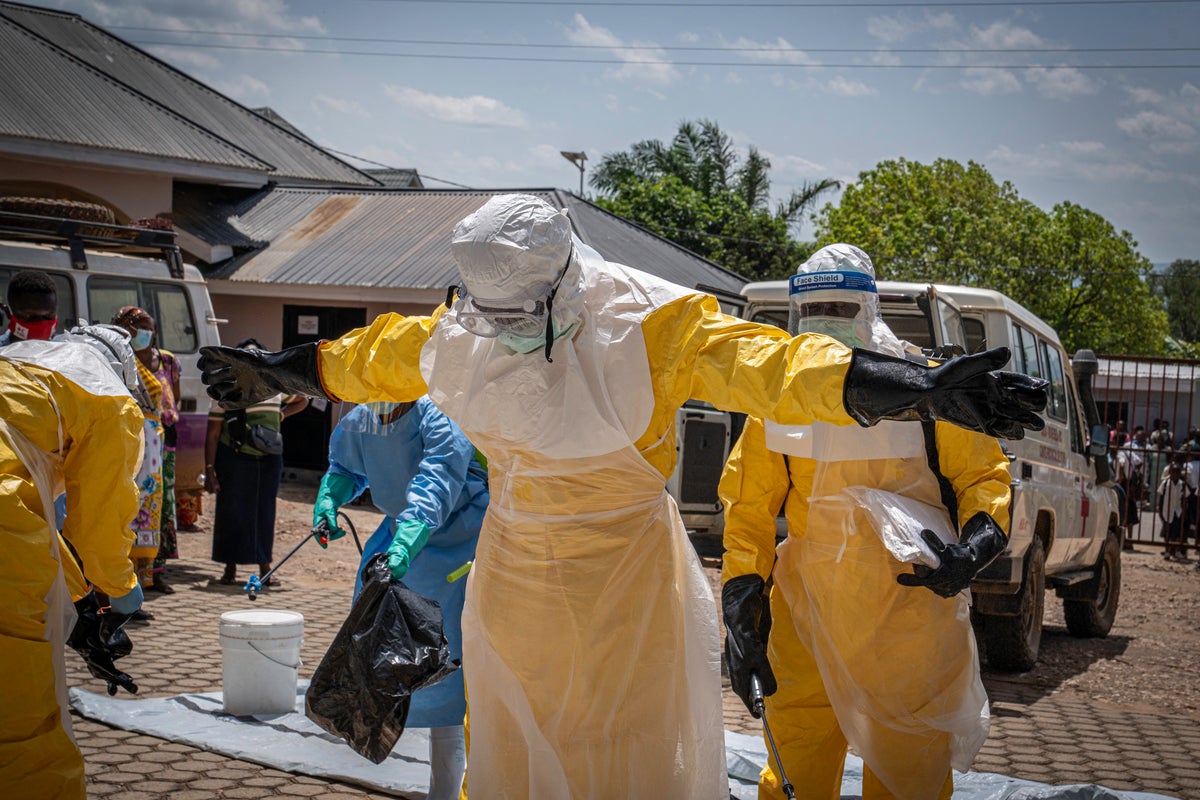
Suddenly, white Land Cruisers roll in. Millions of dollars in foreign aid materialize overnight. Foreigners arrive in terrifying, faceless personal protective equipment (PPE). They set up bio-secure tents, isolate your sick relatives, and bar you from conducting sacred burial rites. If those relatives enter the tent, they frequently come out in a body bag. To the local population, the infrastructure arrives only when a disease threatens to cross international borders and endanger wealthy nations.
If you lived through that, concluding that the disease was engineered, politically motivated, or spiritually cursed is not a sign of low intelligence. It is a logical deduction based on available evidence. The intervention looks like an invasion because, structurally, it functions like one.
Anthropologists like Melissa Leach and Paul Richards have documented this for years. During the 2013–2016 West African outbreak and subsequent epidemics in the Democratic Republic of Congo (DRC), resistance was highest where political marginalization was deepest. The skepticism is not about the science of virology. It is about the politics of containment.
The Body Bag Economics of Global Health
I have watched public health campaigns incinerate millions of dollars doing exactly the wrong thing. They hire expensive Western consultants to design "community engagement" strategies that amount to lecturing people who are fighting for daily survival.
The standard medical model treats an Ebola Treatment Center (ETC) as a black box. You put a loved one in; you rarely see them alive again. In the early days of major outbreaks, mortality rates inside these centers often mirrored or exceeded the mortality rates of staying at home, largely because patients were brought in too late.
When a community sees that entering a clinic equals death, boycotting the clinic is a survival strategy.
+-----------------------------------------------------------------+
|                    The Vicious Distrust Cycle                   |
+-----------------------------------------------------------------+
|                                                                 |
|   Historical Neglect -> Sudden Militarized Medical Intervention |
|                                   |                             |
|                                   v                             |
|   Forced Isolation & Alienation <- Community Hides the Sick     |
|                                                                 |
+-----------------------------------------------------------------+
Furthermore, the enforcement mechanisms used by governments often validate the worst conspiracy theories. During the 2018–2020 outbreak in the eastern DRC, health responses were heavily securitized. Armed escorts accompanied vaccination teams. When you use assault rifles to deliver a vaccine, you are no longer running a health campaign. You are running a military operation. You cannot terrorize a population into trusting a syringe.
Dismantling the Premise of the "Ignorant Local"
If you look at the public health data, the premise that skepticism stems from a lack of education falls apart completely. Studies conducted by the Harvard Humanitarian Initiative during the DRC outbreaks showed that individuals with higher levels of formal education were sometimes more skeptical of the official government response, not less. They understood the political corruption inherent in their systems and assumed the Ebola funds were being plundered by elites—which, in many cases, they were.
The media loves the quote about a "satanic disease" because it fits a predefined trope of exotic mysticism. What they miss is the metaphor. When a local person calls Ebola "satanic" or "spiritual," they are often describing a destructive, incomprehensible force that disrupts the social fabric, tears families apart, and defies the natural order. Westerners use terms like "unprecedented biological threat" or "existential crisis." The vocabulary is different; the underlying trauma is identical.
To fix this, the entire architecture of outbreak response must be flipped.
- De-escalate the PPE visual terror: Early triage can be done without looking like an astronaut. Human contact matters.
- Decentralize care: Stop building massive, centralized, foreign-run fortresses. Fund, equip, and protect local community health workers who already possess the social capital required to trace contacts.
- Treat the whole person, not just the pathogen: If an Ebola clinic offers state-of-the-art care for a viral fever but turns away a child dying of basic dehydration from diarrhea next door, the community will reject it.
The Cost of Telling the Truth
The downside to this contrarian approach is that it is messy, slow, and expensive. It requires building permanent healthcare infrastructure instead of dropping temporary, flashy containment tents that look good on cable news. It requires international agencies to cede control and funding directly to local institutions, which bureaucratic structures loathe to do.
It means admitting that the global health apparatus is deeply flawed, often prioritizing the safety of Western borders over the dignity of African patients.
Stop asking how to fix the "ignorance" of the population facing an outbreak. Start asking how to fix the arrogance of the institutions responding to it.
Until the intervention values the lives of the community before the virus breaks out, the community has every reason to lock their doors when the aid trucks arrive.