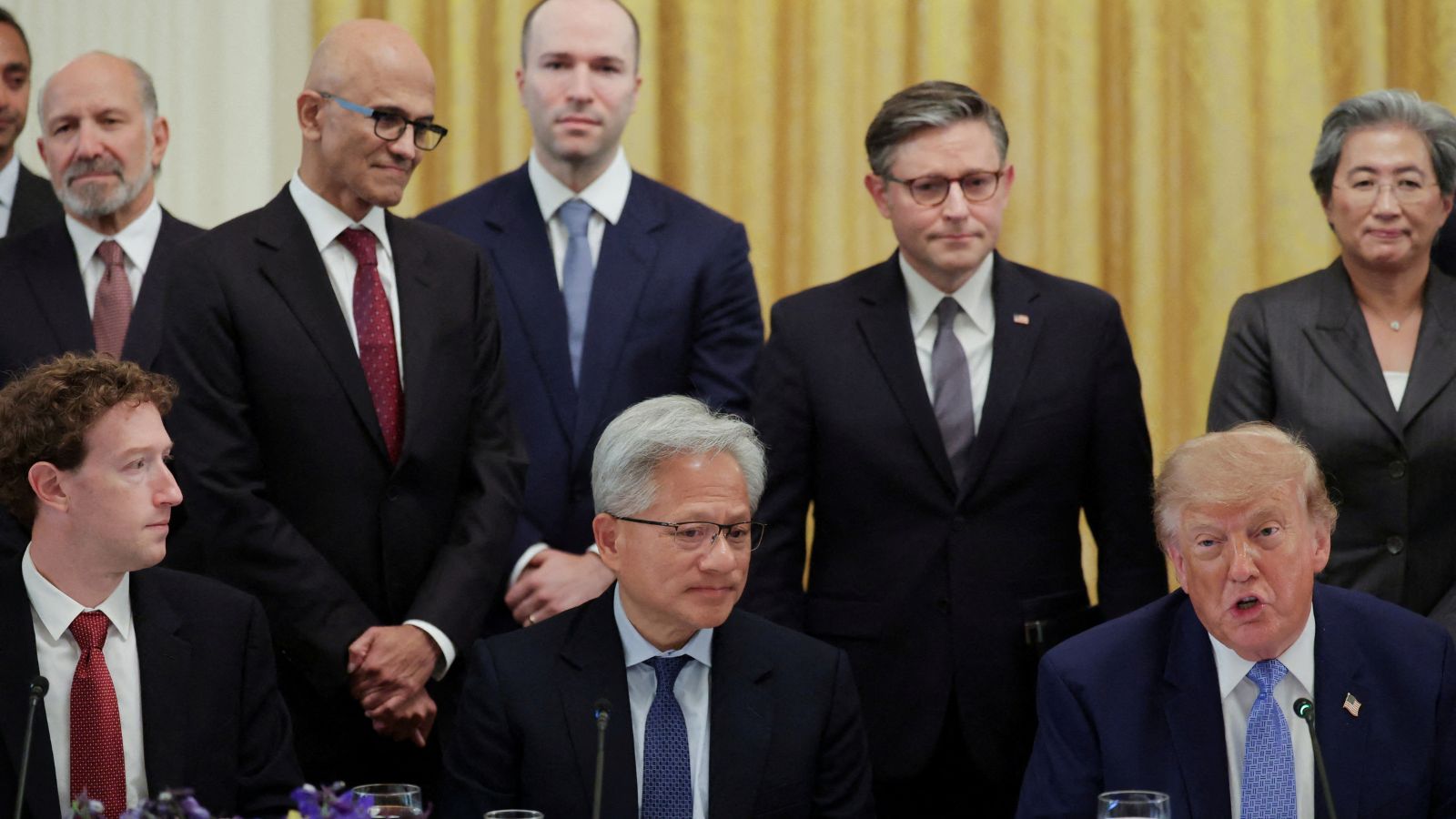
When the chief executive officers of America's most powerful artificial intelligence firms filed into Washington to shake hands on a high-profile safety pact, the political theater was absolute. Billed as a historic agreement resembling a constitutional framework for the digital age, the accord gathered leaders from OpenAI, Google, Microsoft, and Meta under a collective banner of voluntary accountability. The rhetoric sounded monumental. Corporate executives spoke of shared responsibility, while administration officials framed the moment as a triumph of proactive governance over an unpredictable technological wave.
Strip away the podium lights, however, and the reality looks entirely different. This agreement is not a binding charter protecting the public interest. It is a calculated exercise in corporate self-defense, engineered by legal teams to preempt heavy-handed regulation while cementing an oligopoly that effectively locks out smaller competitors. Meanwhile, you can explore related developments here: Why Trump Calling the AI Accord Morally Binding Means Almost Nothing.
For months, the policy corridors of Washington have buzzed with anxiety over generative models. Lawmakers, caught flat-footed by the rapid commercialization of large language models, scrambled to draft legislation. They talked of licensing regimes, federal oversight boards, and mandatory safety audits before deployment. Tech giants watched these legislative maneuvers with alarm. A poorly drafted statute could cripple development cycles or expose firms to immense liability if a model hallucinated dangerous instructions or leaked proprietary data.
The voluntary safety pact offered an elegant escape hatch. By pledging adherence to internal testing regimens, red-teaming protocols, and watermarking standards, the industry effectively told regulators they could police themselves. It is an old playbook. Whenever a disruptive industry faces imminent public scrutiny and the threat of statutory shackles, its leaders rally around voluntary standards. These agreements create the illusion of strict oversight while preserving maximum commercial flexibility. The pact establishes no independent enforcement mechanism, levies no fines for non-compliance, and relies entirely on the good faith of corporations whose primary fiduciary duty is maximizing shareholder value, not safeguarding humanity. To understand the complete picture, we recommend the detailed report by Mashable.
Consider the mechanics of the commitments themselves. Signatories agreed to conduct internal safety evaluations, share information with government researchers, and invest in cybersecurity. Yet the definitions of what constitutes a dangerous capability remain conveniently vague. When a company determines its own threshold for when a model becomes too powerful to release safely, that company holds absolute power over the narrative. There is no independent arbiter verifying whether a safety test was rigorous or whether a potential risk was quietly minimized to preserve a product launch schedule.
This dynamic highlights a deeper market distortion: regulatory capture disguised as philanthropy. Compliance is expensive. Building sophisticated red-teaming operations, hiring ethics boards, and maintaining dedicated safety legal teams require immense capital reserves. For a multi-trillion-dollar enterprise, these costs are a rounding error. For an open-source startup or a mid-sized competitor operating on venture capital, compliance overhead represents a formidable barrier to entry.
When industry titans lobby for safety frameworks that emphasize rigorous pre-deployment vetting, they are not merely guarding against catastrophic risks. They are erecting a moat. By institutionalizing a complex bureaucracy around safety compliance, they ensure that only entities with massive balance sheets can afford to play in the major leagues. Smaller labs that rely on decentralized development and open-source collaboration find themselves squeezed out, painted by association as reckless actors operating outside established norms.
The historical parallels are glaring. In the early days of commercial aviation and pharmaceutical manufacturing, established players similarly embraced federal safety standards only after they had established dominant market positions. Regulation became a tool to crush upstart rivals who could not afford the compliance burden. The artificial intelligence sector is following this exact trajectory at an accelerated pace.
What the public misses in the breathless coverage of these high-level summits is the fundamental asymmetry of power. The government lacks the technical infrastructure to independently verify the claims made by these tech firms. The talent pool required to audit frontier models resides almost entirely within the private sector. When federal agencies rely on corporate labs to test their own systems, they are outsourcing regulatory authority to the very entities they are supposed to regulate.
This setup leaves ordinary users and downstream businesses exposed to the commercial pressures of rapid deployment. Despite public pledges to prioritize safety, the race to monetize machine learning remains frantic. Features roll out weekly, integration deepens across critical infrastructure, and reliance on autonomous decision-making systems expands into healthcare, finance, and logistics. When failures occur—whether through algorithmic bias, flawed financial advice, or automated security vulnerabilities—the corporations point back to their voluntary agreements as proof of due diligence, insulating themselves from tort liability while consumers bear the fallout.
The debate over artificial intelligence governance is frequently framed as a choice between immediate restriction and unbridled innovation. That framing is a false dichotomy manufactured to paralyze meaningful policy debate. Real accountability requires statutory mandates with teeth, independent technical auditing bodies funded by public resources, and strict liability frameworks that hold developers accountable for foreseeable harms caused by their deployed systems.
Handshakes in the Roosevelt Room and grand declarations about constitutional principles do not alter the underlying incentives of capital accumulation. As long as market dominance rewards speed and scale above all else, voluntary safety pacts will remain what they were designed to be: a sophisticated shield protecting corporate dominance from the messy reality of genuine public oversight.