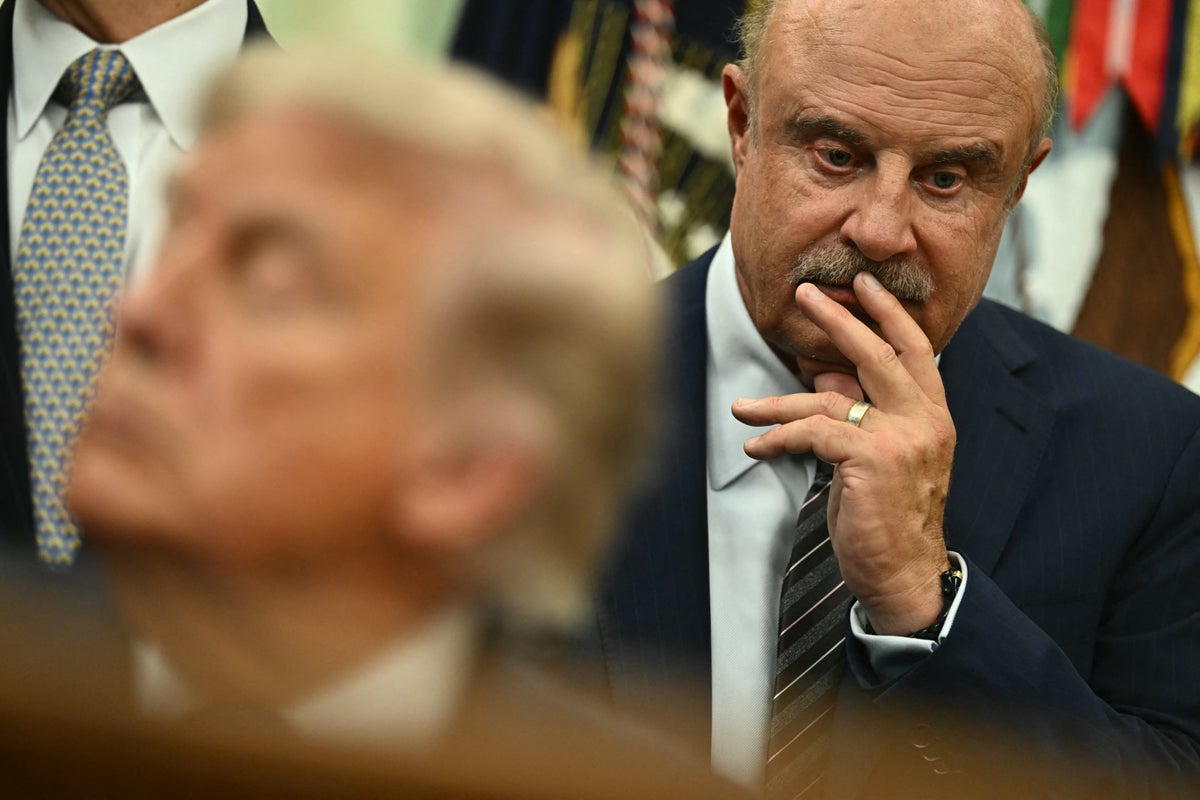
When you think of high-level national security vetting, television talk show hosts aren't usually the first people who come to mind. Yet during a recent interview on Ross Coulthart's Reality Check, Dr. Phil McGraw dropped a bomb that sounds straight out of a political thriller: the White House asked him to review classified government UFO files to gauge how the public would react if the truth came out.
It turns out officials weren't looking for another theoretical physicist to debate propulsion systems. They wanted someone who spent five decades sitting across from everyday people dealing with existential shock, trauma, and deep psychological distress.
The Psychological Experiment Behind the Declassification Effort
The logic behind bringing in a TV psychologist is surprisingly sound when you strip away the tabloid framing. If an administration is genuinely weighing full disclosure of Unidentified Anomalous Phenomena (UAP), the technical data is only half the battle. The bigger question is socio-psychological panic. How do millions of people process the confirmation that human technology isn't at the top of the food chain?
Dr. Phil didn't hold back his opinion on the matter. He sharply criticized the government's long-standing secrecy, calling the idea that everyday citizens are too fragile to handle the truth a "patronizing view."
"There has been a huge cover-up, and there are things in our atmosphere we cannot explain and did not build." — Dr. Phil McGraw
📖 Related: The Map Makers of the Indo-Pacific
His takeaway after reviewing the materials was straightforward: people can take bad news, hard news, and world-shifting news, but they can't stand being lied to.
What Was Inside the Classified Briefings
Dr. Phil highlighted several historical documents and military directives that shaped his perspective on the cover-up:
- Lt. General Nathan Twining's 1947 Assessment: Early official documentation acknowledging that observed aerial phenomena were real objects rather than psychological hallucinations or visionary experiences.
- The 1949 Los Alamos Classified Conference: Secret meetings held specifically to address mysterious aerial craft hovering directly over sensitive nuclear weapons infrastructure.
- The CIA's 1953 Robertson Panel: A calculated media strategy aimed at debunking routine sightings publicly while maintaining absolute silence on legitimate, unexplained military encounters.
- JANAP Directives: Strict military regulations that placed commercial and defense pilots under threat of prison sentences, severe fines, and prosecution under the Espionage Act simply for reporting UAP encounters.
He also pointed out that the public is only seeing a fraction of the actual evidence. The short, blurry video clips shown in mainstream news broadcasts are intentionally degraded. According to McGraw, high-resolution gun-camera video, crystal-clear optical tracking, and comprehensive multi-sensor radar logs exist inside intelligence archives—data that lawmakers like Representatives Tim Burchett and Anna Paulina Luna are actively fighting to unseal.
The Real Shift in Government Secrecy
The government's strategy around UAPs has shifted from total denial to managed exposure. By drip-feeding declassified documents, launching official databases like the PURSUE archives, and testing reaction metrics through public figures, federal agencies are executing a slow-burn desensitization campaign.
They know that an abrupt, unvarnished reveal creates societal shockwaves. By floating materials to trusted cultural figures and mainstream commentators first, the state softens the blow. It turns a sudden catastrophic revelation into an ongoing, manageable news cycle.
If you want to track where government disclosure goes from here, keep an eye on Congressional oversight hearings, monitor official releases from the All-domain Anomaly Resolution Office (AARO), and watch how messaging evolves from soft-media figures to formal defense briefings. The drip of information isn't an accident—it's the strategy.