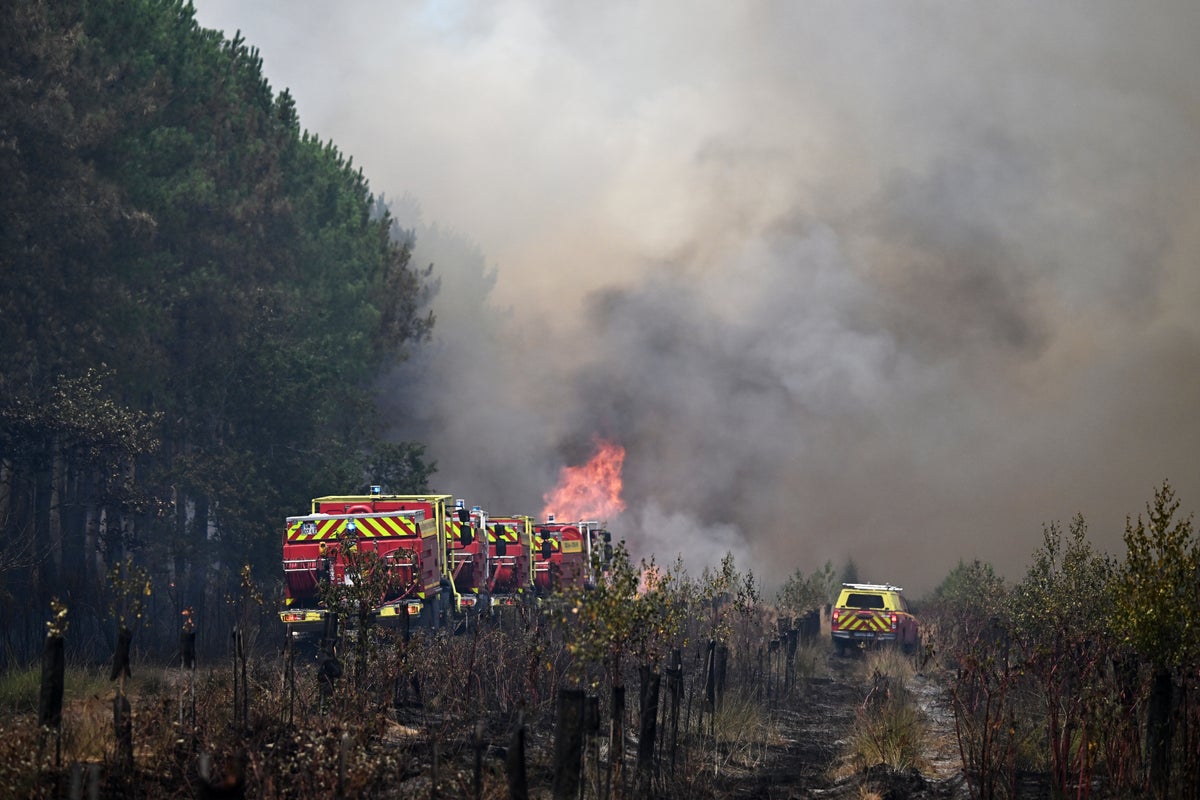
Spatial analysis of wildfire proliferation across Western Europe reveals that traditional regional risk models are fundamentally obsolete. Contemporary mega-fires in France and Spain are no longer isolated meteorological anomalies, but predictable outcomes of systemic mismatches between fuel management, thermal-evaporative forcing, and the expanding urban-forest interface.
Understanding the geography of these events requires shifting focus away from raw hectares burned and toward the underlying physical and structural drivers that dictate ignition, propagation velocity, and containment failure.
The Thermodynamic Mechanics of European Drought
Standard media reports frequently attribute modern European wildfire seasons entirely to low seasonal precipitation. However, operational meteorological data demonstrates that current wildfire vulnerability is driven primarily by thermal-evaporative demand rather than simple rainfall deficits.
The physical mechanics operate through a strict thermodynamic sequence:
- Elevated atmospheric temperatures accelerate the vapor pressure deficit.
- The super-heated air extracts moisture from surface soils, river basins, and live vegetation at an exponential rate.
- High antecedent winter or spring precipitation paradoxically amplifies long-term risk by maximizing early-season biomass growth, which subsequently cures into a dense, continuous fuel bed under rapid drying conditions.
This creates a high-energy fuel matrix across regions historically considered low-risk, such as southwest France near Bordeaux and central Spain north of Madrid. The problem is thermodynamic suction: the atmosphere acts as an active moisture pump, converting healthy biomass into volatile kindling long before mid-summer.
The Geographic Shift of Vulnerability
For decades, public policy and civil defense infrastructure in France and Spain treated wildfire hazard as a localized Mediterranean periphery issue. Risk was geographically bounded to southern coastal tracts, where dry shrublands and historic climate patterns aligned.
That geographic assumption has collapsed. The expansion of risk zones into temperate and oceanic zones is governed by two structural vectors.
[Thermal Anomalies] ---> [Vapor Pressure Deficit] ---> [Rapid Soil & Plant Desiccation]
                                                                  |
[Biomass Accumulation] ---> [Continuous Fuel Beds] <--------------+
                                   |
                                   v
             [Megafire Propagation Across Non-Traditional Zones]
The first vector is fuel continuity. Decades of aggressive fire suppression policies have disrupted natural fire regimes, preventing low-intensity ground fires that periodically clear dead understory. In its place, unchecked organic matter accumulation has generated continuous fuel corridors across administrative boundaries.
The second vector is the expansion of the urban-forest interface. As populations migrate toward rural-amenity regions, residential subdivisions, infrastructure networks, and tourism nodes intersect directly with unmanaged forest ecosystems. Emergency responders are forced to prioritize immediate asset protection and mass evacuations over direct tactical suppression of the fire front, substantially lowering containment efficiency.
Economic and Operational Bottlenecks in Fire Suppression
Quantifying the failure of current suppression models requires examining the resource allocation bottleneck. When extreme weather parameters—characterized by high ambient temperatures, low relative humidity, and high wind velocity—coincide with heavy fuel loads, initial attack success rates drop close to zero.
- The Airpower Ceiling: Aerial firefighting assets, including water-scooping aircraft and heavy helicopters, face strict operational safety thresholds during high winds and extreme thermal updrafts. When smoke density reduces visibility below legal safety limits, aerial intervention is grounded entirely, leaving ground crews exposed to high-intensity crown fires.
- Logistical Overextension: Simultaneous multi-region outbreaks stretch national civil protection fleets past their breaking point. Moving heavy machinery and specialized personnel across international borders introduces command friction, interoperability challenges in communication protocols, and delayed tactical deployment.
- The Suppression Trap: Relying exclusively on suppression infrastructure creates moral hazard. Communities built within high-risk forest interfaces often lack mandatory local fuel-break engineering or building material hardening, transferring the ultimate liability onto state emergency budgets while accumulating more combustible biomass year over year.
Strategic Re-Engineering of Fire Resilience
Addressing the escalating scale of wildland fires in Western Europe demands a transition from reactive suppression to structural landscape management. Tactical interventions must abandon the objective of eliminating all fire from the ecosystem. Instead, strategies must focus on lowering energy release rates when fires inevitably ignite.
Controlled, low-intensity prescribed burns executed during windows of high fuel moisture must be systematically scaled up to break the horizontal and vertical continuity of forest biomass. Concurrently, zoning laws must enforce defensible space perimeters around rural and semi-urban developments, substituting volatile resinous tree species near infrastructure with fire-resistant deciduous buffers. Capital expenditure must pivot away from procuring additional suppression aircraft and toward long-term landscape engineering, decentralized water storage reservoirs in remote forest zones, and community-level hardening to ensure structural survival during extreme fire front passages.
Southern Europe Wildfires Analysis
The video details how ongoing climate anomalies and severe heatwaves are escalating the frequency and intensity of extreme fire weather across regions like France and Spain.
http://googleusercontent.com/youtube_content/1