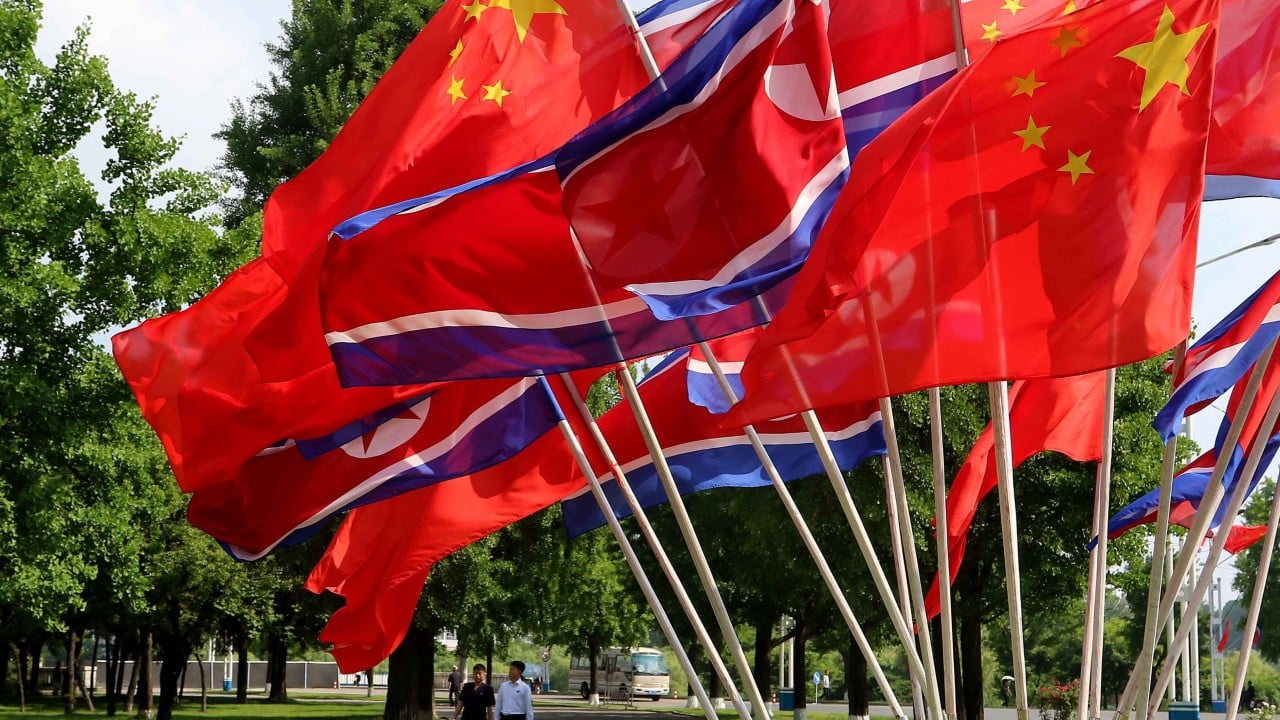
Chinese President Xi Jinping just arrived in North Korea for a high-stakes state visit. On the surface, the state media reports paint a picture of predictable solidarity. They talk about an everlasting friendship, shared history, and unshakable bonds. Don't buy the corporate diplomatic script. This isn't a casual victory lap or a routine handshake.
When the leader of the world’s second-largest economy packs his bags for Pyongyang, it means something massive is shifting behind the scenes.
You need to look at the timing to understand the real story. This is Xi's first time setting foot in North Korea since June 2019. Think about that for a second. For seven years, Xi stayed away, preferring to let world leaders travel to Beijing to see him. He's famously cut back on international travel since the pandemic, dropping from an average of 14 overseas trips a year down to just a handful. Yet, he chose Pyongyang for his big move.
The real driver behind China’s Xi Jinping arrives in North Korea after hailing everlasting friendship isn't old-school sentimentality. It’s a calculated, urgent response to Kim Jong Un’s aggressive new geopolitical gambits, specifically his booming bromance with Vladimir Putin.
The Russian Shadow Over the Korean Peninsula
For decades, Beijing held all the cards in its relationship with Pyongyang. China is North Korea’s economic pipeline, historically accounting for up to 95 percent of the isolated nation's total trade. If Beijing squeezed the valve, Pyongyang felt the pain.
That dynamic completely fractured when Russia invaded Ukraine. Desperate for artillery shells and rockets, Moscow turned to Kim Jong Un. In exchange for conventional weapons and thousands of North Korean troops sent to the front lines, Russia started giving Kim what he wants most: advanced military technology, space reconnaissance assistance, and a powerful diplomatic shield at the United Nations.
Kim used this newfound leverage to build an assertive foreign policy, embracing a new Cold War mentality. He realized he didn't have to rely entirely on Beijing anymore.
That reality deeply rattles China. Beijing hates unpredictable security situations right on its doorstep. A militarily emboldened North Korea, flush with Russian tech and acting reckless, threatens the delicate balance of power in Northeast Asia. Xi is in Pyongyang to reassert China’s role as the definitive senior partner. He needs to remind Kim who actually keeps the lights on.
The Secret Uranium Plant and the Nuclear Reality
The timing of this trip gets even more interesting when you look at North Korea’s recent military disclosures. Just 24 hours before China and North Korea officially confirmed Xi's trip, Kim Jong Un toured a newly unveiled facility designed to produce nuclear bomb materials. South Korean intelligence quickly identified it as a highly sophisticated uranium enrichment plant.
During his tour, Kim openly ordered his military to expand the country's nuclear arsenal at an exponential rate.
This wasn't an accident or a coincidence. Kim deliberately timed the disclosure to maximize his leverage before sitting down with Xi. By putting his nuclear teeth on full display, Kim sent a clear signal to Beijing: North Korea is a permanent nuclear weapons state, and any future diplomatic negotiations must treat it as one.
Historically, Chinese officials would respond to these stunts by repeating their standard talking points about the denuclearization of the Korean Peninsula. Watch the official statements coming out of Beijing this week. Experts from organizations like the George H.W. Bush Foundation for U.S.-China Relations have noted that if China omits the word denuclearization from its final readouts, it means Beijing has quietly accepted reality. They are folding Kim's nuclear status into their broader geopolitical buffer strategy against Washington.
What Xi Is Willing to Give and What He Wants Instead
Xi didn't show up empty-handed. Kim needs major economic relief to fulfill his domestic promises of raising living standards, and Russia's wartime handouts can only go so far. China holds the keys to long-term economic stability.
We are likely looking at a massive new package of food aid, fertilizer, and energy supplies. Behind closed doors, negotiators are hashing out concrete economic projects that have languished for years.
- The Yalu River Bridge: Expect movement on opening the massive cross-border bridge that has sat completed but entirely unused for years.
- Tourism Resumption: The formal restart of large-scale Chinese tour groups heading into North Korean cities to inject immediate foreign cash into Kim's pockets.
- Special Border Zones: Joint economic development projects utilizing shared borders between China, North Korea, and Russia.
But Beijing doesn't give away billions in economic life lines for free. Xi wants strategic concessions. China is reportedly pushing for enhanced navigational rights in the waters off the eastern coast of the Korean Peninsula. Crucially, Beijing wants greater access to the estuary of the Tumen River, a vital strategic waterway that marks the border zone where China, North Korea, and Russia meet.
The Shifting Alliance in East Asia
You can't analyze this summit in a vacuum. Look at what Xi did right before booking his flight to Pyongyang. He hosted United States President Donald Trump and Russian President Vladimir Putin in Beijing for separate, intense diplomatic meetings.
The regional chessboard is moving fast. Last week at the Shangri-La Dialogue in Singapore, defense officials dropped hints about a major military-logistics support pact brewing between South Korea and Japan. A tight, functional military alliance between Seoul and Tokyo, backed fully by Washington, is Beijing’s absolute worst nightmare.
Xi’s journey to Pyongyang tells us that China is actively fortifying its camp. By securing his northern flank and keeping Kim closely tethered to Beijing's economic lifeline, Xi ensures that no Western coalition can rewrite the security architecture of East Asia without his direct consent.
Don't expect Kim to completely back away from Russia or abandon his nuclear ambitions after this week. He's playing a smart game, balancing Moscow against Beijing to extract maximum benefits from both sides. But Xi's physical presence in Pyongyang draws a clear line in the sand. It tells the world that despite Russia’s recent meddling, North Korea remains firmly within China’s primary sphere of influence.
To track how this geopolitical shift impacts regional stability, your next step is to closely monitor the official joint communiqués released at the end of the state visit. Pay specific attention to any mentions of maritime access rights around the Tumen River and whether Beijing completely drops its historic rhetorical demands for North Korean denuclearization.
The Diplomatic Backstory of China and North Korea Ties
This video provides essential historical context on the decades-long relationship between Beijing and Pyongyang, helping to explain why Xi's sudden trip after seven years carries such heavy geopolitical weight.