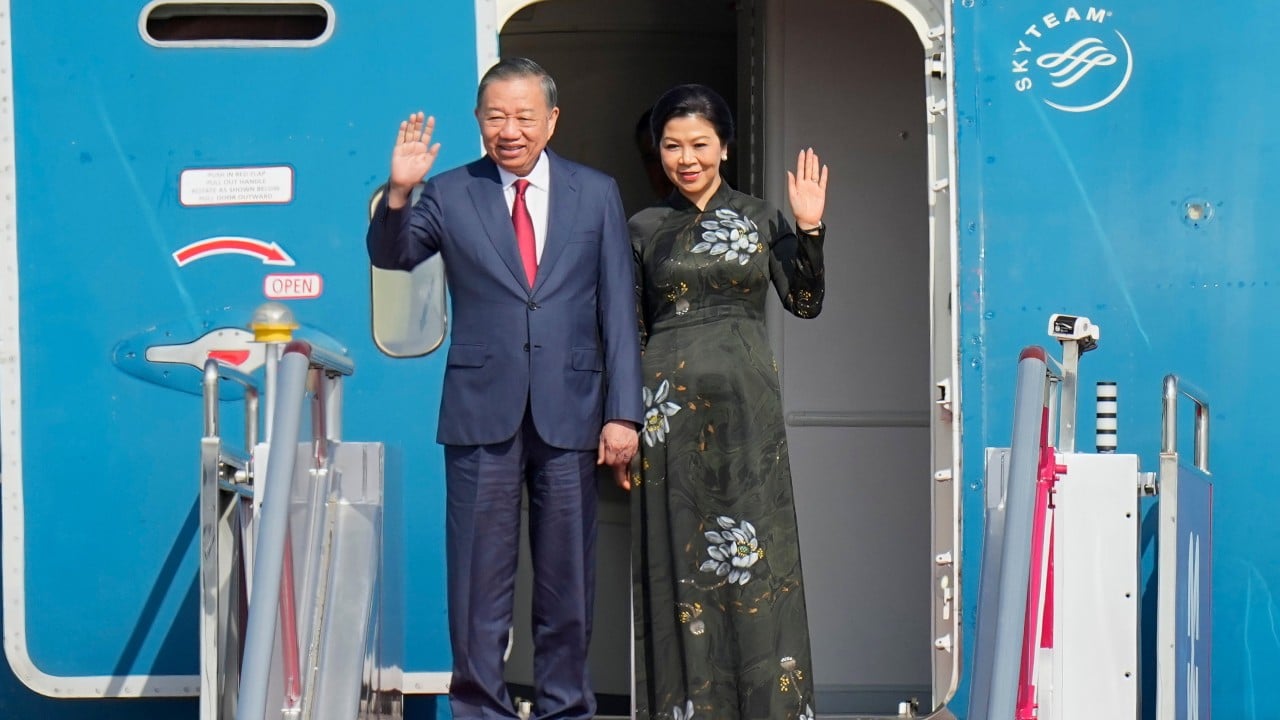
When Chinese President Xi Jinping told Vietnamese leader To Lam in Shenzhen on November 17, 2026, that their countries should "weather the storm together," he wasn't just reciting polite diplomatic clichés. He was making an urgent pitch for economic survival.
Sitting on the sidelines of the 33rd Asia-Pacific Economic Cooperation (APEC) Economic Leaders' Meeting, both leaders knew exactly what that "storm" meant. Washington has spent months accusing Beijing of routing goods through Vietnamese factories to dodge American import duties, and the Trump administration has zero patience left for supply-chain workarounds.
Most coverage treats this Shenzhen handshake as routine regional diplomacy. It isn't. Hanoi is caught in a tightening vise between its biggest trading partner and its biggest export market, and the stakes for global manufacturing couldn't be higher.
What Actually Happened in Shenzhen Between Xi and To Lam
On the surface, the November 17 meeting in Guangdong Province looked like standard APEC warm-up choreography. To Lam arrived in Shenzhen ahead of the November 18–19 leaders' summit, where China was preparing to pass the APEC hosting baton to Vietnam for 2027.
Behind closed doors, the conversation centered on keeping bilateral trade rails intact while global tariff walls shoot up. Xi urged both nations to deepen economic connectivity and integrate their shared interests, framing Beijing as a steady anchor against unilateral trade restrictions. To Lam responded by calling for stronger cooperation in strategic energy infrastructure—specifically cross-border power grid connectivity—while pledging to manage maritime differences quietly so they don't derail economic growth.
Here is why the timing matters so much:
- The APEC Handoff: Vietnam officially accepted the 2027 APEC host role on November 19 in Shenzhen, setting up next year's Leaders' Week on Phu Quoc Island. Hanoi needs Beijing's diplomatic backing to make its 2027 summit a success.
- The Washington Squeeze: Just days after the Shenzhen summit wrapped, the US Trade Representative (USTR) rolled out new Section 301 tariff proposals targeting Chinese excess capacity—and a USTR report on Vietnam mentioned China more than 250 times.
- Energy Shocks: The outbreak of the Iran war earlier in 2026 triggered severe fuel shortages and energy price spikes across Vietnam, threatening To Lam's ambitious 10 percent economic growth target and making Chinese power grid links far more attractive.
Why the "China Plus One" Strategy Is Under Fire
If you've worked in Asian supply chains over the past few years, you know how the game was played. Manufacturers moved final assembly lines from southern China across the border into northern Vietnam—places like Bac Ninh and Hai Phong—to slap a "Made in Vietnam" label on electronics, textiles, and solar panels.
That worked great until Washington started checking the receipts.
Today, China runs an annual global trade surplus exceeding $1 trillion. American trade officials argue that a massive chunk of Vietnam's export boom relies on Chinese components, Chinese raw materials, and Chinese-owned factories operating inside Vietnamese industrial parks. In late November 2026, Washington proposed fresh 20 percent Section 301 tariffs on China while simultaneously putting Southeast Asian partners on notice over transshipment and Chinese industrial inflows.
Xi's message in Shenzhen was a direct counter-move. By telling To Lam to "weather the storm together," Beijing is asking Hanoi not to cave to American pressure to decouple from Chinese supply chains.
The Lopsided Math Hanoi Cannot Ignore
Vietnam's dilemma comes down to brutal arithmetic. You can't easily replace China when your factories literally cannot run without Chinese inputs.
- Upstream Dependence: Vietnamese manufacturers import billions of dollars in machinery, fabrics, semiconductors, and base metals from China every single month. Cut off Chinese imports, and Vietnamese assembly lines grind to a halt within weeks.
- Downstream Exposure: On the flip side, the United States remains Vietnam's single largest export buyer. If the Trump administration slaps punitive tariffs on Vietnamese goods over suspected Chinese origin, Hanoi's export-driven growth model takes a direct hit.
- Capital Constraints: Even as some Chinese firms begin looking toward Thailand because Vietnamese industrial zones are nearing saturation, Hanoi still depends heavily on Chinese financing and engineering for domestic megaprojects.
Vietnam's High-Wire Act Between Beijing and Washington
Anyone who thinks To Lam is simply folding into Beijing's orbit hasn't been paying attention to Hanoi's diplomatic calendar in 2026. Vietnam's famous "bamboo diplomacy"—bending with the wind without breaking—is running at full throttle.
Look at how To Lam has played both sides over the past several months:
- Courting Beijing: He visited Beijing for state talks in April 2026, agreed to joint naval drills in the Gulf of Tonkin despite a five-decade maritime dispute, and sat down with Xi in Shenzhen to lock in trade and power grid ties.
- Hedging with Global Powers: Between those China trips, To Lam traveled to New Delhi to discuss buying Indian BrahMos missiles, visited Manila to reinforce ASEAN maritime coordination, and made back-to-back stops in Moscow and Paris to rally support for Hanoi's South China Sea position without formally picking a side.
- Engaging the Trump Orbit: Even right after Washington floated new tariff threats against Vietnam in late November, Vietnamese officials quietly met with partners of the Trump Organization to keep backchannels open.
Honestly, this isn't fence-sitting. It's survival. Hanoi knows that siding openly with Washington invites economic retaliation and maritime friction from its giant northern neighbor. Siding openly with Beijing invites crippling US tariffs that could wreck Vietnam's economy overnight.
The South China Sea Elephant in the Room
Whenever Chinese and Vietnamese leaders talk about "managing maritime differences", read between the lines. Friction in the South China Sea hasn't vanished—it's just being compartmentalized.
Both governments agreed in Shenzhen to handle disputes in accordance with the United Nations Charter and international law. In practice, that means keeping coast guard standoffs out of the headlines while trade negotiators and grid engineers cut deals. Whether that truce holds through 2027, when Vietnam hosts APEC and faces heightened regional scrutiny, remains one of Asia's biggest geopolitical questions.
What Businesses and Analysts Should Watch Next
If you manage supply chains, invest in Southeast Asian equities, or track Asia-Pacific trade policy, don't get distracted by warm summit photos from Shenzhen. Watch the policy mechanics unfolding over the next 90 days instead.
First, track rules-of-origin enforcement from the US Trade Representative. Following the November 2026 Section 301 announcements, expect stricter customs audits on Vietnamese exports containing high percentages of Chinese components. Companies relying on light assembly in Vietnam to bypass China tariffs need to audit their bill-of-materials localization immediately.
Second, watch cross-border infrastructure approvals between northern Vietnam and southern China. If Hanoi fast-tracks Chinese-linked power grid connections and rail links ahead of its 2027 APEC chairmanship, it signals that energy security and domestic growth have overridden Western decoupling pressure.
Third, keep an eye on regional diversification into Thailand and India. With Vietnam's industrial capacity tightening and tariff scrutiny rising, manufacturers are already splitting new factory bets across multiple Asian hubs rather than treating Vietnam as a single safe harbor.
Xi Jinping wants Vietnam to weather the storm alongside China. To Lam is happy to hold the umbrella in Shenzhen—just don't expect Hanoi to stop checking the forecast in Washington.


