The envelope always arrived on a Thursday.
It was thin, white, and carried the return address of the county clinic. My father would not open it immediately. Instead, he would slide it under the ceramic fruit bowl on the kitchen counter, letting it sit there like an unexploded shell. We all knew what was inside. It was a single sheet of paper containing three digits that dictated the emotional weather of our household: his LDL cholesterol level.
For twenty years, my father’s "bad" cholesterol hovered around 210 mg/dL. To the untrained eye, it is just a number. To our family, it was a ticking clock. His own father had collapsed on a lawn in mid-July, dead of a myocardial infarction at forty-six. Genetics is a quiet author, writing scripts we are forced to perform.
My father tried everything. He ate meals that tasted of wet cardboard. He walked until his sneakers wore thin. When those failed, the doctors put him on high-dose statins.
That was when the real trouble began.
The Price of Prevention
Statins are the undisputed workhorses of modern cardiology. They have saved millions of lives, and for many, they are a simple, daily ritual. But for my father, and for up to twenty percent of people who take them, they came with a heavy tax.
He began to walk with a slight, stiff-legged hitch.
"Just getting older," he would say, squeezing his thighs.
It wasn't age. It was statin-induced myalgia. The medication that was keeping his arteries clear was turning his muscle tissue into a constant, aching weight. Some mornings, the simple act of stepping out of bed felt like wading through wet cement. The brain fog followed. A man who once memorized entire baseball box scores began to squint at his car keys, wondering what they unlocked.
Eventually, the trade-off became too steep. He stopped taking them. The numbers under the fruit bowl spiked again.
Then came the bi-weekly injections.
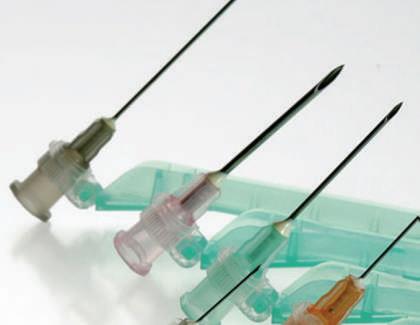
These were PCSK9 inhibitors, biological blockbusters that arrived in cold, styrofoam boxes packed with dry ice. They worked beautifully, dropping his numbers into the safe zone. But they required a needle. Every fourteen days, my mother had to pinch a fold of skin on his abdomen and press a plastic autoinjector until it clicked. He hated it. The anxiety began two days before the injection. If we traveled, we had to plot our journey around hotel mini-fridges and ice packs.
It was a life lived in service to a biochemical vulnerability. It was effective, but it was exhausting.
The Bouncer at the Liver's Door
To understand why the latest regulatory milestone matters, you have to understand how our bodies handle this sticky, yellow substance.
We often talk about cholesterol as if it is a villain we swallow in our cheeseburgers. In reality, the vast majority of it is manufactured right inside our own livers. The liver is both the factory and the waste management plant. It produces cholesterol because our cells need it to build walls and manufacture hormones. But when there is too much of it circulating in the bloodstream, it begins to seep into the walls of our blood vessels, forming hard, brittle plaques.
This is where the liver's cleaning crew comes in.
On the surface of your liver cells are tiny structures called LDL receptors. Think of them as cellular hands reaching out to grab passing cholesterol molecules and drag them inside to be destroyed.
The problem is a specific protein called PCSK9.
PCSK9 acts like an overzealous security guard. It targets those helpful receptors and destroys them before they can clear the cholesterol from your blood. Injectable drugs solved this by neutralizing the PCSK9 protein, leaving the receptors free to do their cleaning work.
But until now, that biological masterpiece could only be delivered through a needle. The fragile proteins in those drugs would be torn apart by the brutal, acidic environment of the human stomach if swallowed.
The Demolition of Risk
The US Food and Drug Administration has officially changed the rules of this game.
With the approval of the first daily oral pill designed to inhibit PCSK9, the high-stakes science of biological therapy has been compressed into something you can swallow with a glass of tap water.
The clinical data behind this approval is not just encouraging; it is startling. In large-scale trials, this single daily pill cut bad cholesterol levels by more than 55%. When combined with standard low-dose therapies, that reduction can plunge even deeper.
Consider the math of a human life.
For someone sitting at a dangerous baseline of 180 mg/dL, a 55% reduction drops them to around 80 mg/dL—well within the safe zone where plaque buildup not only stops but, in some cases, can actually begin to regress. It is the therapeutic equivalent of a structural demolition of cardiac risk.
The magic lies in how the molecule is engineered. Scientists managed to design a small, synthetic peptide that is tough enough to survive the stomach's digestive enzymes, yet agile enough to slip through the gut wall into the bloodstream and bind to the PCSK9 protein.
It is a triumph of molecular origami.
The Kitchen Counter, Reclaimed
My father did not live to see this approval. He passed away three years ago, not from a broken heart, but simply of old age, his arteries kept clear in his final years by the grueling routine of those cold, bi-weekly injections.
But I inherited his liver.
Two months ago, my own lipid panel came back with that familiar, unwelcome three-digit warning. I felt the same cold dread I used to see on his face when he stared at the envelope under the ceramic fruit bowl. I braced myself for the conversations about statins, the fear of the muscle aches, the shadow of the needle.
Instead, my cardiologist spoke to me about this new daily pill.
There are no styrofoam boxes arriving on my doorstep. There is no dry ice melting in my sink. There is no quiet, tense moment of holding my breath while a needle pierces my skin.
There is only a small, amber bottle sitting next to my coffee maker.
Every morning, I take one pill. It is a quiet, unremarkable act. I do not feel it working. My muscles do not ache. My mind remains clear. Yet, beneath the surface of my skin, in the dark, busy corridors of my liver, millions of tiny cellular hands are suddenly free to reach out, clearing the path, making sure the story my grandfather and father wrote does not become my own.
The envelope still arrives from the clinic. But now, I open it right away.