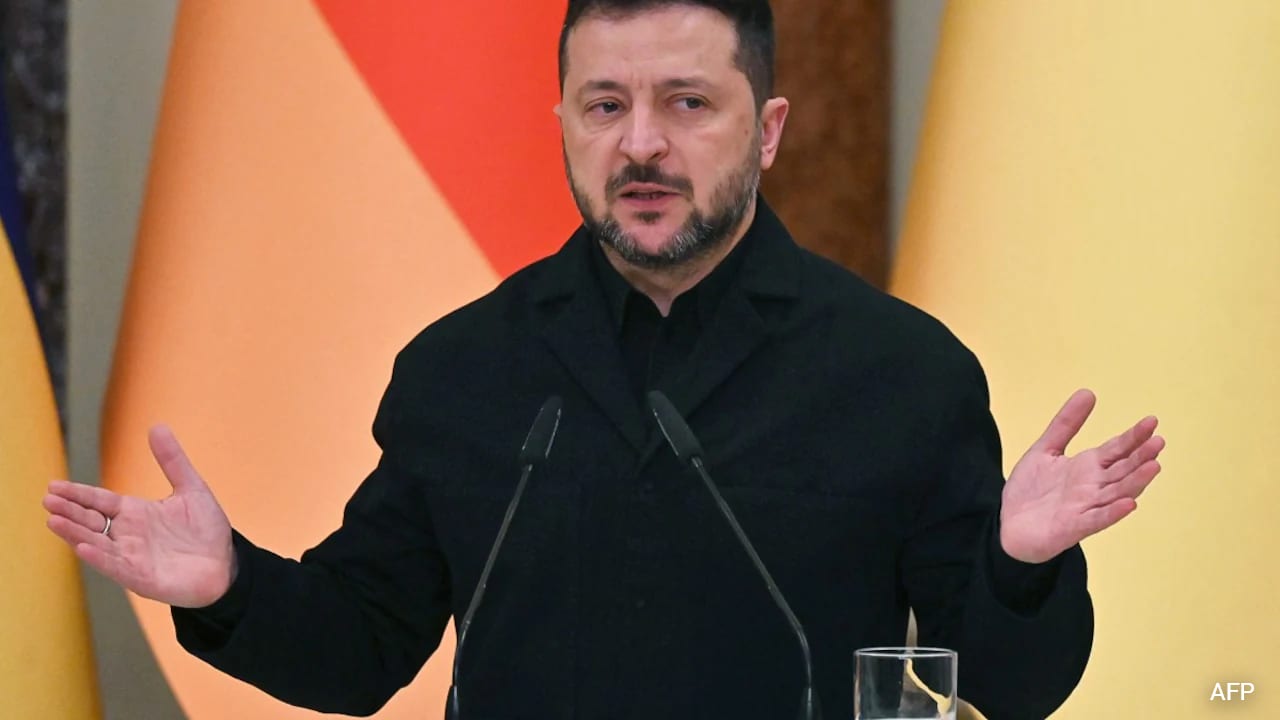
When Ukrainian President Volodymyr Zelensky publicly branded Donald Trump’s latest energy negotiations with Vladimir Putin as both "unworthy" and "weak," diplomatic circles across Washington and Brussels didn't just take notice. They panicked.
For months, rumors had swirled around backchannel discussions involving Russian crude exports, sanction relief, and a potential bilateral energy framework designed to stabilize global oil prices while nudging Moscow toward a ceasefire. Now, the friction between Kyiv and the White House is completely out in the open. Zelensky’s sharp rebuke cuts right to the core of Ukraine’s biggest fear—that Western leaders will trade away Kyiv’s long-term security and territorial integrity for cheap gas at the pump and a quick diplomatic headline. You might also find this related article useful: Why Modi and Xi Do Not Need to Hold Hands to Fix the India China Border.
You don't need a doctorate in international relations to see why this blew up. Energy revenue is the literal lifeblood of the Kremlin's war machine. Every barrel of Russian oil sold on the global market funds artillery shells, drone manufacturing, and military recruitment. By opening the door to a deal with Putin, Trump isn't just tweaking economic policy; he's handing Moscow a financial lifeline at the exact moment Western sanctions were supposed to be choking the Russian economy.
What Actually Happened Between Trump and Putin on Oil
To understand why Zelensky reacted with such rare, unfiltered anger, you have to look at the mechanics of what Washington and Moscow have been discussing. Since the full-scale invasion of Ukraine began, the G7 and the European Union built an intricate, albeit leaky, wall of sanctions around Russian energy. The goal was simple: keep Russian oil flowing so global prices wouldn't spike to $150 a barrel, while capping the price at $60 so Putin couldn't profit from it. As reported in detailed reports by The New York Times, the results are notable.
It was a delicate balancing act. Honestly, it only partially worked, largely because Moscow built a massive "shadow fleet" of aging tankers to bypass Western insurance and shipping bans.
Trump’s approach flips that entire strategy on its head. Rather than tightening the screws on the shadow fleet or lowering the price cap, the Trump administration has floated a direct bilateral understanding with Moscow. The core premise involves easing specific energy-sector restrictions and allowing major Western service firms back into Russian oil fields in exchange for production commitments that keep global crude prices low—and vague promises from the Kremlin regarding de-escalation in Ukraine.
Zelensky didn't mince words when asked about the framework. Calling the move "unworthy" of American leadership and "weak" in the face of Russian aggression, the Ukrainian president pointed out an obvious truth that Washington seems eager to ignore. You can't negotiate with a bully by handing him back his wallet.
The Economics of Russian Crude
Let's look at the numbers, because geopolitics always comes down to cash flow. Even under heavy sanctions, oil and gas revenues still account for roughly a third of Russia's federal budget. When Urals crude trades at a steep discount, the Kremlin has to burn through its National Wealth Fund to pay soldiers and keep domestic inflation from spiraling out of control.
If a US-Russia oil deal removes the friction costs Moscow currently pays to move its oil—like middleman fees in India and China or the massive expense of maintaining uninsured tankers—billions of dollars flow straight back into the Russian treasury. That money doesn't go toward building schools in Siberia. It goes straight to the front lines in Donetsk and Kharkiv.
Why Zelensky’s "Unworthy" and "Weak" Remark Hits So Hard
Politicians throw around harsh adjectives all the time, usually for domestic consumption. This is different. Throughout the war, Zelensky has walked a tightrope with American leaders, carefully calibrating his public statements to avoid alienating the country that supplies the bulk of Ukraine's air defense missiles and intelligence. Even when frustrated by delays in congressional aid packages, Kyiv almost always defaulted to public gratitude.
Breaking that discipline to call a US-led initiative "weak" signals that Kyiv views this oil deal as an existential threat.
Think about the precedent it sets. For years, the official Western mantra was "nothing about Ukraine without Ukraine." Yet here is Washington, cutting energy side-deals with Moscow while Ukrainian cities are still dodging ballistic missiles. From Kyiv's perspective, separating energy policy from military aggression is a fantasy. Putin doesn't separate them. To the Kremlin, oil, gas, territory, and military leverage are all pieces on the exact same chessboard.
The Trap of Short-Term Price Relief
Why would Trump pursue this? Domestic politics.
American voters hate high gas prices. Every president knows that when the price at the pump creeps above $4 a gallon, approval ratings tank. By striking a deal that floods the market with unimpeded Russian crude, the White House can claim an immediate victory against inflation. It’s a fast, visible win.
The problem is that it’s built on sand. Putin has a two-decade track record of weaponizing energy supplies the second it suits his geopolitical goals. Relying on a handshake agreement with Moscow to keep global energy markets stable isn't savvy dealmaking; it's voluntary vulnerability. Kyiv knows this better than anyone, having spent the better part of thirty years dealing with Russian gas cutoffs every time a Ukrainian government leaned too far toward Europe.
What Most Analysts Miss About the Shadow Fleet Factor
If you listen to pundits defending the Trump-Putin oil talks, you'll hear the same argument over and over: The sanctions weren't working anyway, so we might as well get something in return for lifting them.
That argument falls apart the second you look closely at maritime data. Yes, Russia built a shadow fleet of hundreds of old tankers to move oil to Asia. Yes, some of that oil still found its way back into European refineries via third-party countries.
Sanctions were hurting Moscow—just not instantaneously. Maintaining that shadow fleet costs billions. Insurance is a nightmare. Ships are breaking down, getting detained in European ports, and facing mounting secondary sanctions from the US Treasury Department. By late 2025 and into 2026, the logistical strain on Russian energy giants like Rosneft and Lukoil was becoming undeniable. Discounts on Russian crude were widening again, squeezing profit margins to razor-thin levels.
Trump’s oil deal essentially rescues Putin from a logistical quagmire right before the trap fully snapped shut. Instead of forcing Moscow to spend massive amounts of capital just to get its product to market, Washington is offering to clear the shipping lanes. That’s why European diplomats in Brussels and London are quietly furious, even if they're too cautious to use Zelensky's exact words on the record.
The Ripple Effects Across Europe and NATO
You can't pull a thread this big without unraveling the rest of the sweater. Europe spent trillions of euros and endured a brutal energy crisis in 2022 and 2023 to wean itself off Russian fossil fuels. Countries like Germany, Poland, and the Baltic states completely overhauled their energy infrastructure, building liquefied natural gas (LNG) terminals at breakneck speed to ensure Putin could never blackmail them again.
Now, Washington is signaling that Russian oil is back on the menu.
This creates a massive rift inside NATO. Eastern European members—the ones who actually share a border with Russia and Belarus—view any normalization of trade with Moscow as a direct threat to their own sovereignty. If the United States is willing to normalize energy relations with Putin while Russian troops still occupy roughly a fifth of Ukraine, what happens if Russia tests NATO's borders in the Baltics next? Will Washington trade away Tallinn or Vilnius for a favorable trade deal too?
Those are the exact questions keeping European defense ministers awake right now.
A Gift to Kremlin Propaganda
Beyond the hard economics and alliance politics, there's the information war. Russian state media has been running Zelensky's quotes on a loop, framing them not as a principled stand, but as proof that the West is abandoning Kyiv.
When the President of the United States treats the Russian president as an equal partner in managing global energy markets, it shatters the diplomatic isolation that Western allies spent years constructing. It tells countries in the Global South—who were already skeptical of Western sanctions—that the rules don't really matter, and that Washington will drop its moral principles the moment economic convenience calls.
How Kyiv and Its European Allies Are Responding
Zelensky isn't just venting to the press; Kyiv is already scrambling to counter the narrative and minimize the damage. Because Ukraine can't force Washington to abandon bilateral talks with Moscow, Ukrainian officials are shifting their focus toward European capitals and independent energy pressure points.
First, Ukraine has doubled down on its domestic drone campaign targeting Russian refining capacity. While diplomatic talks happen in plush hotel rooms, Ukrainian long-range drones continue to hit oil depots and refineries deep inside Russian territory. If Washington won't restrict Russian oil exports through policy, Kyiv is making it abundantly clear that it will restrict Russia's ability to process fuel through physical force.
Second, Ukrainian diplomats are lobbying Brussels to maintain—and actually tighten—EU-level maritime restrictions. Even if the US eases Treasury sanctions, European shipping companies, insurers, and port authorities control critical chokepoints in the Baltic and Mediterranean seas. Without European cooperation, a US-Russia oil deal becomes much harder to execute smoothly.
What to Watch Next as the Fallout Continues
If you're trying to track whether this deal actually holds or collapses under diplomatic pressure, ignore the press conferences and watch three concrete indicators over the next few weeks:
- OFAC Licensing Changes: Keep an eye on the US Treasury Department's Office of Foreign Assets Control. Until they actually issue general licenses allowing Western oilfield service companies or maritime insurers to work with Russian entities again, the "deal" is mostly talk.
- European Port Enforcement: Watch how Denmark, Germany, and the UK treat uninsured Russian tankers passing through the Danish Straits and the English Channel. If European navies start aggressively inspecting shadow fleet vessels for environmental compliance, they can effectively blockade Russian Baltic exports regardless of what Washington says.
- Urals Crude Price Spreads: Track the price gap between international Brent crude and Russian Urals crude. If that discount narrows from $15–$20 a barrel down to $5, you'll know the market believes sanctions are truly dead and Putin is pocketing the difference.
Zelensky called the move weak because appeasement in the middle of an active war almost always backfires. History backs him up. Trading long-term strategic deterrence for short-term commodity price relief is a gamble that rarely pays off, and right now, Ukraine is the one forced to cover the bet.