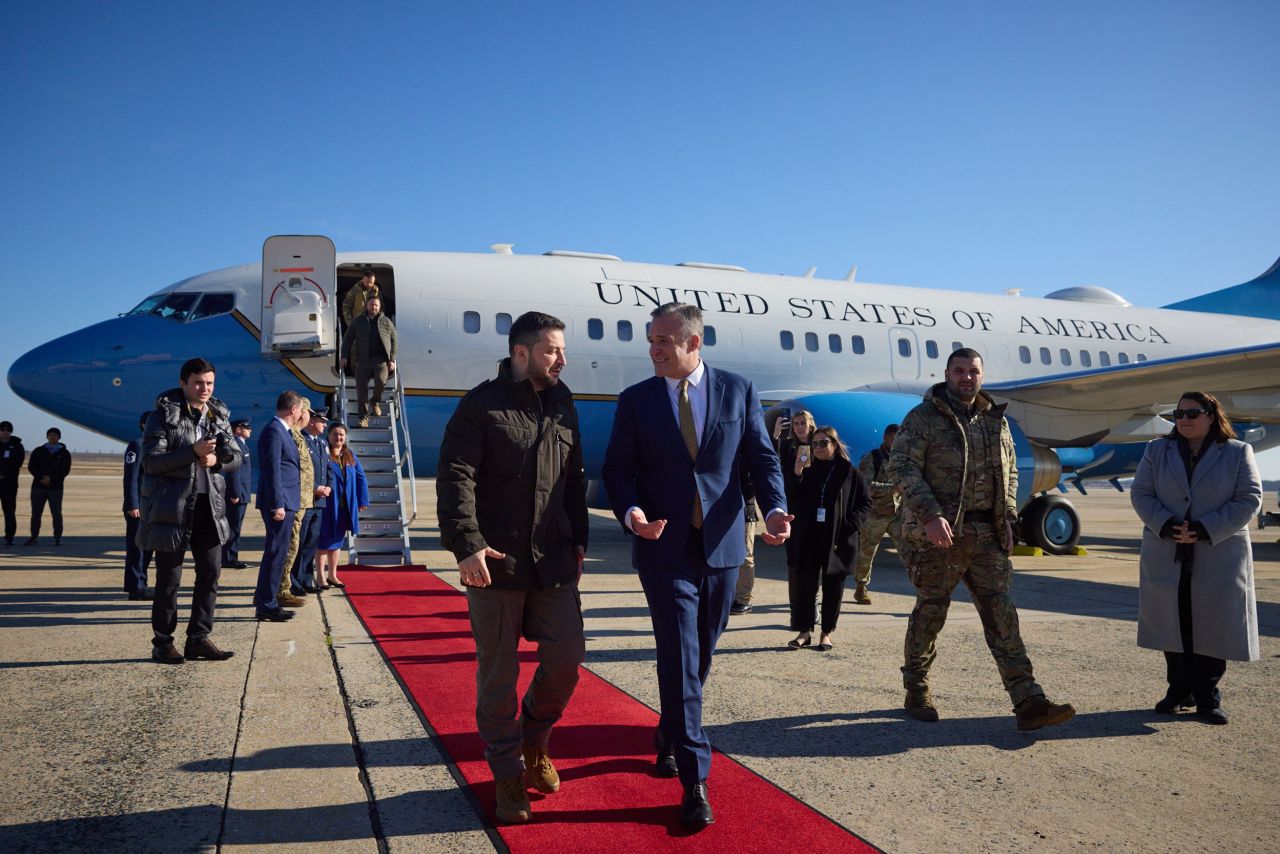
The headlines want you to believe Ukraine is shopping for a silver bullet in the desert. They paint a picture of Volodymyr Zelenskyy huddling with technical experts in Saudi Arabia, eyeing advanced interceptors to shield Kyiv from the next wave of Russian cruise missiles. It’s a comfortable narrative. It’s also completely wrong.
If you think this trip was about technical specifications or procurement timelines, you’ve been sold a sanitized version of modern warfare. Zelenskyy isn't in Riyadh because the Saudis have a secret warehouse of Patriots that the Americans forgot to mention. He is there because the global hardware market is broken, and the "experts" are actually there to manage a diplomatic shell game.
The Patriot Myth and the Math of Attrition
Most analysts focus on the "what"—as in, what systems can Ukraine get? They should be focusing on the "how many" and the "at what cost." The lazy consensus suggests that moving a few batteries of PAC-3 units from the Gulf to the Donbas changes the strategic calculus. It doesn't.
Air defense is not a shield; it is a ledger. On one side, you have an interceptor that costs $4 million. On the other, you have a Shahed-style drone that costs $20,000.
When Zelenskyy reviews air defense work in Saudi Arabia, he is staring at the physical manifestation of a failed economic model. The Saudis have spent a decade using high-end Western tech to swat down low-end Houthi projectiles. They have the most expensive "lessons learned" portfolio on the planet. But those lessons aren't about how to win; they are about how to go broke slowly.
Ukraine doesn't need Saudi Arabia's hardware. It needs Saudi Arabia's influence over the supply chains that Russia uses to bypass sanctions. Every minute spent discussing radar cross-sections is a minute wasted not discussing the flow of dual-use components through third-party intermediaries.
Saudi Arabia is Not an Arsenal It is a Pressure Valve
The assumption that Riyadh is a "partner" in the Western sense is the first mistake. Saudi Arabia operates on a principle of radical pragmatism. They aren't looking to save democracy; they are looking to maintain the price of Brent crude and ensure their own Vision 2030 doesn't get incinerated by regional proxies.
By hosting Zelenskyy and his experts, the Kingdom isn't picking a side. They are auditioning for the role of the indispensable middleman. They want to be the ones who broker the eventual "frozen conflict" because that’s where the real money is.
If you look at the technical specs of the systems discussed—likely the MIM-104 Patriot or the THAAD—you’ll notice a glaring issue. These systems require a massive logistical footprint and months of specialized training. You don't just "review work" and drive them off the lot.
The real conversation in those rooms isn't about the radar. It’s about the "end-use monitoring" agreements. It’s about whether the U.S. will allow the Saudis to backfill their stock if they "lend" units to Ukraine. It’s a three-way bank shot where the technology is just the currency, not the solution.
The Drone Gap the Experts Wont Admit
Here is the truth the "experts" won't tell you: standard air defense is failing.
I’ve watched defense contractors pitch "integrated solutions" for years. They always promise a 99% interception rate. They never mention what happens when the 1% that gets through hits a power transformer.
Saudi Arabia’s experience with the Abqaiq–Khurais attack in 2019 proved that even the most expensive air defense net in the world can be blinded by a coordinated swarm. Zelenskyy knows this. His experts know this. So why are they in Riyadh?
They are there to study the failure of the systems, not the success. They are looking for the "gaps in the gate"—the specific ways Russian-made or Iranian-designed systems exploit the blind spots of Western logic.
Stop Asking if the Systems Work
People keep asking: "Will Saudi air defense help Ukraine?"
Wrong question.
The right question is: "Can Ukraine afford to use them?"
If Ukraine secures Saudi-style defense levels, they will be tethered to a Western industrial base that cannot produce interceptors fast enough. The U.S. produces roughly 500 Patriot missiles a year. In a high-intensity conflict, that is a week's worth of inventory.
By pivoting to Saudi Arabia, Zelenskyy is signaling to Washington that the current supply line is insufficient. He is trying to create a "secondary market" for security. It is a desperate, brilliant move of geopolitical arbitrage. He is attempting to shame the West into increasing production by showing he is willing to negotiate with anyone—even those who have maintained a "warm" relationship with Moscow.
The Real Cost of Neutrality
The "experts" mentioned in the news reports are likely specialists in electronic warfare (EW) and signal intelligence. This is the only area where Saudi input actually matters. The Kingdom has a massive database of the electronic signatures of Iranian hardware—hardware that is now being used by Russian forces.
This isn't a military cooperation; it's a data trade.
Ukraine brings real-time combat data from the most high-tech battlefield in history. Saudi Arabia brings the "library" of Middle Eastern threat profiles.
But don't mistake this for a deepening alliance. The moment the data trade stops being profitable for Riyadh, the "cooperation" ends. Saudi Arabia is the ultimate "mercenary" state in the realm of diplomacy. They are selling their relevance.
The Illusion of the Technical Fix
We have an obsession with the idea that a specific piece of tech can solve a political problem. We think if we just give Ukraine the right "box," the war ends.
It won't.
The war in Ukraine has turned into a war of industrial capacity. Saudi Arabia, for all its wealth, is an importer. They don't manufacture the chips. They don't forge the barrels. They are just a very wealthy parking lot for Western tech.
Zelenskyy’s "review" is a photo op designed to put pressure on the U.S. Congress. It says, "If you won't give us what we need, we will find it elsewhere." It’s a bluff. There is no "elsewhere." Every road leads back to the American defense industrial base.
The Brutal Reality of the Riyadh Trip
If you want to understand the "nuance," stop looking at the planes and start looking at the oil.
Russia needs high oil prices to fund its war machine. Saudi Arabia controls the valves. Zelenskyy isn't there to talk about missiles; he’s there to talk about the price of a barrel. Air defense is the polite cover story for a conversation about economic strangulation.
If the Saudis wanted to help Ukraine, they wouldn't send a Patriot battery. They would increase production by 2 million barrels a day and crater the Russian economy overnight. They haven't. They won't.
Forget the Hardware Focus
The "experts" are chasing shadows. The future of this conflict isn't in a $4 million missile. It’s in the $500 FPV drone and the ability to jam it.
The Saudi trip is a masterclass in distraction. It keeps the media talking about "air defense work" while the real battle—the battle of logistics, attrition, and energy pricing—happens behind closed doors.
Ukraine is being forced to play a game where the rules change every week. They are fighting a 21st-century war with a 20th-century supply chain, managed by 19th-century diplomacy.
The "superior article" on this topic isn't about a meeting in Riyadh. It's about the realization that the global security architecture is a house of cards, and Zelenskyy is just trying to find a way to stop the wind from blowing.
Stop looking at the missiles. Look at the ledger. The math doesn't lie, even if the diplomats do.
Go look at the production numbers for the PAC-3 MSE interceptor. Then look at the daily launch rates in the Kyiv oblast. Do the division yourself. You’ll realize very quickly that "reviews" in Saudi Arabia are just a way to kill time while the world runs out of ammo.