Alabama just collected a $12.2 million check from Roblox, and the tech world is applauding. They think this is a victory for child safety. They think a state attorney general finally "held Big Tech accountable."
They are wrong.
This settlement isn't a victory; it is a distraction. It is a rounding error for a company with a market cap hovering around $30 billion. More importantly, it is a convenient way for regulators to pretend they are solving a systemic problem while actually just tax-collecting on a tragedy. If you think twelve million dollars changes the incentive structure of a platform built on user-generated content and algorithmic engagement, you aren't paying attention to the math.
The Regulatory Extortion Loophole
Let’s look at the numbers. Roblox reported over $700 million in revenue in a single quarter recently. A $12.2 million settlement represents roughly 1.5 days of revenue. In the world of corporate litigation, this isn't a "punishment." It’s a permit. It is the cost of doing business in a state that decided to make some noise.
The "lazy consensus" here is that legal settlements force internal change. In reality, they often do the opposite. They provide a "clean slate" narrative that allows a company to move past a PR crisis without fundamentally re-engineering the product. Alabama gets a headline for the election cycle. Roblox gets a release of liability. The actual architecture of the internet remains exactly as dangerous as it was yesterday.
I have seen this play out in Silicon Valley for a decade. A company scales faster than its safety protocols. A vulnerability is exploited. A state sues. A settlement is reached. The company hires a few hundred more moderators—usually outsourced to low-wage centers—and calls it a day. But the underlying issue isn't a lack of moderators. It’s the platform’s core physics.
The Myth of "Safety by Moderation"
The public and the press keep asking the same flawed question: "Why didn't Roblox catch this sooner?"
The real question should be: "Is it even possible to monitor 70 million daily active users in real-time without turning the platform into a surveillance state?"
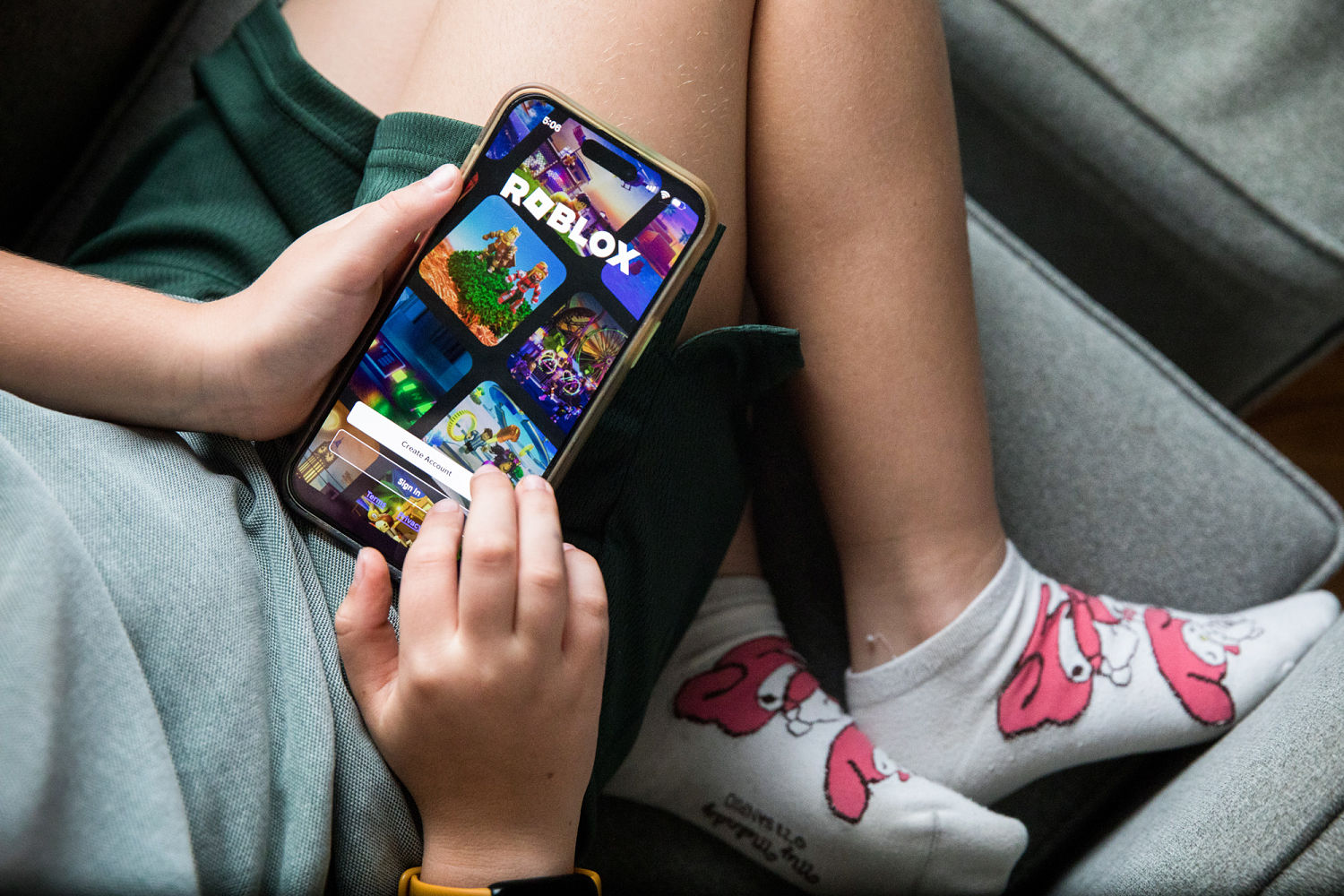
Roblox is not a game. It is an engine. It is a social network wrapped in a Lego-like aesthetic. When you have millions of "experiences" created by teenagers and young adults, you aren't managing a product; you are managing a digital civilization.
Standard moderation relies on:
- Keyword filtering: Easily bypassed by "leetspeak" or evolving slang.
- Report-based systems: Reactive by nature, meaning the harm has already happened.
- AI image recognition: Useful for blatant gore or nudity, but useless for grooming, which is a behavioral process, not a visual one.
The settlement mandates "enhanced safety features." This is a buzzword for "more of the same, but slightly faster." It ignores the fact that predators don't follow the rules; they exploit the gaps between them. By the time a state attorney general drafts a complaint, the methods used by bad actors have already shifted.
The Parent Trap: Outsourcing Responsibility
The most uncomfortable truth in this entire saga—the one no politician wants to touch—is the role of parental abdication.
The settlement focuses on what Roblox didn't do. It ignores what parents aren't doing. We have reached a point in society where we expect a California-based tech giant to be the primary guardian of a child in Birmingham, Alabama.
If you give a seven-year-old an unmonitored device and access to a massive multiplayer online world, you are effectively dropping them off at a busy city center and hoping the mayor has hired enough police. It is a failure of logic. No amount of "parental controls" baked into an app can replace a parent sitting on the couch and looking at the screen.
The settlement treats the platform as the sole actor. But digital safety is a shared responsibility. By focusing entirely on the corporate payout, we reinforce the dangerous idea that parents can "set it and forget it" as long as the state has extracted a fine.
Follow the Money: Where Does $12.2 Million Go?
Whenever a state "reaches a settlement" for the kids, you need to follow the trail. Does that money go toward digital literacy programs in every Alabama school? Does it fund 24/7 mental health resources for victims of online exploitation?
Usually, a significant chunk disappears into general funds or legal fees. It becomes a line item in a state budget. If the goal was truly to protect children, the settlement wouldn't be a cash transfer to the government; it would be a mandated, third-party audited overhaul of the platform's social engineering.
The Engineering Problem Nobody Admits
The fundamental problem with Roblox, and why $12 million won't fix it, is the incentive for engagement.
The platform thrives on "stickiness." It wants kids to stay online as long as possible. The algorithms recommend experiences that keep users active. Predators use these same metrics. They create high-engagement, "friendly" environments to lure targets.
To truly make Roblox "safe," you would have to break the engine. You would have to:
- Disable all private messaging between unverified users.
- Remove the ability to search for specific users by name.
- Kill the "social" aspect that makes the platform a multi-billion dollar juggernaut.
Roblox won't do that. Alabama knows they won't do that. So they settled for a check.
Stop Asking for Fines, Start Asking for Friction
We are asking the wrong questions. "How much should they pay?" is the wrong question.
The right question is: "Why is it so easy for a stranger to contact a child?"
The answer is "frictionless design." Tech companies spend billions removing friction from their apps. They want everything to be one click away. But safety requires friction. It requires barriers. It requires "are you sure?" prompts and identity verification that actually works.
If Alabama wanted to disrupt the status quo, they would have demanded that Roblox implement mandatory, hardware-level age verification for all social features. They would have demanded that any "experience" with over 10,000 users be subject to a human-in-the-loop audit before being featured.
They didn't. They took the cash.
The Downside of My Argument
I’ll be the first to admit: my stance is cynical. It assumes the worst of both corporations and government. If you believe that $12.2 million will actually fund a task force that saves lives, then my "cost of doing business" theory feels heartless.
But I’ve seen the "task force" model before. It usually results in a colorful website and a few PDF brochures. Meanwhile, the predators just move from Roblox to the next unmoderated frontier. They move to Discord. They move to private Minecraft servers. They move to Telegram.
The Reality of the Digital Frontier
We are living through a massive, unregulated experiment on the human psyche. We are the first generation of parents trying to navigate a world where our children’s social lives are hosted on servers owned by public companies.
The Alabama settlement is a band-aid on a gunshot wound. It’s a way for the state to say "we did something" without actually changing the digital topography.
If you want to protect your kids, ignore the headlines about settlements. Ignore the "new and improved" safety settings that are just UI refreshes.
Treat every online platform as a public park at midnight. If you wouldn't let your child walk through that park alone, don't let them walk through Roblox alone. No check from a tech company to a state treasury is going to tuck your kid in at night and make sure they're safe.
The settlement isn't a milestone. It's an invoice. And as long as the price is this low, nothing changes.