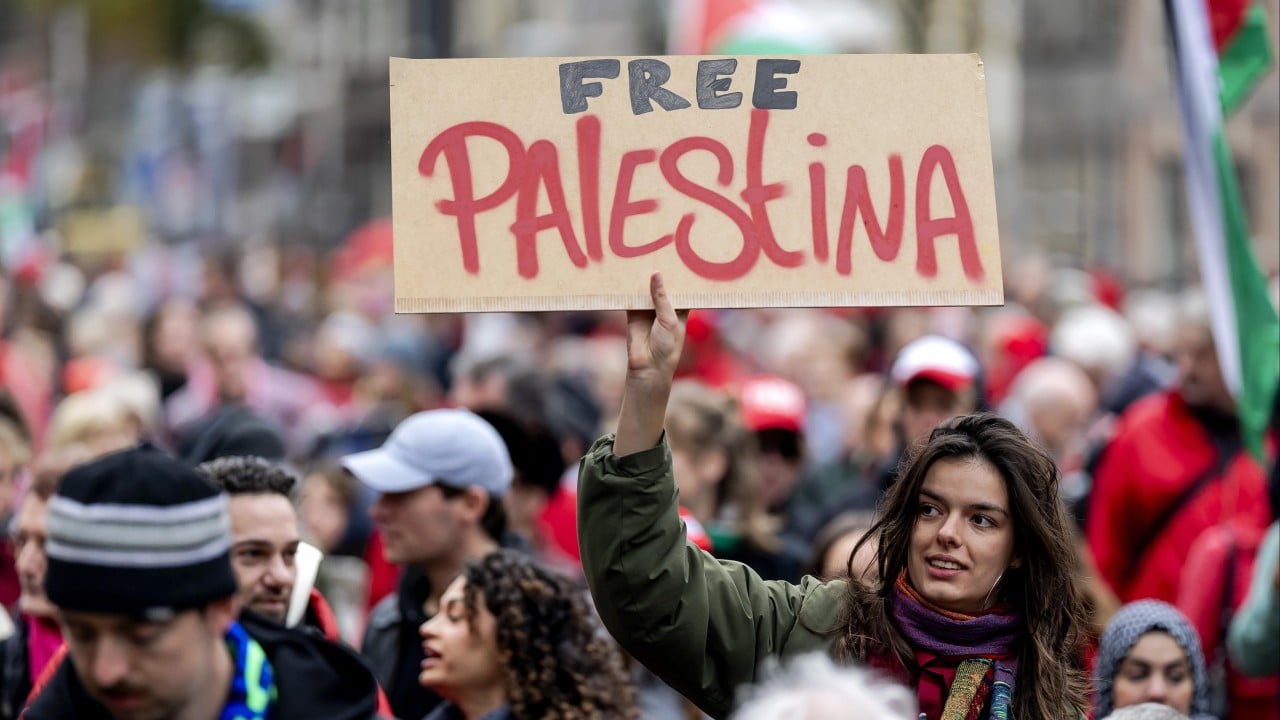
Tens of thousands of people flooded Museumplein and Dam Square in Amsterdam. They brought flags. They chanted slogans. Legacy media outlets rushed to publish the exact same predictable story: massive turnout equals massive political pressure.
That narrative is completely detached from how European foreign policy actually works. Read more on a related topic: this related article.
If you look at the standard coverage of Dutch pro-Palestinian demonstrations, you will find a lazy consensus. Reporters count heads, snap photos of dramatic placards, and imply that the Dutch government is on the verge of caving to public outrage. They treat street volume as a direct proxy for diplomatic power.
It isn't. In the Netherlands, massive street protests often achieve the exact opposite of what organizers intend. They harden parliamentary coalitions, alienate swing voters, and let politicians off the hook by turning an urgent geopolitical crisis into a domestic public-order headache. Additional reporting by The New York Times highlights comparable perspectives on the subject.
The Crowd-Size Fallacy in Dutch Politics
I have spent over a decade watching European advocacy campaigns burn through millions of euros and tens of thousands of volunteer hours chasing optical victories. Organizers obsess over drone shots of packed squares. They think a crowd of 50,000 in Amsterdam forces the hand of the Tweede Kamer in The Hague.
It does not.
The Dutch political system is built on hyper-fragmented coalition mathematics, not majoritarian street pressure. Following the rise of right-wing populism and the shifting alliances inside The Hague, cabinet ministers do not govern based on who screams loudest in Amsterdam. Amsterdam is an ideological outlier compared to the rest of the country. Treating a massive protest in the capital as a barometer for national Dutch sentiment is like judging American foreign policy by a rally in Berkeley.
When protesters block central transit hubs or clash with the Mobiele Eenheid (riot police), the news cycle instantly pivots. The story stops being about Gaza, Rafah, or international humanitarian law. The story becomes broken shop windows, delayed trams, and municipal cleanup costs.
Politicians in The Hague love this. Instead of answering hard questions about weapons export licenses or diplomatic recognition, ministers get to stand at a podium and talk about "maintaining the rule of law" and "protecting public safety." The protest gives them an easy off-ramp.
Street Theater vs. Actual Diplomatic Pressure
Let’s define our terms precisely. Performative activism is public demonstration optimized for social media visibility and moral signaling among peers. Material leverage is targeted pressure applied directly to financial, legal, and supply-chain choke points that force institutional actors to change behavior.
Right now, the Amsterdam demonstrations are 95% performative activism and 5% material leverage.
Look at the historical precedent in the Netherlands. In 1981 and 1983, hundreds of thousands of Dutch citizens marched against the placement of American cruise missiles on Dutch soil. Those were the largest protests in modern Dutch history—nearly 550,000 people in The Hague alone. The government still approved the deployment plan in 1985. The missiles were only cancelled later because the United States and the Soviet Union signed the Intermediate-Range Nuclear Forces Treaty in 1987.
Mass mobilization without institutional chokepoints fails even when half a million people show up.
If the goal is to actually alter Dutch state policy toward Israel and Palestine, shouting on Dam Square is the least efficient tool in the shed. Real pressure in the Netherlands happens in courtrooms, pension fund boardrooms, and municipal procurement offices.
Consider the actual victories that have rattled the Dutch establishment:
- Strategic Litigation: In February 2024, a Dutch appeals court ordered the government to halt the export of F-35 fighter jet parts to Israel, ruling there was a clear risk of serious violations of international humanitarian law. Three human rights organizations—Oxfam Novib, PAX, and The Rights Forum—achieved with a legal brief what 50,000 marchers could not achieve in six months.
- Institutional Divestment: Dutch pension giants like ABP and PFZW manage hundreds of billions of euros. When researchers and insiders force scrutiny on specific holdings in companies operating in occupied territories, fund managers face fiduciary and reputational risk. A boardroom audit moves capital; a chant does not.
- Academic and Cultural Boycotts: Targeted pressure on Dutch university boards regarding joint research grants with Israeli institutions forces administrators into concrete policy votes.
Why Legacy Media Loves the Protest Narrative
Why do major outlets keep framing these Amsterdam marches as decisive turning points? Because conflict is cheap to cover.
Sending a reporter to Dam Square with a camera crew takes three hours and guarantees dramatic visuals. Reading a 400-page export control audit from the Ministry of Foreign Affairs or tracking dual-use technology shipments through the Port of Rotterdam takes weeks of investigative legwork.
So the press takes the shortcut. They quote a few emotional protesters, get a boilerplate statement from a municipal spokesperson, and declare that "tensions are boiling over." This creates an echo chamber where activists believe their marches are working because they see themselves on the evening news, while policymakers quietly continue business as usual behind closed doors in The Hague.
The Uncomfortable Truth About Radical Tactics
We need to be brutally honest about a question most commentators dance around: Do disruptive protests in Amsterdam actually help Palestinians on the ground?
No. In fact, when demonstrations spill into university occupations that destroy property or intimidate Jewish students and residents, they actively damage the cause.
The Netherlands carries a heavy, unresolved historical sensitivity regarding antisemitism and World War II. The moment a protest crosses the line from criticizing Israeli military policy to vandalizing university buildings or harassing bystanders, the political backlash is immediate and overwhelming. Moderate Dutch citizens—the exact demographic needed to shift parliamentary majorities—tune out the humanitarian message entirely and demand tougher policing.
Imagine a scenario where the same 40,000 people who marched in Amsterdam spent four hours each researching municipal contracts, filing Freedom of Information (Wob/Woo) requests on dual-use exports at Schiphol Airport, and flooding the offices of centrist parliamentarians with targeted, data-backed policy briefs. That would paralyze the bureaucracy in a week. Instead, they spent four hours walking in a circle, went home, posted photos on Instagram, and left the state apparatus completely untouched.
What Actually Moves the Needle in the Netherlands
To be clear, street protests do have one legitimate function: they cure isolation. For Dutch-Palestinians and their allies watching horrific footage unfold daily, standing in a crowd of tens of thousands provides psychological solidarity. That human need is real, and dismissing it entirely would be dishonest.
The downside of abandoning mass marches altogether is losing visible proof that public anger exists. Politicians do notice when an issue refuses to die down over months.
However, visibility is a starting line, not a strategy. When visibility becomes the entire plan, the movement stalls out. If organizers want to stop spinning their wheels in Amsterdam, they have to pivot from street volume to institutional friction.
- Target the Port of Rotterdam and Schiphol Logistics. The Netherlands is a global logistics hub. Tracking specific cargo manifests, insurance underwriters, and transit permits creates immediate legal exposure for shipping firms and state regulators.
- Weaponize the Wet open overheid (Woo). Dutch transparency laws allow citizens to force government ministries to release internal communications. Systematic Woo requests expose discrepancies between public diplomatic statements and private export approvals.
- Shift Focus from Amsterdam to Provincial Swing Districts. Pressure in Amsterdam is preaching to the choir. Political vulnerability lives in the provincial towns and mid-sized cities where centrist and center-right parties actually win and lose seats.
- Enforce Strict Message Discipline. Any movement that tolerates property destruction or intimidation hands its opponents a loaded weapon. Ruthless discipline keeps the spotlight squarely on international law and state complicity.
Stop Confusing Noise With Power
Power does not care how loud you are on a Saturday afternoon in Amsterdam. Power cares about legal injunctions, frozen export licenses, withdrawn pension capital, and lost parliamentary seats in swing provinces.
Until organizers trade the megaphone for the subpoena and the balance sheet, the marches will keep growing, the media will keep cheering, and the policies in The Hague will not budge an inch.