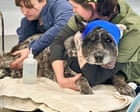
In the high-desert scrub of New Mexico, the boundary between domestic life and the raw food chain is often thinner than a screen door. When a twelve-pound, partly blind dog named Buttercup stood her ground against a black bear in her owner’s yard, the resulting headlines followed a predictable, feel-good script. Small dog saves family. Bravery outweighs sight. The "hero pet" narrative is a staple of local news because it provides a momentary reprieve from a grim news cycle.
However, stripping away the sentimentality reveals a much more complex interaction between instinct, proximity, and the changing behavior of North American predators. This wasn't just a fluke of canine courage. It was a collision of biology and geography that highlights a growing tension in the American West.
The mechanics of the bluff
Animals do not operate on a moral compass of "bravery." They operate on risk assessment. To understand why a black bear—a powerful omnivore capable of snapping a spine with a single swipe—would retreat from a diminutive, sight-impaired terrier mix, you have to look at the psychology of the black bear.
Black bears are notoriously risk-averse. Unlike the more aggressive grizzly, the black bear’s primary survival strategy is avoidance. They are the professional cowards of the woods. When Buttercup engaged the intruder, she didn't win through physical dominance. She won through the element of surprise and the sheer auditory chaos of a high-pitched, relentless bark.
In the wild, a small, loud, and erratic moving object is an anomaly. For a bear, an anomaly is a threat. The bear isn't thinking about the dog's size; it’s calculating the potential for injury. A small scratch on the nose or an infected bite can be a death sentence in the wilderness. When the dog "charged," it broke the expected predator-prey dynamic. The bear likely viewed the encounter not as a hunt, but as a nuisance that wasn't worth the calories or the risk of a counter-attack.
Sight vs Sound in the Canine Defense
The fact that Buttercup is partly blind is often cited as the most miraculous part of the story. In reality, it may have been her greatest tactical advantage.
A dog with full vision might have seen the sheer scale of the bear and felt the primal urge to flee. Flight triggers the predatory chase instinct in bears. If the dog runs, the bear pursues. Because Buttercup relied on her acute sense of smell and hearing, she likely perceived a large, looming presence without the paralyzing visual data of its claws and teeth. She reacted to a "vibration" of a threat rather than the "image" of a monster.
Domesticated dogs have spent thousands of years being bred to alert humans to encroaching threats. In this specific New Mexico incident, the dog was simply performing a specialized biological function. Her blindness narrowed her focus to the immediate vicinity, creating a defensive perimeter that she refused to yield.
The New Mexico Encroachment Factor
We have to talk about why the bear was there in the first place. This isn't just a story about a dog; it’s a story about a changing ecosystem.
New Mexico has seen a significant shift in wildlife patterns due to prolonged drought and the steady expansion of residential footprints into formerly wild corridors. When natural food sources—acorns, berries, and piñon nuts—become scarce, bears are forced into the "buffet" of suburbia. Bird feeders, unsecured trash cans, and outdoor pet food bowls act as high-calorie beacons.
The bear in the Buttercup story wasn't an apex predator on the hunt. It was likely a "nuisance bear," an animal that has become habituated to human presence. This habituation is a double-edged sword. While it makes the bear less likely to immediately attack a human or a pet, it also makes them bolder about entering yards. The encounter in New Mexico was a byproduct of a world where the line between "the woods" and "the patio" has been blurred by human convenience.
The Myth of the Savior Pet
While the media loves the "savior" angle, there is a danger in romanticizing these encounters. Encouraging the idea that small dogs can—or should—ward off bears leads to a false sense of security for pet owners.
Buttercup survived because of a specific set of circumstances: the bear’s personality, the dog’s lack of fear, and the proximity of the owners. In nine out of ten similar encounters, a twelve-pound dog becomes a snack. Experts in wildlife management often cringe at these "hero" stories because they undermine the reality of the danger.
We tend to project human virtues onto our pets. We call them loyal, brave, and selfless. But Buttercup wasn't trying to be a martyr. She was protecting her territory. The "miracle" here isn't that the dog was brave; it's that the bear was bored enough to leave.
Designing a Harder Perimeter
If you live in bear country, relying on a blind dog is not a viable security plan. The New Mexico incident should serve as a wake-up call for homeowners to audit their own environments.
- Electric Fencing: Even a low-voltage wire can be a powerful deterrent for a bear looking for an easy meal.
- Acoustic Deterrents: Air horns or motion-activated alarms are far more effective than a barking dog and don't put a pet's life at risk.
- Waste Management: The most "heroic" thing a homeowner can do is buy a bear-proof trash can. If there is no reward, the bear won't return.
The survival of a small dog against a bear is a statistical outlier. It is a fascinating look at inter-species communication and the power of a bluff, but it should not be mistaken for a standard of safety.
The Biological Reality of the West
As we move further into a decade defined by shifting climates and shrinking habitats, these stories will become more frequent. We are living in a period of forced co-habitation. The bear didn't "lose" and the dog didn't "win" in a traditional sense. They negotiated a temporary peace treaty in a shared space.
Buttercup’s story resonates because we want to believe that the small can overcome the mighty. We want to believe that our pets would put themselves in harm's way for us. And while the instinct to protect the pack is real, the responsibility to prevent these encounters lies entirely with the humans.
Stop looking at the dog as a bodyguard and start looking at the backyard as a battlefield that needs better management. The next bear might not be so easily discouraged by a bark.
Check your door locks and secure your bins before the sun goes down tonight.