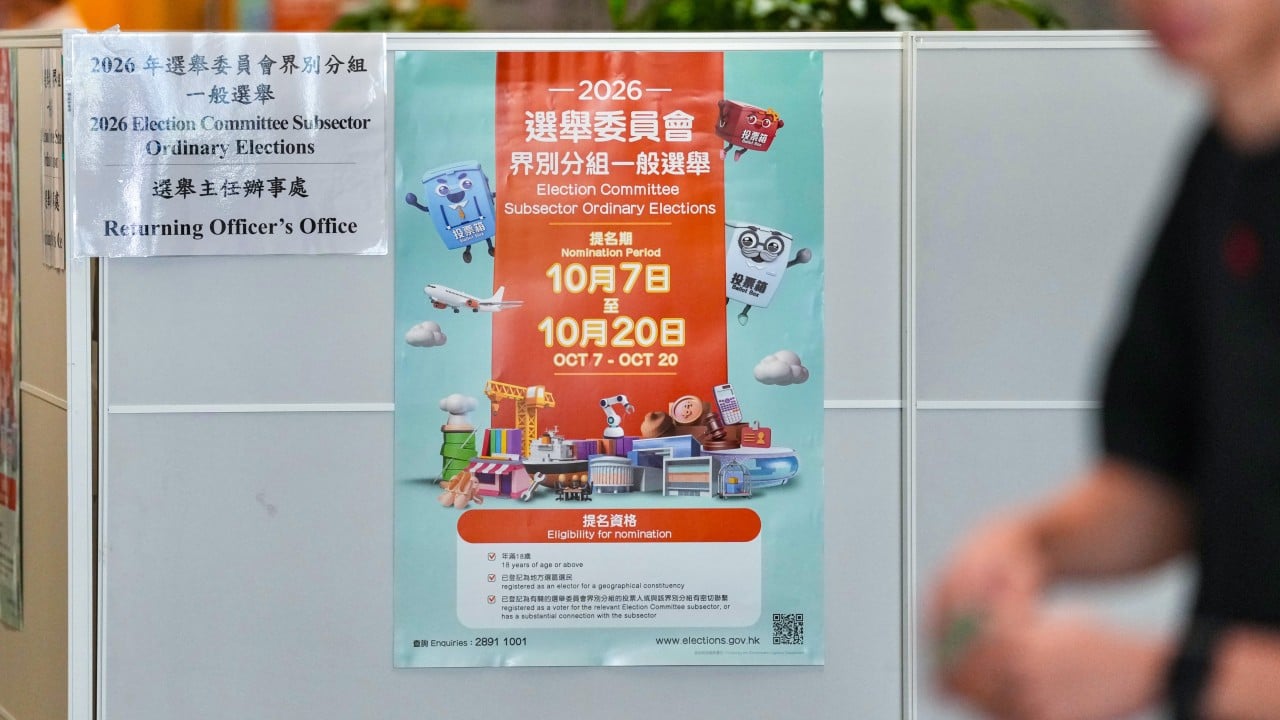
Most coverage treats Hong Kong’s Election Committee Subsector Ordinary Elections as a conventional political horse race, tracking individual personalities while ignoring the structural filter that determines every outcome before a single ballot is cast. In the November 2026 cycle, 856 candidates competed for 723 contested seats across 31 subsectors, yet the true locus of power sits inside a closed, multi-tiered selectorate architecture engineered under the 2021 electoral overhaul. Understanding how this body operates requires stripping away standard democratic campaign assumptions and analyzing the institutional mechanics of a 1,500-member corporate-state clearinghouse.
The Selectorate Architecture and the Three Entry Channels
Political science defines a selectorate as the subset of a population that holds the institutional authority to choose executive leadership. Under Annex I of the Basic Law as amended in 2021, Hong Kong’s Election Committee functions as a 1,500-member selectorate divided equally into five sectors of 300 seats each: Read more on a related topic: this related article.
- Sector 1: Industrial, commercial, and financial interests.
- Sector 2: The professions.
- Sector 3: Grassroots, labour, religious, and social service organizations.
- Sector 4: Members of the Legislative Council and representatives of district and area organizations.
- Sector 5: Hong Kong deputies to the National People’s Congress (NPC), members of the National Committee of the Chinese People’s Political Consultative Conference (CPPCC), and representatives of Hong Kong members of relevant national organizations.
Conventional reporting obscures how seats inside these five sectors are populated. Seats are not allocated through a uniform electoral mechanism; they are distributed across three distinct entry channels that insulate core institutional blocs from open electoral volatility:
- Ex-Officio Allocation: Certain officeholders—such as Hong Kong NPC deputies, CPPCC members, Legislative Council members, and designated heads of statutory bodies or universities—assume seats automatically by virtue of their institutional post. In the 2026 cycle, 341 individuals were confirmed as validly registered ex-officio members.
- Direct Nomination by Designated Bodies: Specific subsectors, including the religious subsector and segments of the technology, legal, and Chinese medicine subsectors, fill seats through direct nomination by state-recognized associations rather than balloting. For the 2026 term, 156 members entered through this nomination channel.
- Subsector Balloting: The remaining seats are filled via subsector elections, which encompass both uncontested returns and contested races. In November 2026, 259 candidates were returned uncontested, leaving 723 seats decided by contested balloting among 856 candidates.
This three-channel design creates an asymmetric baseline. Nearly half of the 1,500-member committee is locked in before contested voting begins through ex-officio status, direct nomination, or uncontested return. Contested elections operate within pre-calibrated boundaries rather than functioning as open-ended referenda on public sentiment. More reporting by USA Today delves into related views on this issue.
The Vetting Bottleneck and Pre-Ballot Filtering
Before any candidate reaches a ballot paper or secures an uncontested return, they must clear an upstream administrative gate. Every prospective candidate requires valid nominations from voters within their specific subsector—and in many cases, endorsements from Sector 5 national organization representatives—followed by mandatory screening by the Candidate Eligibility Review Committee (CERC).
The CERC evaluates candidates against statutory criteria requiring loyalty to the Hong Kong Special Administrative Region and adherence to the Basic Law. In operational terms, this functions as a pre-ballot filter that eliminates ideological variance prior to campaigning. Competition is confined strictly to candidates who have passed national security and constitutional vetting.
When analysts describe the 2026 race as featuring competitive contests across 31 subsectors, that competition must be understood as intra-establishment optimization. Voters are not choosing between opposing constitutional visions; they are selecting which technocrats, business executives, and community leaders will represent sectoral interests within an aligned governance framework.
Voting Mechanics and the Corporate Electorate Shift
A frequent error in surface-level election guides is conflating the Election Committee electorate with the general public. Prior to the 2021 restructuring, several professional and functional subsectors—such as education, legal, and medical—contained large pools of individual practitioners voting in their personal capacity. The 2021 overhaul systematically contracted individual voting and expanded corporate and organizational voting.
Under current rules, the overwhelming majority of subsector votes are cast by corporate entities, trade associations, and designated institutional bodies rather than individual citizens. An authorized representative casts a single ballot on behalf of a registered organization.
The voting system itself uses Multiple Non-Transferable Vote (MNTV) block balloting. Within a given subsector:
- If a subsector is allocated $N$ contested seats, each eligible corporate or individual voter may cast up to $N$ votes, selecting up to $N$ distinct candidates on a single ballot.
- Voters cannot cumulative-vote (casting multiple votes for one preferred candidate) and cannot rank preferences.
- The $N$ candidates with the highest raw vote totals win the seats.
This mechanic rewards coordinated slate management over individual charisma. Because corporate voters are identifiable, finite, and organized through peak industry chambers and clan associations, campaign strategy centers on institutional endorsement and slate discipline. A candidate running outside an established chamber slate faces severe mathematical friction under MNTV rules, as coordinated voters cast identical full-slate ballots across all $N$ available slots.
The structural consequence of a small, corporate-heavy electorate is exceptionally high turnout. In the November 2026 elections, overall voter turnout reached 98.8 percent, with 14 subsectors—including commercial, industrial, legal, and technology—recording 100 percent participation. In a corporate selectorate, high turnout reflects institutional compliance and organizational mobilization rather than mass populist enthusiasm.
Candidate Archetypes and Cohort Dynamics
Evaluating notable candidates in the Election Committee requires categorizing them by institutional function rather than treating them as conventional politicians. Across the 2026 cycle, three distinct candidate archetypes define the incoming cohort:
1. Recycled Senior Technocrats
A prominent pattern in the November 2026 results is the transition of former senior civil servants and principal officials into the Election Committee. Contested subsectors returned multiple former policy secretaries and department heads, including former Secretary for Justice Rimsky Yuen Kwok-keung, former Secretary for Food and Health Sophia Chan Siu-chee, former Secretary for Innovation and Technology Alfred Sit Wing-hang, and former Secretary for Development Eric Ma Siu-cheung, alongside former permanent secretaries Annie Tam Kam-lan and Hon Chi-keung.
Operational Role: These figures provide institutional memory and regulatory fluency. Having run government bureaus, they act as intermediaries who translate executive policy initiatives into language digestible by industry subsectors—and vice versa. However, bureaucratic pedigree does not guarantee immunity from intra-sectoral competition; former Secretary for Financial Services and the Treasury Ceajer Chan Ka-keung failed to secure a seat in the contested finance subsector, demonstrating that established chamber networks can outmaneuver former officials when subsector seats are oversubscribed.
2. Symbolic Cultural and Athletic Figures
In Sector 5—specifically the subsector representing Hong Kong members of relevant national organizations—uncontested seats went to high-profile non-political figures, including Olympic table tennis medalist Doo Hoi-kem and visually impaired singer Michelle Siu Hoi-yan.
Operational Role: Placing recognizable athletes and cultural figures inside Sector 5 broadens the committee's public legitimacy without altering its voting discipline. These entrants serve a communicative and representational function, linking national integration narratives to relatable civic achievements while operating inside the committee's most tightly coordinated sector.
3. Next-Generation Corporate and Mainland-Linked Operators
The remaining contested seats across commercial, financial, and innovation subsectors increasingly favor second-generation conglomerate executives, cross-border financial managers, and leaders of mainland-affiliated enterprise associations.
Operational Role: As Hong Kong’s economic policy pivots toward Greater Bay Area integration and state-aligned industrial strategy, business representation on the Election Committee has shifted away from traditional local property-centric oligopolies toward operators with direct mainland commercial exposure.
Downstream Leverage: Why the Committee Controls Governance
The Election Committee’s strategic weight stems from its dual constitutional mandate, which extends far beyond selecting a single executive every five years.
First, the committee nominates and elects the Chief Executive. To qualify as a Chief Executive candidate, an aspirant must secure nominations from at least 188 Election Committee members, including a minimum of 15 members from each of the five sectors. Winning the Chief Executive election requires an absolute majority of more than 750 votes across the 1,500-member body. Because every sector holds a minimum nomination threshold, no candidate can bypass grassroots, district, or national-organization blocs by relying solely on business tycoons.
Second, the committee directly shapes the legislature. Under the post-2021 Legislative Council structure, the Election Committee Constituency elects 40 of the 90 Legislative Council seats—the single largest bloc in the legislature, outnumbering both functional constituencies (30 seats) and geographical constituencies (20 seats). Furthermore, every candidate running in any Legislative Council constituency must secure nominations from Election Committee members across all five sectors before standing for election.
This creates a closed-loop governance circuit: the same 1,500-member body selects the head of the executive branch, directly elects 44 percent of the legislature, and acts as the mandatory nominating gatekeeper for the remaining 56 percent of legislative seats.
Analytical Limitations and System Blind Spots
Observers relying on Election Committee metrics to gauge Hong Kong’s political stability or economic sentiment face three structural blind spots:
- Turnout Distortion: A 98.8 percent turnout rate measures administrative mobilization among corporate and organizational electors, not broader civic engagement among Hong Kong’s 7.5 million residents. Treating corporate selectorate turnout as a proxy for public satisfaction produces severe analytical errors.
- Consensus Masking: Because CERC vetting and MNTV slate voting compress public ideological disagreement, policy friction inside the establishment rarely surfaces during the subsector campaign. Conflicts over tax policy, land supply, and regulatory reform still exist between traditional local conglomerates, mainland state-owned enterprises, and grassroots labour unions, but they are negotiated behind closed doors rather than debated on campaign stages.
- Accountability Asymmetry: Because corporate electors and ex-officio officeholders answer to boards, chambers, or appointing authorities rather than mass geographical electorates, Election Committee members face minimal pressure to respond to retail consumer or middle-class voter grievances unless those grievances align with central government priorities.
Strategic Positioning for Institutional Stakeholders
For corporate leaders, policy analysts, and institutional investors operating in Hong Kong, treating the Election Committee as a ceremonial body is a capital-allocation mistake. Because the committee controls both Chief Executive selection and Legislative Council composition, regulatory and fiscal priorities over the next five-year cycle are negotiated within its subsector networks.
Organizations seeking regulatory visibility or policy input should execute three concrete adjustments:
- Map Sectoral Interlocks Over Individual Titles: Track which industry associations and peak chambers control corporate votes within your specific Sector 1 or Sector 2 subsector. Influence flows through the trade bodies that assemble MNTV slates rather than through isolated individual members.
- Engage Sector 4 and Sector 5 Bridges: Because Chief Executive and Legislative Council nominations require cross-sector thresholds across all five sectors, policy proposals backed solely by commercial chambers fail if they encounter resistance from Sector 3 labour groups or Sector 4 district networks. Build coalition alignment across district and national-organization representatives early in the legislative cycle.
- Monitor Former Official Appointments as Policy Signals: Track which subsectors absorb former policy secretaries and permanent secretaries. Where retired senior bureaucrats cluster inside specific subsectors, expect heightened regulatory coordination and accelerated alignment between executive bureau initiatives and industry compliance standards.