High-stakes diplomatic engagements operate under strict semiotic constraints where every visual variable acts as a calibrated signal to domestic and international audiences. When state principals gather for high-level summits, wardrobe selection is never incidental. It functions as a non-verbal messaging protocol designed to project national identity, signal political alignment, and communicate strategic posture without the friction of formal negotiations. Analyzing the sartorial choices deployed during recent diplomatic meetings in Washington reveals a deliberate shift from Western corporate uniformity toward distinct national aesthetics, most notably through the calculated resurgence of structured traditional and neo-traditional silhouettes.
The primary mechanism driving this shift is the substitution of universal diplomatic armor with sovereign visual heritage. For decades, the standard uniform of global summits was strictly bound to the Western business suit—a single-breasted or double-breasted two-piece configuration in charcoal navy or black paired with a silk tie. This uniformity minimized cultural friction but effectively neutralized domestic visual signaling. By reintroducing alternative authoritative silhouettes, state delegations alter the baseline of international protocol. For a different perspective, check out: this related article.
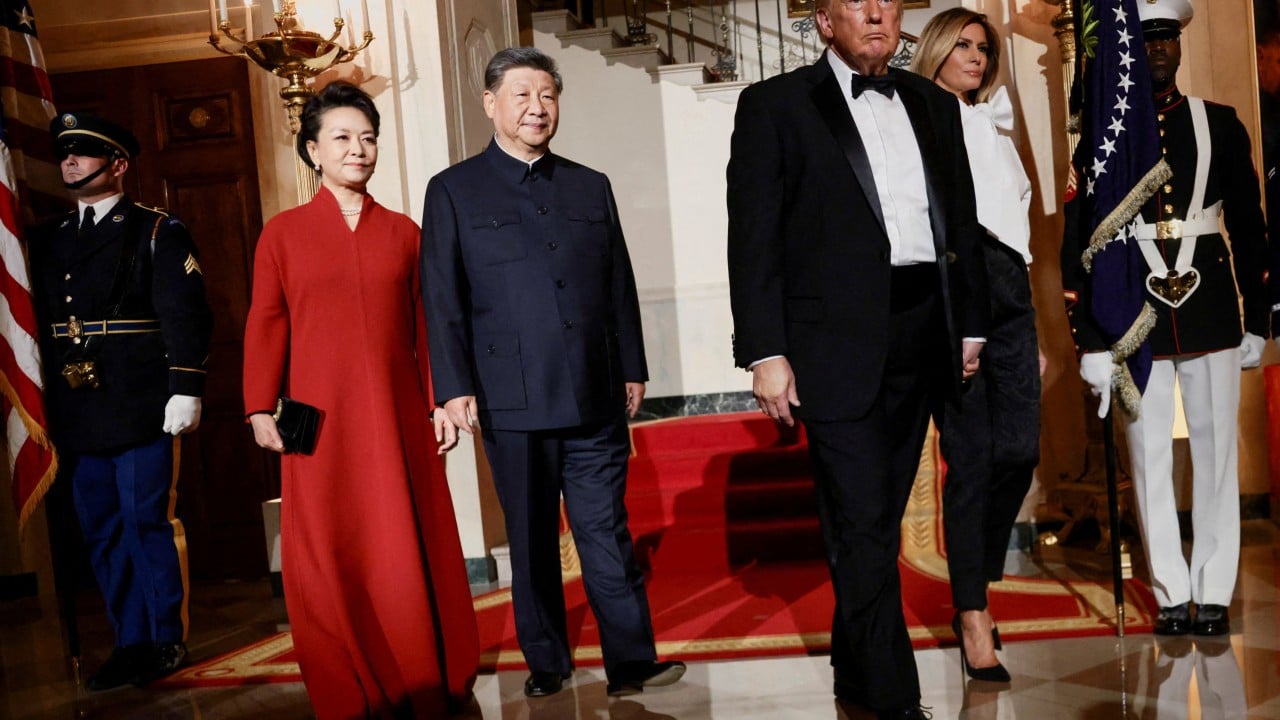
The deployment of the Mao suit alongside embroidered textile elements establishes a dual-track signaling strategy. The structure of the garment projects historical continuity and institutional discipline, while specific textural details, such as traditional botanical motifs like the peony, anchor the aesthetic in deep cultural iconography. This creates a high-contrast visual environment where the host nation's standardized executive dress code meets an intentionally distinct, culturally sovereign counter-aesthetic.
To understand the mechanics of this sartorial diplomacy, one must deconstruct the variables that govern summit wardrobe architecture: Further coverage on this trend has been shared by Reuters.
- Silhouette Authority: The geometry of the garment dictates physical presence. Structured collars and militaristic or minimalist cuts project administrative control and internal cohesion.
- Textural Narrative: Fabrics and embroidery patterns communicate heritage and economic depth, moving the visual narrative from modern corporate standardization to historical lineage.
- Audience Segmentation: Visual signals are dual-routed. Domestically, they reinforce nationalist narratives and validate local aesthetic pride. Internationally, they project autonomy and refusal to assimilate into a Western-dominated visual hegemony.
The economic and manufacturing realities behind these garments further reinforce their strategic utility. Unlike mass-produced Western tailoring, garments featuring intricate traditional embroidery or specialized cuts require specialized artisan labor and localized supply chains. Wearing them on an international stage acts as a high-visibility endorsement of domestic craftsmanship, turning a diplomatic wardrobe into an implicit trade showcase.
Furthermore, the timing of these sartorial choices coincides with periods of intense structural competition. When formal communiqués are deadlocked or diplomatic channels face friction, visual signaling acts as a pressure release valve. It allows a delegation to assert distinct cultural boundaries while maintaining the physical proximity required for ongoing negotiations. The absence of compromise at the negotiating table is often inversely proportional to the rigidity and distinctiveness of the visual presentation observed on the steps of the summit venue.
Evaluating the efficacy of this approach requires looking beyond the immediate media cycle and examining long-term perceptual shifts. As global governance fragments into multi-polar power centers, the homogenization of international summit dress will continue to erode. Future diplomatic encounters will increasingly feature codified national dress as a standard instrument of statecraft, replacing subtle nods with explicit visual declarations of sovereignty. Delegations that fail to master this non-verbal layer cede narrative control to opponents who understand that perception is a foundational component of geopolitical leverage.