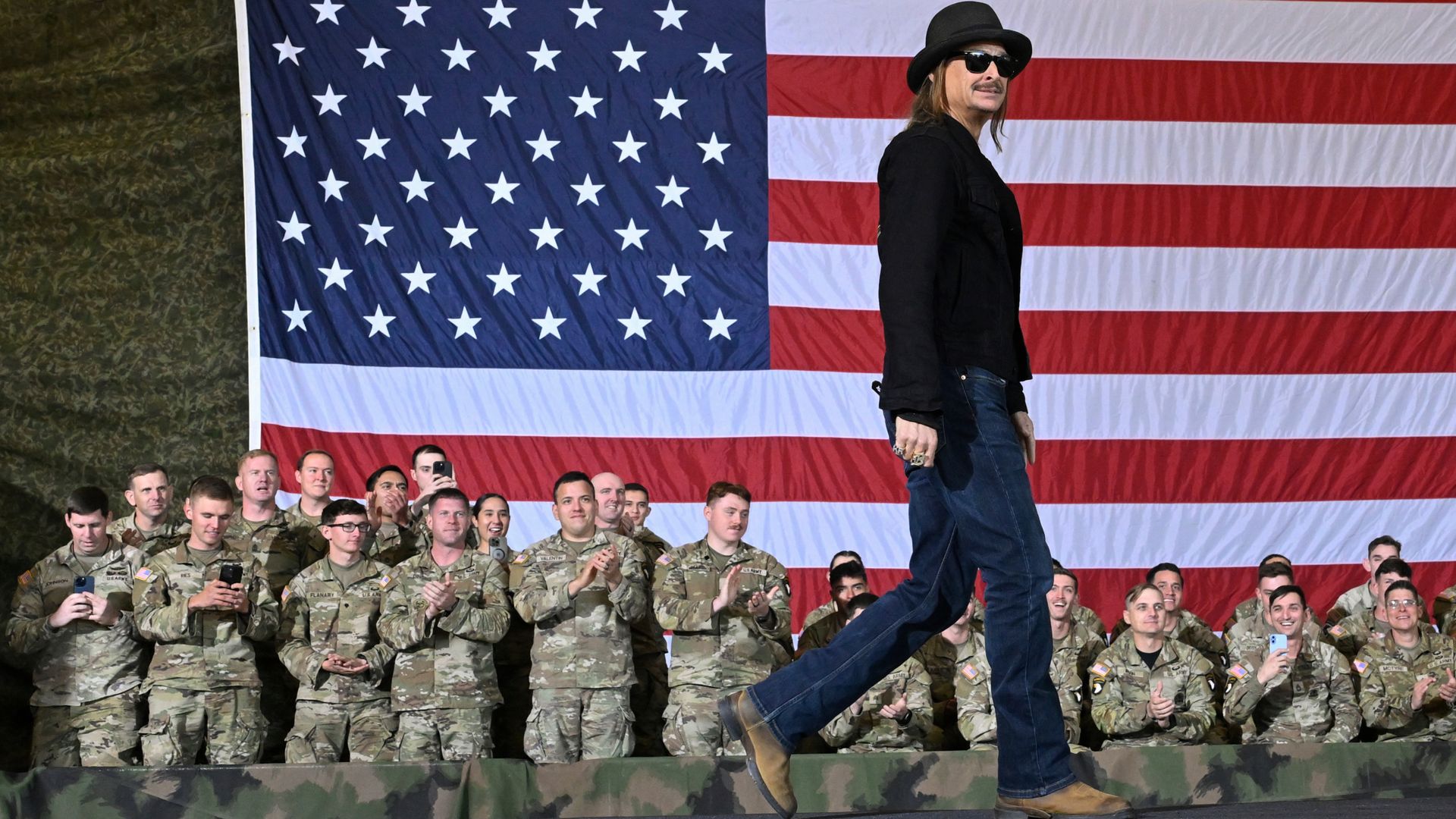
Military pilots aren't supposed to treat the sky like a personal playground. When a group of Army National Guard members decided to take their helicopters on a detour over Kid Rock’s Nashville estate, it looked like a classic case of tax-funded joyriding. People were pissed. Investigations were launched. The internet did what it does best—erupted into a shouting match about celebrity worship versus military discipline.
Now, the dust has settled. The Army finished its homework and decided the crews didn't actually break any major rules. They're back in the cockpit. If you think that sounds like a lucky break, you're right. But it’s also a look into how the military handles its own when the spotlight gets a little too bright. Expanding on this theme, you can find more in: Why the Green Party Victory in Manchester is a Disaster for Keir Starmer.
Why the Kid Rock Flyover Investigation Went Nowhere
The whole drama started when videos surfaced of UH-60 Black Hawks dipping low over the rock star’s property. To the average person, it looked like a private concert salute. To the Army, it looked like a potential violation of flight paths and safety regulations. You can't just steer a multi-million dollar machine wherever you want because you like "Bawitdaba."
Military investigators looked at the flight data. They checked the altitudes. They reviewed the mission parameters. Their finding? The crews stayed within the legal limits of their training flight. They weren't low enough to be "buzzing" the house in a way that violated FAA or Army safety minimums. Essentially, they skirted the line without crossing it. Analysts at NPR have shared their thoughts on this situation.
It’s a classic "legal but looks bad" scenario. The Army isn't in the business of firing pilots for being fans, as long as they stay within the box. Since the flight path was technically pre-approved and the altitude stayed above the "reckless" threshold, there wasn't enough meat on the bone for a court-martial or even a permanent grounding.
Breaking Down the Army Flight Rules
Most people don't realize how much freedom pilots actually have during low-level training. These maneuvers are necessary. Pilots need to practice contour flying—hugging the terrain to stay under radar. Nashville's rolling hills are perfect for this.
When these crews headed out, they were on a "continuation training" mission. That's military speak for "keeping your skills sharp." They have a set area they can fly in. Kid Rock's house just happens to be in that area.
- Altitude minimums: Generally, for these types of missions, pilots have to stay 500 feet above the highest obstacle.
- Mission intent: If a pilot deviates from a flight plan for personal reasons, it's a huge problem.
- The "Fan" Factor: The investigation had to prove the pilots went out of their way specifically to see the celebrity.
The Army concluded the flight stayed on its intended track. Did they linger a second longer? Maybe. Did they bank the helicopter so the crew chief could get a better view? Probably. But proving "intent to fanboy" is almost impossible when the flight logs show they were where they were supposed to be.
The Controversy of Carry On Patriots
The phrase "Carry on, patriots" started circulating almost immediately after the news broke that the investigation was dropped. It’s a polarizing sentiment. On one side, you have people who think the military is becoming too "woke" or restrictive, and they see this as a win for the "good old boys." On the other, you have taxpayers who don't want their money spent on celebrity sightings.
Let’s be real. If these pilots flew over a random farmer's house, nobody would care. The farmer might complain about the noise, but there wouldn't be a national news story. The celebrity element is the only reason this became a thing. Kid Rock is a lightning rod. He’s vocal, he’s political, and he loves the military. That combination makes this a culture war issue instead of a simple aviation safety check.
What This Means for Military Accountability
The Army has a reputation for being strict. Usually, if you breathe wrong, there’s a counseling statement waiting for you. So, why did these guys get off?
It comes down to retention and common sense. We're in a pilot shortage. The military is struggling to keep experienced aviators in the seats. If you start hammer-dropping every pilot who makes a minor PR mistake, you’re going to have empty hangars. The command likely saw this as a "don't do it again" moment rather than a career-ending offense.
They did receive "administrative actions." That’s the Army way of saying they got a stern talking-to and maybe some extra paperwork. It’s not a slap on the wrist, but it’s definitely not a kick out the door. They were cleared to return to flight status because, at the end of the day, they are still qualified, trained assets that the National Guard needs.
The Reality of Low Level Flight Operations
If you live near a base, you know the sound. The windows rattle, the dog barks, and you see a shadow pass over the backyard. Usually, it's just a Tuesday.
The Kid Rock incident highlights a growing gap between military operations and public perception. As urban sprawl moves closer to training areas, these "encounters" happen more often. Pilots are trained to avoid noise-sensitive areas, but a celebrity mansion isn't always marked on the map as a "no-fly zone."
The investigation looked at whether the pilots "harassed" the property. Harassment in aviation terms usually means repeated passes at dangerously low levels or performing aerobatics. Since this was a pass-through, it didn't fit the bill.
What Happens Next for the Crew
The crews are back. They’re flying. But you can bet your life they aren't flying anywhere near Kid Rock’s zip code for a long time. They're likely under a microscope now. Every bank, every climb, and every radio call will be scrutinized by their safety officers.
This isn't just about one flight. It's about the "optics." The military hates being the center of a political meme. These pilots learned that the hard way. They might have kept their wings, but they lost their anonymity.
How to Handle Military Noise Complaints
If a Black Hawk ever actually does buzz your house—and I mean really low, where you can see the pilot’s helmet—you don't just post it on TikTok. There’s a process.
- Get the tail number: Hard to do, but if you can see it, write it down.
- Note the time and direction: This is how they track the flight logs.
- Contact the Public Affairs Office (PAO): Every base has one. They're the ones who handle "noise complaints."
- Be specific: "It was loud" doesn't help. "It was below tree-level and circling" gets an investigation started.
The Army dropped the case because the evidence didn't support a crime. It supported a lapse in judgment, and in the military, judgment lapses are handled with training, not always with firing squads. The "patriots" are carrying on, but the lesson here is simple: if you’re flying a $20 million helicopter, keep your eyes on the mission and off the celebrities.