Listen.
Before a single handshake is photographed, before a single trade agreement is inked in gold leaf, and long before the cameras pan across a gilded banquet hall, diplomacy speaks in brass and percussion. It happens on the cold, windswept asphalt of an airport tarmac, usually under a gray winter sky, where a military band stands at rigid attention waiting for an airplane door to swing open.
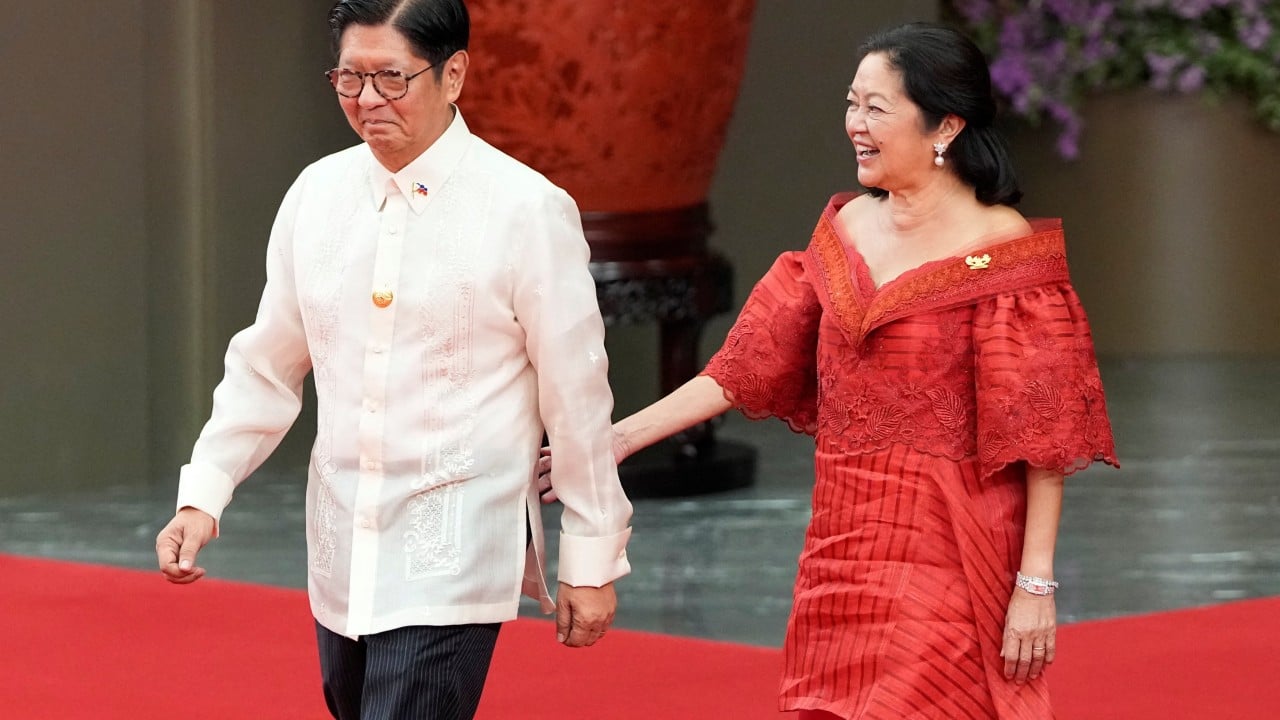
In January 2023, that door opened in Beijing for Philippine President Ferdinand Marcos Jr.
Stepping down the red-carpeted stairs into the biting northern chill, Marcos was greeted by the People’s Liberation Army military band. They lifted their instruments. They began to play. To the casual observer scrolling past a ten-second clip on a smartphone screen, it sounded pleasant enough—a sweeping, melodic arrangement with a distinct, nostalgic lilt. A nice gesture for a visiting neighbor.
Except the melody wasn’t a random piece of ceremonial filler. It was "The Story of Time" (Guangyin de Gushi), a classic Mandopop ballad originally popularized in the 1980s by Taiwanese singer Sylvia Chang and later covered by powerhouse vocalists across the Chinese-speaking world.
And in the hyper-choreographed universe of Beijing’s foreign policy, nothing—not the color of a tie, not the seating chart at a state dinner, and certainly not the sheet music handed to the People’s Liberation Army—is ever left to chance.
The Weight of a Three-Minute Melody
To understand why a forty-year-old pop song set off quiet alarms across diplomatic cables in Manila, Washington, and Tokyo, you have to understand how statecraft actually works behind closed doors.
I have spent years watching international summits from the press risers and the back rows of ministry briefings, and if there is one thing I can tell you with absolute certainty, it is this: diplomats are terrifyingly literal people who communicate almost entirely in subtext. When two nations are locked in a high-stakes territorial standoff—like the bitter, ongoing dispute between China and the Philippines over the South China Sea—leaders cannot simply walk up to a microphone and shout their grievances. That causes markets to crash and warships to mobilize. Instead, they weaponize etiquette.
Think of state protocol like an old-fashioned Victorian parlor room. On the surface, everyone is sipping tea and complimenting the wallpaper. Underneath the table, they are kicking each other in the shins.
When Beijing selected "The Story of Time" for Marcos, they weren't just picking a pretty tune. Look at the lyrics of that song, which every single Chinese official standing on that tarmac knew by heart. The ballad speaks of the relentless passage of years, of how time changes everything, of spring flowers blooming and autumn winds blowing, and how a single moment of history transforms a person—or a nation—forever.
More specifically, the song carries heavy nostalgic weight tied directly to the 1970s and 1980s. Why does that specific era matter? Because in 1975, Ferdinand Marcos Sr.—the current president’s late father and namesake—traveled to Beijing to meet Chairman Mao Zedong, formally establishing diplomatic ties between the Philippines and the People’s Republic of China.
Beijing was playing a memory card. By filling the freezing air with a song steeped in the nostalgia of changing eras and shared history, China was gently, firmly reminding the younger Marcos of his father’s legacy. The unspoken message hung between the notes: Remember who opened this door. Remember how much time has passed. Do not throw away what your family built.
A Fisherman, a Coast Guard Cutter, and a Brass Section
It is easy to treat this kind of musical diplomacy as parlor trivia, a fun little Easter egg for foreign policy nerds to dissect over coffee. I used to view it that way myself. Early in my career, I thought protocol analysis was mostly guesswork—reading tea leaves when the real action was happening in naval shipyards and trade ministries.
I stopped thinking that way the afternoon I stood on a wooden pier in Zambales, a coastal province in the Philippines facing the West Philippine Sea, talking to a fisherman named Mateo.
Let me introduce Mateo as a composite, a hypothetical character built from dozens of real men I have interviewed along that coastline whose livelihoods hang on the whims of Beijing and Manila. Mateo is fifty-two, his skin cured like dark leather by salt and equatorial sun, his livelihood tied to a twenty-foot wooden outrigger boat with a sputtering diesel engine. For generations, his family fished the calm, turquoise waters of Scarborough Shoal, a triangle of reefs and rocks rich with grouper and snapper.
Mateo has never heard of "The Story of Time." He has never walked a red carpet in Beijing. Yet the exact subtext encoded in that brass band's performance dictates whether Mateo comes home with a hold full of fish or an empty hull chased off by a water cannon.
When Marcos Jr. took office in June 2022, he inherited a diplomatic tightrope stretched over a chasm. His predecessor, Rodrigo Duterte, had pivoted sharply toward Beijing, downplaying a landmark 2016 international arbitration ruling that invalidated China’s sweeping claims over the South China Sea, in exchange for promises of billions in Chinese infrastructure loans—most of which never materialized.
By the time Marcos flew to Beijing in January 2023, the mood in Manila had soured. Chinese Coast Guard vessels were aggressively blocking Philippine supply boats heading to the Second Thomas Shoal, shining military-grade lasers at Filipino crews, and swarming disputed reefs. At the same time, Marcos was quietly reopening talks with the United States, preparing to expand American military access to Philippine bases—bases located just across the water from Taiwan.
So when Marcos stepped onto that Beijing tarmac, China wasn't welcoming an unquestioning ally. They were greeting a leader who was drifting back toward Washington.
The song choice was an emotional anchor dropped into turbulent water. Beijing knew Marcos was proud of his father’s statesmanship in the 1970s. By serenading him with a melody tied to the passage of eras and the weight of history, Chinese officials were trying to pull him back into a familiar orbit—before he signed the deals with Washington that would lock in a very different future.
How Beijing Writes Its Playlists
If this sounds like an over-interpretation, look at China’s track record. Beijing has turned state dinner playlists and tarmac welcomes into an art form, a deliberate branch of soft-power signaling that researchers and intelligence analysts actually track.
Consider what happens when other leaders visit.
When Russian President Vladimir Putin arrives in Beijing, the military bands frequently lean into beloved Soviet-era classics like "Katyusha" or "Moscow Nights." The subtext there is unmistakable: brotherhood, shared ideological roots, and an unbroken front against the West. There is no ambiguity in "Katyusha." It is a wartime song about loyalty and endurance.
Contrast that with how China greeted U.S. officials during periods of intense trade friction, or how state media selectively broadcasts specific classical pieces during diplomatic standoffs. During the height of the U.S.-China trade war in 2019, Chinese state television abruptly changed its evening programming to air old anti-American war films from the Korean War era, accompanied by triumphant revolutionary marches. No diplomat had to issue a press release saying, We are prepared to fight a long, painful economic war. The soundtrack said it for them.
Even the choice of a song with deep roots in Taiwan—remember, "The Story of Time" was first sung by Sylvia Chang in 1982, at the height of Taiwan's campus folk and early Mandopop golden age—carried a double edge. In Beijing’s eyes, playing a beloved Taiwanese song at an official state reception subtly folds Taiwan’s cultural heritage into the broader Chinese national narrative, right in front of a Philippine president whose country sits right next to the Taiwan Strait.
You begin to realize that the PLA band is not an entertainment committee. They are messengers in dress uniforms.
The Anatomy of a Diplomatic Signal
Why go to all this trouble? Why not just say what you mean in the closed-door bilateral meeting an hour later?
Think about how human beings handle confrontation when pride is on the line. If you walk into a room and immediately accuse a neighbor of trespassing on your yard, the neighbor’s defenses go up. They cross their arms. They stop listening. Now, imagine instead that before you even bring up the property line, you invite them onto your porch, pour them the exact drink you used to share with their late father, and put on a record from the summer you two helped each other build the fence.
You haven't surrendered an inch of your property claim. You haven't backed down. You have simply framed the upcoming argument on your emotional turf. You have made the other person feel slightly guilty, slightly nostalgic, and keenly aware of what they stand to lose if they blow up the relationship.
That is precisely what happened in Beijing.
Inside the Great Hall of the People, the actual talks were polite, structured, and ultimately non-committal. Marcos and Chinese President Xi Jinping agreed to establish a direct communication mechanism between their foreign ministries to avoid "miscalculations and miscommunication" in the South China Sea. They signed fourteen bilateral agreements covering agriculture, infrastructure, and tourism. On paper, it looked like a warm, productive reset.
Yet the real story wasn't in the fourteen agreements. It was in what happened after the music stopped.
When the Melody Fades
Less than a month after returning from Beijing, in February 2023, Ferdinand Marcos Jr. stood beside U.S. Defense Secretary Lloyd Austin in Manila and announced a massive expansion of the Enhanced Defense Cooperation Agreement (EDCA). The Philippines granted American forces access to four new strategic military sites—including bases in the northern province of Cagayan, barely two hundred miles from Taiwan, and on Balabac Island, looking directly out over the contested waters of the South China Sea.
Beijing’s musical nudge hadn't stopped the geopolitical shift.
Why? Because nostalgia cannot feed a nation, and a nostalgic ballad cannot erase the daily reality of water cannons and blocked supply ships. Marcos Jr. had listened politely to the music on the tarmac, accepted the hospitality of the Great Hall, and even expressed warmth about his father's 1975 trip. Then he flew home, looked at the maps laid out by his defense department, looked at the realities facing fishermen like Mateo, and made a cold, hard calculation about national survival.
If anything, the contrast between the warm, sentimental music in Beijing and the harsh, uncompromising behavior of Chinese vessels at sea only highlighted the widening gap between China’s words and its actions. You cannot serenade a neighbor with songs about timeless friendship while simultaneously cutting off their coast guard in disputed waters. Eventually, the dissonance becomes too loud to ignore.
The Invisible Stakes of Listening Closely
I still think about that ten-second clip from the Beijing airport whenever I watch international news. Most viewers treat state ceremonies as boring filler—the visual wallpaper networks run while anchors read off talking points about GDP growth and trade deficits. We fast-forward past the marching bands to get to the press conferences.
That is a mistake.
Press conferences are written by speechwriters and scrubbed clean by lawyers until every sharp edge has been sanded down into harmless platitudes. Tarmac welcomes, gift exchanges, and banquet playlists are where governments reveal their actual psychological playbook. They show you how a powerhouse sees itself, what levers it thinks it can pull on you, and where it believes your weaknesses lie.
China played "The Story of Time" because Beijing believed Marcos Jr. was sentimental, impressionable, and bound by the shadow of his father’s past. They bet that a reminder of history would outweigh the pressures of the present.
It was a sophisticated, deeply calculated bet. And it failed—not because the signal was misunderstood, but because the receiver understood it completely, and decided to walk another way anyway.
Out on the water off Zambales, the diesel engines still sputter to life before dawn, wooden hulls cutting through the dark swell toward reefs claimed by two flags, while the brass instruments in Beijing sit polished and quiet in their velvet cases, waiting for the next plane to land.