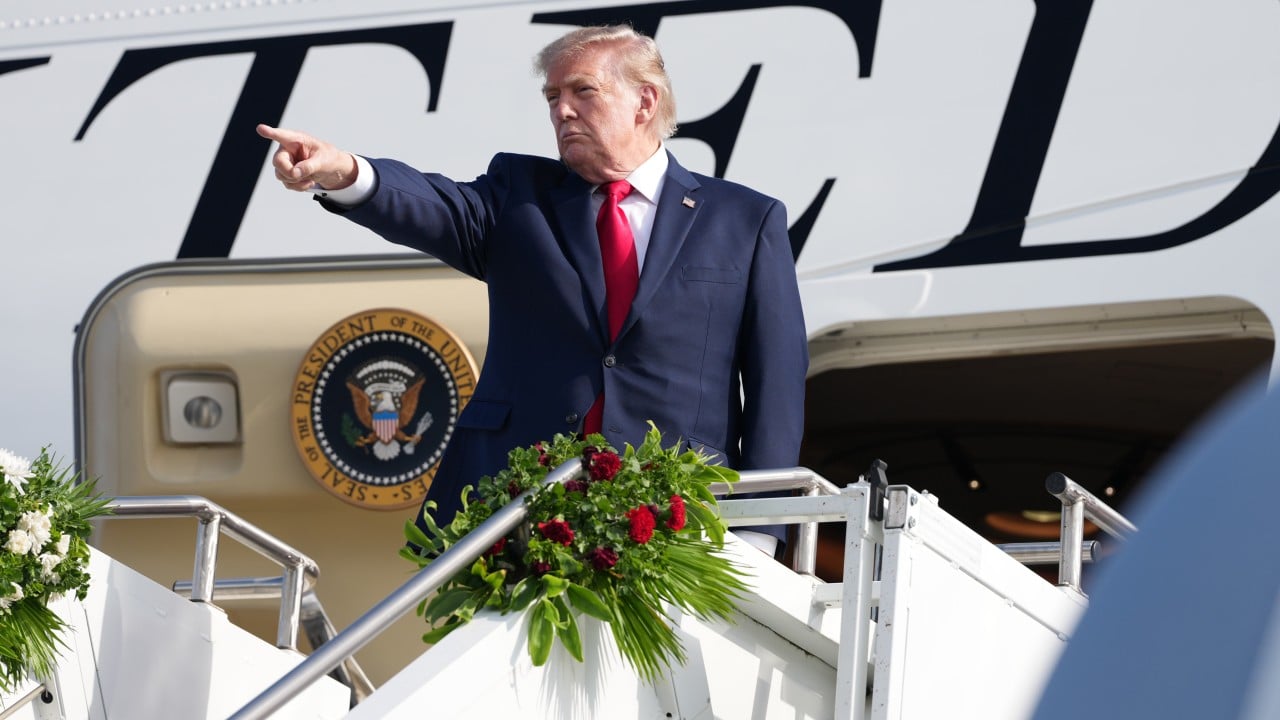
Two older Air Force One jets sat on the tarmac at Shenzhen Bao'an International Airport while a massive, freshly painted Boeing 747-8I stole every camera lens in southern China. Most headlines focused on the diplomatic spectacle of President Donald Trump arriving for the November 2026 APEC summit aboard a luxury airliner donated by Qatar. They missed the real story.
This wasn't just a flashy entrance in Shenzhen. The deployment proved that Washington's emergency stopgap plane—officially designated the VC-25B Bridge—can actually pull off ultra-long-haul presidential missions without stopping for fuel. For an Air Force fleet that's been limping along on 1990-era Boeing 747-200Bs, that single round-trip flight changed the operational math overnight.
Why the VC-25B Bridge Exists in the First Place
If you've followed the saga of the next-generation Air Force One program, you know it's been an expensive headache for years. Boeing's two permanent VC-25B replacements—built on heavily modified 747-8 airframes at the company's San Antonio facility—have suffered repeated schedule slips and billions of dollars in cost overruns. With delivery pushed out to 2028 and the legacy VC-25A fleet approaching 40 years of service, the Pentagon faced an awkward reality.
Keeping two aging 747-200Bs mission-ready for global presidential travel requires brutal maintenance cycles. Enter Qatar's 2025 donation of a VIP-configured Boeing 747-8I, registration N7478D (formerly A7-HJA under the Qatar Amiri Flight).
Defense contractor L3Harris rushed the jet through an intensive 10-month conversion to strip out foreign hardware, audit the airframe, and install military-grade communications and self-defense systems. The aircraft arrived at Joint Base Andrews in June 2026 and flew its first presidential mission to North Dakota on July 1, 2026. Until November, though, critics dismissed it as a domestic shuttle or a ceremonial flyover piece.
Shenzhen put that skepticism to rest.
What Actually Happened on the Shenzhen Trip
When the White House travel pool touched down in Guangdong province for the APEC meetings, aviation observers noticed something unusual on the ramp. All three presidential 747s—the new VC-25B Bridge and both legacy VC-25A jets—deployed to Asia for the summit. Standard presidential protocol always keeps a backup aircraft nearby on major overseas trips, especially when testing a newly commissioned airframe on a high-stakes diplomatic run.
The Outbound Stop vs. the Nonstop Return
On November 16, 2026, the outbound leg to Asia required a technical refueling stop in Fairbanks, Alaska—diverted from Anchorage because of freezing rain. That looked business-as-usual.
The return leg on November 19 was anything but. Departing Shenzhen at 5:54 p.m. local time, the VC-25B Bridge bypassed Alaska entirely. It climbed to 33,000 feet, averaged roughly 500 knots, and carved a great-circle arc over Shanghai, Tokyo, Shemya, Winnipeg, and Cleveland before touching down at Joint Base Andrews at 8:01 p.m. EST.
Total distance covered sat around 7,500 nautical miles.
Sorting Out the White House Record Claims
During the flight home, White House staff handed traveling reporters a signed commemorative card claiming two aviation milestones:
- The longest nonstop Air Force One flight in history.
- The heaviest takeoff in U.S. Air Force history, at just under one million pounds.
Let's look closely at the numbers, because precision matters here. Accounting for the 13-hour time difference between Shenzhen and Maryland, the wheels-up to wheels-down clock comes out to 14 hours and 7 minutes (the White House card rounded this to "nearly 15 hours," and a corrected pool report pinned down the exact 14-hour, 7-minute flight time).
What about the weight? Boeing lists the commercial 747-8 Intercontinental's maximum design takeoff weight at 987,000 pounds (about 447.7 metric tons). By comparison, the older VC-25A maxes out at 833,000 pounds, and even a fully loaded C-5M Super Galaxy tops out lower than a maxed-out 747-8. While the U.S. Air Force hasn't formally published the exact weight sheet from Shenzhen, lifting off near maximum fuel and VIP payload puts the jet right against that 987,000-pound ceiling.
Why Skipping a Fuel Stop Is a Big Deal for Presidential Security
To casual observers, saving a two-hour layover in Anchorage sounds like a minor convenience. For the Secret Service and Air Force planners, it's a massive tactical advantage.
Every time Air Force One touches down—even at a secure U.S. military base in Alaska—an entire security apparatus has to spin up. Local airspace gets locked down. Ground crews, perimeter security, medical teams, and backup logistics have to be staged hours in advance. Cutting a refueling stop in half eliminates an entire vulnerability window on transpacific summits.
It also solves a major hardware limitation. Unlike the 1990s-era VC-25As, neither the VC-25B Bridge nor Boeing's upcoming permanent VC-25Bs are equipped for aerial refueling. Range has to come purely from fuel capacity and aerodynamic efficiency. Interestingly, because the Bridge kept a lighter VIP interior configuration than the heavily armored permanent VC-25Bs still under construction, it actually carries better unrefueled range than the $5 billion replacements will have when they arrive.
The Trade-Offs Nobody Wants to Talk About
None of this means the Qatar-gifted 747 is a miracle fix. Honestly, operating a one-off presidential airframe comes with real headaches that aviation analysts have been flagging since June.
First, there's the runway footprint. At nearly a million pounds with a 224-foot wingspan, a 747-8I cannot land at many smaller regional airfields where the older, lighter VC-25As routinely operate. Global airports often require specific taxiway clearances and reinforced pavement just to handle the load.
Second, spare parts and fleet commonality remain an ongoing grind. The Air Force even had to acquire a retired commercial Lufthansa 747-8 to strip down in Arizona for spare windshields, escape slides, and structural components. And back in July 2026, following a NATO summit in Turkey, the president actually switched back to a legacy VC-25A for the flight from Ankara to RAF Mildenhall—sparking intense debate in defense circles over whether certain high-threat airspace corridors still require the deeper defensive countermeasure suites built into the original Air Force One jets.
Third, the legal and political friction hasn't gone away. Because the jet was gifted by a foreign government before being transferred to U.S. government custody—with plans to eventually transfer the airframe to a presidential foundation after 2029—constitutional scholars and congressional oversight committees continue to scrutinize the arrangement.
How to Track What Happens Next With the Presidential Fleet
If you're watching military aviation or U.S.-China diplomacy, the Shenzhen trip gives you a clear baseline for how the White House will use its three-plane fleet over the next two years.
- Watch international routing patterns. Pay attention to whether the VC-25B Bridge becomes the default choice for long Pacific and Middle Eastern legs while the older VC-25As handle shorter European trips or regional airfields with weight limits.
- Track the 2028 Boeing delivery milestones. Boeing's permanent VC-25B program faces major electrical power-on testing at the end of 2026 ahead of its scheduled 2028 handover. Any further slip in San Antonio directly extends how long the Bridge jet stays in active frontline rotation.
- Check official Air Force verification releases. Keep an eye on Air Mobility Command and White House press pool dispatches for formal weight and performance certifications from the Shenzhen flight, which will confirm how close the 747-8I operated to its 987,000-pound structural limit.
For deeper context on how this aircraft went from a Qatari royal transport to flying the U.S. president over the Pacific, watch this breakdown of Air Force One's Million-Pound Takeoff, which captures the VC-25B Bridge rolling down the Shenzhen runway alongside its legacy predecessor.