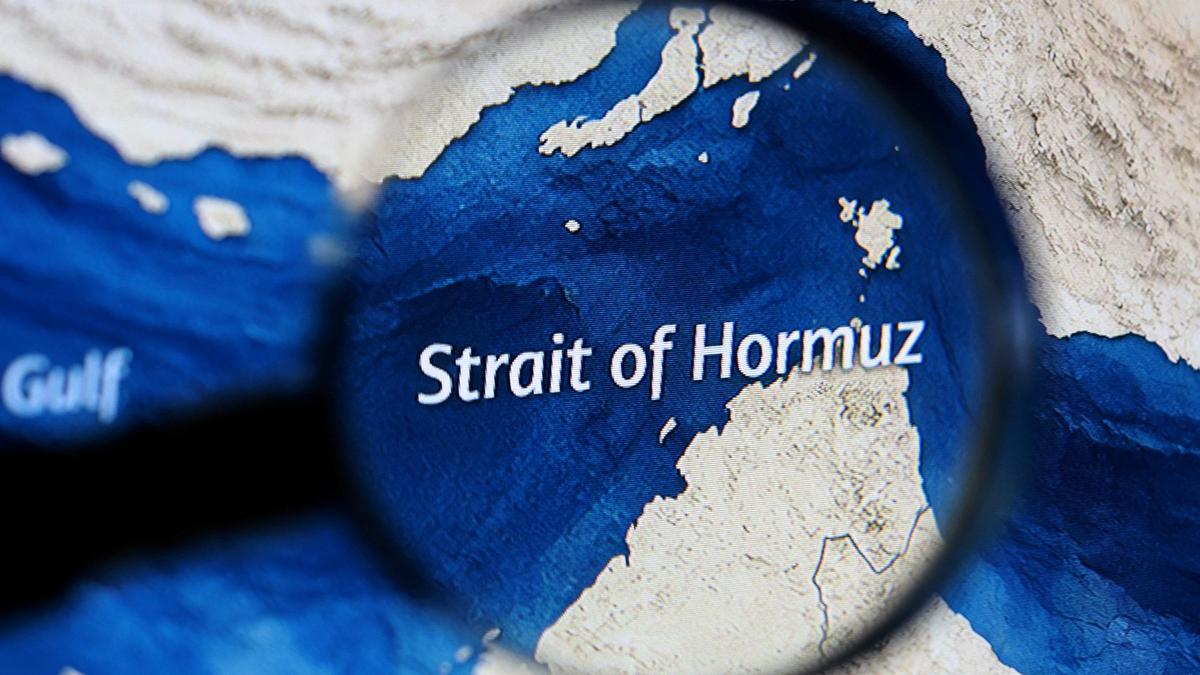
The global economy rests on a knife’s edge in a stretch of water barely twenty-one miles wide at its narrowest point. While headlines focus on the explosive potential of a direct U.S.-Israel-Iran conflict, the actual mechanics of maritime survival in the Strait of Hormuz are governed by a brutal mix of international law and local firepower. No country has a permanent "hall pass" to cross these waters. Instead, every tanker and container ship operates under the fragile protection of the Transit Passage doctrine, a legal framework that Iran has spent decades trying to dismantle.
If full-scale hostilities break out, the list of countries allowed to cross becomes a moot point. In a hot war, "permission" is replaced by "escort." Under the United Nations Convention on the Law of the Sea (UNCLOS), ships enjoy the right of transit passage through international straits. However, Iran—which has signed but never ratified UNCLOS—maintains that it only recognizes Innocent Passage. The difference is not academic. Innocent passage allows a coastal state to temporarily suspend navigation if it deems a ship’s presence a threat to its security. In the current climate, that definition is as flexible as Tehran needs it to be.
The Myth of the Green List
There is no formal list of "safe" flags. Commercial shipping is a hall of mirrors. A vessel might be owned by a Greek conglomerate, flagged in Panama, managed from Singapore, and crewed by Filipinos. When tensions spike, the Iranian Revolutionary Guard Corps (IRGC) does not look at the flag of convenience first. They look at the beneficial owner.
Ships linked to the United States, United Kingdom, and Israel are currently the primary targets for seizure or "inspections" that turn into indefinite detentions. China, meanwhile, occupies a unique position. As the largest buyer of Iranian crude, Chinese-flagged vessels or those carrying cargo destined for Ningbo are generally afforded a wider berth. This is not due to a legal treaty, but a survival instinct. Tehran cannot afford to alienate its only major economic lifeline.
However, even neutral nations like Japan or South Korea find themselves caught in the crossfire. In 2021, the seizure of the Hankuk Chemi proved that a ship’s "allowed" status can vanish the moment a diplomatic dispute over frozen assets arises. If you are sailing through the Strait, your safety is a derivative of your government’s current credit score with the IRGC.
The Legal Trap of the Twelve Mile Limit
The Strait of Hormuz is divided into two shipping lanes, each two miles wide, separated by a two-mile buffer zone. To stay in the deep-water channels, ships must enter the territorial waters of either Iran or Oman.
Iran’s legal argument hinges on the fact that since the U.S. is not a party to UNCLOS, it cannot claim the benefits of transit passage. This creates a permanent state of legal friction. The U.S. Navy conducts Freedom of Navigation Operations (FONOPs) to challenge these claims, but commercial insurers see things differently. For a Lloyds of London underwriter, the "right" to cross is secondary to the "risk" of crossing.
Current Risk Profiles by Nationality
- United States and United Kingdom: High risk of harassment or seizure as "tit-for-tat" responses to sanctions or regional strikes.
- European Union (excluding France): Moderate risk. Often viewed as reluctant participants in U.S. policy, but still subject to detention if political leverage is needed.
- China and Russia: Low risk. These vessels are protected by strategic partnerships and the fact that they provide the hardware and revenue keeping the Iranian economy afloat.
- India: Variable. India’s historic "strategic autonomy" usually grants it safe passage, but its growing proximity to U.S. maritime security initiatives is being watched closely in Tehran.
The Insurance Wall
The most significant barrier to crossing the Strait isn't a minesweeper; it's a spreadsheet. When the Joint War Committee in London designates the Persian Gulf as a high-risk area, "War Risk" premiums skyrocket. We have seen rates jump from 0.02% to 0.5% of a ship's value in a single week.
For a $100 million VLCC (Very Large Crude Carrier), that is a $500,000 surcharge for a single transit. At a certain point, the "allowance" to cross becomes a financial impossibility for smaller operators. Only state-backed fleets or those with sovereign indemnities—like those of China or Saudi Arabia—can afford to ignore the spiraling costs of a regional flare-up.
Why Military Escorts Fail the Market
The instinct of the U.S. Fifth Fleet or the UK’s Royal Navy is to provide "sentinel" support. But military escorts are a double-edged sword. While they deter physical boardings, they also signal to the insurance market that the area is an active combat zone.
Furthermore, an escort cannot protect against a "swarm" attack of hundreds of fast-attack craft or the deployment of smart mines. The Strait is shallow and narrow. In a conflict, the density of traffic makes it a shooting gallery. The reality is that the U.S. can keep the Strait open for its warships, but it cannot realistically guarantee the safety of the 2,000 commercial transits that occur every month.
The Omani Factor
Oman is the quiet custodian of the Strait’s southern half. Most of the outbound shipping traffic—the oil-heavy lanes—falls within Omani territorial waters. Muscat has spent decades perfecting a balancing act, maintaining a functional relationship with Iran while hosting Western military assets.
If Oman were to be pressured into a side, the entire transit passage regime would collapse. Currently, the "list" of countries allowed to cross is essentially the list of countries that haven't offended Muscat's sense of neutrality or Tehran’s sense of sovereignty. It is a shifting, informal consensus, not a written law.
The Looming Reality of Land Routes
The vulnerability of the Strait has forced a desperate search for alternatives. The East-West Pipeline in Saudi Arabia and the Habshan–Fujairah pipeline in the UAE are the only meaningful valves. Together, they can move about 6.5 million barrels per day. The problem? The Strait handles over 20 million.
There is no "fix" for a closed Strait of Hormuz. There is only a hierarchy of pain. In a full-blown U.S.-Israel-Iran war, the countries "allowed" to cross will be those willing to lose a ship to keep their lights on. It is a gamble of attrition, where the house—in this case, the IRGC—holds the home-field advantage.
Check the current "War Risk" ratings on the Lloyd’s Market Association portal to see which flags are being priced out of the Gulf this hour.