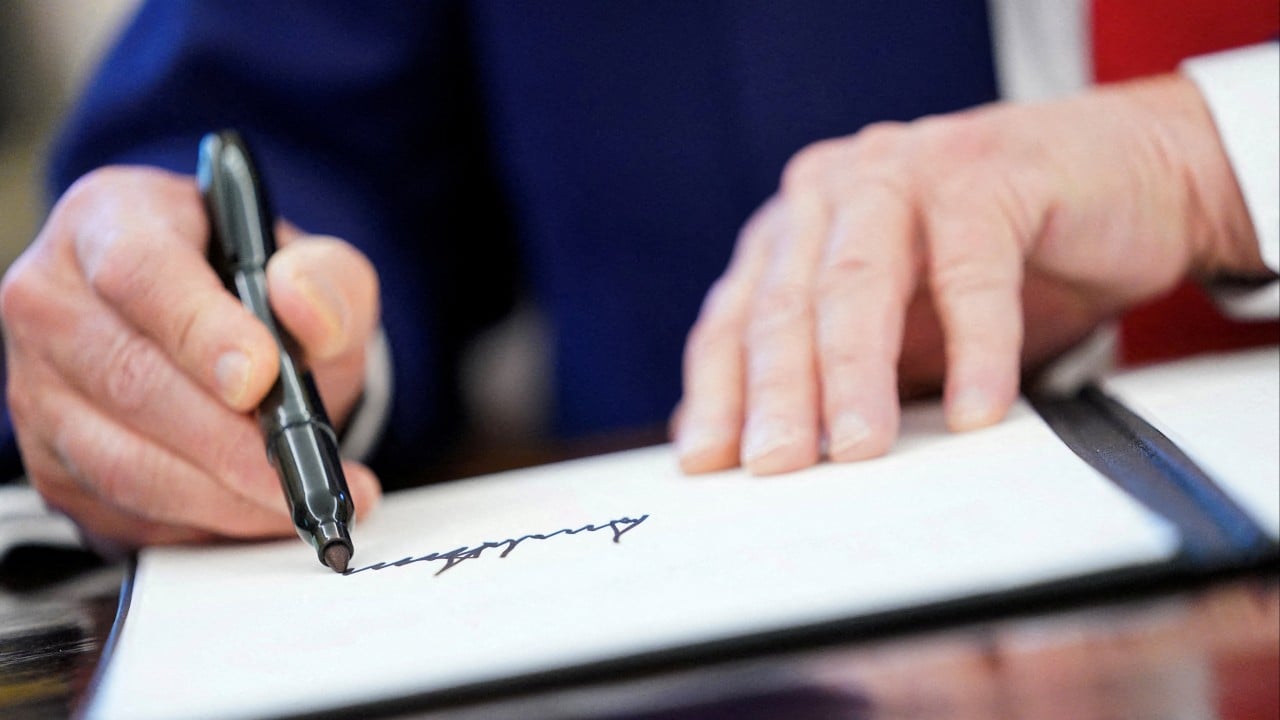
The pearl-clutching has reached a fever pitch. Traditionalists are mourning the "sanctity" of the greenback because a sitting president decided to scrawl his name on the currency. They call it a break from tradition. They call it an ego trip. They call it a politicization of the Treasury.
They are all missing the point.
Focusing on the ink on the bill is like obsessing over the font choice on a Titanic boarding pass while the ship is vertical in the Atlantic. Whether the signature belongs to a career bureaucrat or a populist firebrand is a cosmetic distraction from the systemic rot of the underlying asset. The signature isn't the story; the fact that you still think that piece of paper represents a stable store of value is the story.
The Myth of the "Apolitical" Dollar
The primary argument against a sitting president’s signature is that it violates the "independence" of the Treasury. This is a fairy tale told to keep the markets calm.
The U.S. Treasury has never been independent. It is a cabinet-level department. The Secretary of the Treasury serves at the pleasure of the President. To suggest that putting a name on the bill "politicizes" the money assumes the money wasn't already a tool of statecraft, debt management, and geopolitical leverage.
For decades, we’ve accepted the signatures of Treasury Secretaries and U.S. Treasurers—individuals appointed by the President to execute his economic agenda. Pretending that a signature from the person who actually won the election is somehow "more" political than a signature from the person they appointed is a distinction without a difference.
Gresham’s Law and the Aesthetics of Devaluation
If you’re worried about the dignity of the dollar, you’re about forty years too late.
The dollar lost its dignity in 1971 when it was severed from the gold standard. Since then, the currency has become a pure fiat instrument—a "trust me" note backed by nothing but the "full faith and credit" of a government $34 trillion in debt.
In economics, Gresham’s Law states that "bad money drives out good." When a government begins to tinker with the optics of its currency, it’s often a signal of underlying instability. But the instability isn't caused by the signature. It’s caused by the printer.
We are currently witnessing a massive psychological shift. By putting a presidential signature on the note, the government is leaning into the "cult of personality" because the "cult of the institution" is failing. People no longer trust the Federal Reserve. They no longer trust the Treasury Department as an abstract entity. The signature is an attempt to anchor the currency to a person because the system itself is drifting.
The Inflationary Elephant in the Room
While the media debates the "propriety" of the signature, the real theft is happening in your bank account.
$1.00 in 1913 is worth roughly $0.03 today.
The signature doesn’t change the math of the M2 money supply. It doesn’t change the fact that the purchasing power of your savings is being liquidated to fund government deficits. If you are more offended by a name on a bill than you are by a 20% increase in the price of eggs, your priorities are functionally broken.
The Real Mechanics of Currency Branding
Currency has always been a branding exercise. From the Roman denarius featuring the profile of Caesar to the British pound featuring the monarch, the "brand" of the money is the "brand" of the power behind it.
- The Sovereign’s Mark: Historically, the person in charge puts their face or name on the money. The U.S. was the outlier by using historical figures. Returning to a "living sovereign" model is actually a return to the historical norm, not a radical departure.
- The Trust Proxy: In a world of digital assets and decentralized finance, the dollar is struggling for relevance. A presidential signature is a desperate play for "authenticity" in a world of algorithmic stablecoins.
Why "Tradition" is a Loser’s Argument
The "lazy consensus" says we must protect the tradition of the dollar to maintain global confidence.
I’ve spent fifteen years watching institutional investors navigate currency collapses. Global confidence isn't based on whose name is on the paper. It’s based on the yield of the 10-year Treasury and the ability of the U.S. military to enforce the petrodollar.
Foreign central banks don't care about the aesthetics of the $20 bill. They care about the liquidity of the market and the stability of the interest rate environment. The idea that a signature will cause a "run on the dollar" is a fantasy cooked up by pundits who don't understand how a repo market works.
Stop Asking if it’s "Proper" and Start Asking if it’s "Solvent"
People also ask: "Will this make the bills collector's items?"
Brutally honest answer: No. They are printing billions of them. It’s mass-produced fiat.
People also ask: "Does this violate the law?"
Brutally honest answer: The Secretary of the Treasury has the legal authority to determine the design of the currency. If the Secretary wants the President’s signature on there, it’s legal. Period.
The wrong question is: "Should Trump’s name be on the money?"
The right question is: "Why am I holding an asset that requires a marketing makeover to feel valuable?"
The Counter-Intuitive Reality
If you hate the president, you should actually want his signature on the money.
Why? Because it ties the performance of the currency directly to his brand. If the dollar tanks, if inflation spikes, or if the debt ceiling causes a default, his name is literally signed to the failure. Usually, politicians hide behind the "independence" of the Fed when things go wrong. This move removes the shield. It is the ultimate "skin in the game" play, even if it was intended as a vanity project.
Your Action Plan for the New Era of Branding
Stop treating the dollar as a sacred relic. It is a utility.
- Diversify beyond the ink: If a signature on a bill makes you nervous about the economy, your portfolio is too heavily weighted in cash.
- Ignore the "Outrage Industrial Complex": The media wants you to argue about the signature because they don't want to explain how the debt-to-GDP ratio actually works.
- Watch the Fed, not the Mint: The interest rate decisions coming out of the Eccles Building matter a thousand times more than the printing plates at the Bureau of Engraving and Printing.
The signature is a signal of a shifting era where the "impersonal state" is being replaced by "personalized power." You can complain about the aesthetics, or you can recognize the shift and position your capital accordingly.
The dollar was already a political fiction. Now, it just has a clearer author.
Stop crying about the ink and start worrying about the paper.