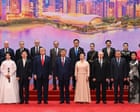
Bilateral trade and security negotiations between the European Union and the United Kingdom operate as a sequential game where Brussels refuses to incur transaction costs until British domestic political equilibrium stabilizes. When reports indicate that the EU will suspend long-term structural talks until Andy Burnham clarifies his position on Brexit—specifically in the context of a Labour Party leadership transition or strategic policy realignment—analysts must look past the surface-level diplomatic rhetoric. The underlying mechanism is an institutional risk-mitigation strategy. Brussels treats UK political ambiguity as an unhedged liability, refusing to commit negotiating capital to an administration whose foundational trade mandate remains contested by a primary leadership contender.
The EU Negotiating Calculus and Asymmetric Risk
To understand why Brussels freezes long-term commitments during British leadership uncertainty, one must examine the institutional mechanics of the European Commission and the European Council. Negotiating a comprehensive bilateral framework—whether it involves veterinary agreements, mutual recognition of professional qualifications, youth mobility schemes, or security pacts—requires unanimous or qualified majority alignment across 27 member states.
- High Upfront Coordination Costs: Before the European Commission can issue a negotiating mandate, it must reconcile competing national interests among member states. Fishing rights, agricultural market access, and financial passporting create internal friction within the bloc. Brussels will not expend political capital to build internal consensus if the counterparty in London lacks a durable mandate.
- The Reversibility Penalty: The EU experienced severe institutional fatigue during the 2016–2020 withdrawal negotiations, where signed agreements and negotiated protocols were repeatedly invalidated by parliamentary deadlocks and leadership changes in Westminster. To prevent a recurrence, Brussels enforces a strict precondition: domestic consensus in the UK must precede bilateral engagement.
- Asymmetric Leverage: The European Single Market is roughly six times the size of the UK economy. Because trade friction imposes a higher proportional drag on British GDP growth than on EU aggregate output, Brussels holds the structural advantage of time. Waiting for Westminster to resolve its internal ideological disputes costs the EU very little, whereas delayed market access compounds supply-chain friction for UK exporters.
Deconstructing the Andy Burnham Variable
Within British politics, Andy Burnham occupies a distinct structural position. As Mayor of Greater Manchester, he operates outside the immediate parliamentary whip while maintaining high national name recognition and strong favorability among Labour Party members and soft-Conservative voters. Whenever speculation surfaces regarding a Labour leadership succession or a shift in the party's economic strategy, Burnham represents the primary alternative pole to the current Downing Street orthodoxy.
His historical and evolving stance on European integration introduces three distinct policy vectors that directly impact Brussels' risk assessment:
- The Single Market and Customs Union Boundary: The current UK government has maintained strict red lines against rejoining the Single Market, the Customs Union, or restoring freedom of movement, opting instead for incremental sector-by-sector alignment. Burnham has previously advocated for a more pragmatic, economically driven relationship with Europe, suggesting at various junctures that the UK should not rule out closer structural ties if the economic data warrants it. Until Burnham defines whether he supports incrementalism or structural re-entry, Brussels cannot determine the scope of future talks.
- Sub-National vs. National Mandates: In his capacity as a regional mayor, Burnham has actively pursued direct economic and green-energy partnerships with European cities and regional bodies. While effective for local foreign direct investment, sub-national diplomacy cannot alter customs borders or regulatory divergence. If Burnham transitions from regional executive to national leadership contender, his sub-national pragmatism must be translated into hard treaty positions.
- Electoral Coalition Management: Any Labour leader must balance two competing voter blocs: socially conservative, Brexit-supporting constituencies in the North and Midlands, and pro-European urban voters. Brussels watches how Burnham navigates this divide because a leader who wins power on an ambiguous platform will inevitably face parliamentary paralysis when forced to make concrete regulatory concessions to the EU.
The Three Pillars of Diplomatic Conditionality
When the EU signals that the door is closed to long-term ties pending political clarity in London, it is enforcing a three-pillar framework of diplomatic conditionality.
1. Mandate Durability
Brussels requires assurance that any agreement signed will survive the next UK general election cycle. The Trade and Cooperation Agreement (TCA) includes scheduled five-year review mechanisms, designed primarily as technical audits rather than sweeping renegotiations. If the UK seeks to expand the TCA into a deeper veterinary, energy, or defense pact, the EU demands multi-year political certainty. A leadership vacuum or an unresolved policy debate around Burnham's Brexit stance signals that any current diplomatic progress could be repudiated within 18 to 24 months.
2. Dynamic Alignment vs. Cherry-Picking
The core philosophical divide between London and Brussels remains the concept of the Single Market's indivisibility. The UK consistently seeks bespoke market access—such as eliminating sanitary and phytosanitary (SPS) checks on agri-food products or streamlining touring rules for artists—without accepting the jurisdiction of the European Court of Justice (ECJ) or dynamic regulatory alignment. Brussels views this as "cherry-picking." Before opening talks on long-term ties, the EU requires confirmation that the UK's leadership—including potential successors like Burnham—accepts the fundamental trade-off: reduced border friction requires binding rule-taking and ECJ oversight.
3. Issue Linkage and Reciprocity
In EU trade diplomacy, negotiations are never compartmentalized. The UK prioritizes defense cooperation, energy interconnectors, and regulatory relief for financial and professional services. Conversely, EU member states prioritize youth mobility schemes, Erasmus+ re-entry, and guaranteed stability in fisheries access. When UK political figures hedge on politically sensitive EU demands—such as youth mobility, which opponents frame as a backdoor return to free movement—Brussels suspends the entire negotiating matrix. Clarification from Burnham is viewed as a proxy for whether the broader Labour movement will accept reciprocal concessions.
Operational Mechanics of a Diplomatic Freeze
A closed door in Brussels rarely manifests as a formal communiqué banning dialogue. Instead, it operates through bureaucratic deceleration and technical gatekeeping.
- Downgrading Engagement Channels: High-level political summits are replaced by routine technical committee meetings under the existing TCA governance structure. Civil servants continue to manage day-to-day customs data and energy grid coordination, but no new mandates are drafted.
- Strict Adherence to TCA Review Boundaries: The EU limits discussions strictly to the narrow legal text of the existing agreement. When British negotiators propose expanding the scope of cooperation, EU counterparts cite the absence of a Council mandate, effectively stalling the proposal in committee.
- Pre-emptive Sequencing: Brussels insists on resolving legacy friction points—such as the full implementation of the Windsor Framework for Northern Ireland and citizens' rights protections—before entertaining any discussions on future structural upgrades.
Limitations of the EU Strategy and UK Counter-Moves
While Brussels' wait-and-see posture minimizes its internal coordination costs, the strategy carries distinct structural vulnerabilities.
First, geopolitical realities erode pure trade conditionality. Deteriorating European security conditions and supply-chain vulnerabilities in critical minerals and green technology create mutual dependencies that cannot be indefinitely subordinated to Westminster's internal politics. Over-reliance on political preconditions risks delaying vital European defense-industrial integration.
Second, forcing a UK political figure like Andy Burnham to declare a definitive, maximalist stance on Brexit prior to a formal leadership contest creates a domestic political trap. In British politics, explicit commitments to closer EU alignment carry high electoral risk, often triggering hostile media cycles and opposition attacks. By demanding upfront ideological clarity, Brussels inadvertently incentivizes UK politicians to adopt rigid, defensive red lines—the exact opposite of the flexibility required for successful trade negotiations.
Strategic Forecast and Execution Playbook
The diplomatic stalemate will persist until the domestic leadership trajectory in London resolves into a single, uncontested executive mandate. For corporate strategists, supply-chain directors, and policy analysts operating across the UK-EU corridor, planning around imminent regulatory convergence is a misallocation of capital.
Businesses must execute a dual-track operational strategy over the next 12 to 18 months:
- Price in Current Friction: Treat existing TCA rules of origin, SPS border checks, and visa requirements as permanent baseline operating costs rather than temporary administrative hurdles. Do not defer capital expenditure on customs compliance software or EU-based distribution hubs in anticipation of a sudden diplomatic breakthrough.
- Monitor Proxy Indicators, Not Rhetoric: Ignore general statements from Westminster or Manchester regarding "resetting relationships." Track three hard indicators instead: the formal publication of an EU Council negotiating mandate on youth mobility, concrete UK legislative proposals accepting dynamic alignment in specific industrial sectors, and the resolution of Labour's internal succession dynamics. Until at least two of these three indicators shift, the bilateral relationship will remain locked in technical maintenance mode.