Brussels and Westminster spent years arguing over fish quotas and customs forms, so seeing cheddar cheese, labradors, and gap-year visas sitting at the top of a diplomatic summit agenda feels almost surreal. Yet that's exactly where the UK-EU relationship reset draft lands. After months of quiet back-channel negotiations following the 2024 UK general election, both sides have put concrete proposals on the table to sand down the sharpest edges of the Trade and Cooperation Agreement.
Don't expect a return to the single market or customs union. Prime Minister Keir Starmer has repeated those red lines until everyone in Westminster is tired of hearing them, and Brussels isn't offering membership perks without membership obligations anyway. Instead, this draft agreement is a pragmatic fix for three specific headaches that have annoyed voters, exporters, and travelers since January 2021. For a deeper dive into this area, we suggest: this related article.
Why Cheese and Sausages Are Back on the Negotiating Table
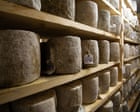
Ask any British cheesemaker about the past few years and you'll hear the same exhausted sigh. Exporting Stilton or Somerset Brie to a buyer in Paris or Amsterdam currently requires an Export Health Certificate signed off by an official veterinarian, physical border checks, and a mountain of customs declarations that can cost hundreds of pounds per shipment. For small artisan producers, the paperwork simply killed the European market.
The reset draft tackles this through a proposed veterinary and sanitary agreement, often called an SPS deal in trade circles. For additional background on this development, detailed coverage is available on USA Today.
Under a full SPS alignment, the UK agrees to mirror European Union food, plant, and animal health standards dynamically. In plain English, if Brussels updates a rule on pesticide residues or dairy hygiene, Britain adopts it too. The payoff is huge. Once both sides share the exact same rulebook, routine veterinary checks at ports like Dover and Rotterdam disappear overnight.
British food exporters have been begging for this since the Brexit transition period ended. The Food and Drink Federation has repeatedly pointed out that UK food and drink exports to the EU dropped sharply after border controls took effect, largely because fresh goods rot while waiting for paperwork clearance.
Still, there's a catch that makes Westminster nervous. Dynamic alignment means Britain becomes a rule-taker on agricultural standards. Critics on the political right argue this restricts the UK's ability to strike independent trade deals with countries like the United States or Australia, where hormone-treated beef or chlorinated chicken sit on the negotiating table. Labour ministers counter that British farmers never wanted to lower food standards anyway, and getting British lamb and cheddar back onto European supermarket shelves easily outweighs hypothetical trade concessions elsewhere.
What Happens to Northern Ireland
A veterinary deal doesn't just help mainland exporters. It also removes the biggest irritant inside the Windsor Framework. Right now, chilled meats, dairy, and plants moving from Great Britain to Northern Ireland still face checks under the "green lane" and "red lane" system because Northern Ireland remains inside the EU's single market for goods.
Aligning UK-wide food standards with Brussels eliminates the regulatory border in the Irish Sea for agrifood products. Supermarkets in Belfast wouldn't need special "Not for EU" stickers on every pack of sausages anymore. Honestly, that single practical change might do more for day-to-day political stability in Northern Ireland than a dozen diplomatic communiqués.
Bringing Back the Pet Passport Without the Paperwork Nightmare
If you've tried taking a dog on a French holiday recently, you know the pain. Before 2021, a UK-issued EU Pet Passport lasted for the life of the animal as long as rabies vaccinations stayed up to date. Post-Brexit, the UK was assigned "Part 2 listed" third-country status, replacing that simple blue booklet with an Animal Health Certificate (AHC).
Here is why pet owners hate the AHC system:
- You need a brand-new certificate for every single trip into the EU.
- Each certificate must be issued by an Official Veterinarian within 10 days of travel.
- The document runs up to ten pages long and routinely costs between £150 and £250 per trip.
- If you take your dog to France twice a year, you're paying up to £500 annually just for stamps.
The UK-EU relationship reset draft proposes re-establishing reciprocal pet passport recognition. Because a pet passport system is fundamentally tied to animal health and biosecurity rules, it slots neatly alongside the broader veterinary agreement.
Once implemented, British pet owners would go back to using a reusable passport document, provided their pet has a microchip and an active rabies vaccination. Tapeworm treatment rules for dogs returning to the UK from mainland Europe would still apply—Britain is rightly protective of its tapeworm-free status—but the recurring vet bill before every ferry crossing vanishes.
For European pet owners visiting Britain, the change is less dramatic since the UK continued accepting existing EU pet passports after Brexit, though aligning the systems streamlines checks at Eurotunnel and ferry terminals on both sides of the Channel.
The Youth Mobility Sticking Point
This is where the smiles fade and the lawyers start arguing over definitions.
Brussels wants a Youth Mobility Scheme allowing citizens aged 18 to 30 to live, work, and study in each other's territories for up to four years. From the European Commission's perspective, this is an easy win. It restores opportunities for young Europeans to learn English in London or Manchester while giving young Britons the chance to work a ski season in Austria or bartend in Barcelona without navigating impossible work visa sponsorships.
Westminster, however, heard the phrase "youth mobility" and immediately panicked about net migration numbers.
The UK government initially rejected the European Commission's proposal outright, worried that opposition politicians and tabloid headlines would frame it as bringing back freedom of movement through the back door. Downing Street argued that Britain already has bilateral youth mobility deals with countries like Australia, Canada, and South Korea, and didn't want a bloc-wide arrangement with 27 member states.
Yet the reset draft keeps the door open through careful compromise language. Rather than an uncapped free-for-all, negotiators are looking at a capped, time-limited visa scheme modeled closely on Britain's existing Youth Mobility Visa.
Look at how those existing schemes actually work in practice:
- Applicants must apply before traveling and pay an upfront visa fee plus the Immigration Health Surcharge to cover NHS access.
- There is no automatic route to permanent settlement—when the two or three years expire, you go home.
- Annual caps limit the exact number of visas issued each year, giving the Home Office total control over numbers.
- Applicants must prove they have enough savings to support themselves without claiming public funds.
European diplomats have hinted they can live with caps and health surcharges, provided the scheme covers all 27 EU nations rather than cherry-picking individual countries. Brussels is also pushing hard to reduce the exorbitant international tuition fees EU students currently pay at British universities, though UK higher education institutions—many facing severe financial deficits—are desperate to keep international fee revenue. Expect intense haggling over university fees right up until the final text is signed.
What Else Is Hidden Inside the Reset Draft
Media headlines love cheese and dogs because they're easy to picture, yet the heavier geopolitical weight in the reset draft sits in defense, energy, and professional qualifications.
Security and Defense Pact
Russia's invasion of Ukraine fundamentally changed how London and Brussels view each other. With shifting security priorities in Washington, European capitals want Britain locked into continental defense planning. The draft outlines a formal UK-EU Security and Defense Partnership that lets the UK participate in EU military mobility projects—making it faster to move troops and equipment across European borders—and potentially opens the door for British defense contractors to bid on joint EU procurement funds.
Energy and Carbon Trading
The UK and EU both operate Emissions Trading Systems (ETS) that put a price on carbon pollution. Because the two markets split after Brexit, British energy exporters face the risk of getting hit by the EU's upcoming Carbon Border Adjustment Mechanism (CBAM), a carbon tariff on imported electricity, steel, and cement. Linking the two carbon markets back together in the reset draft saves British industry hundreds of millions of pounds in export taxes and prevents energy friction across North Sea interconnectors.
Touring Artists and Business Travel
British musicians and theatre crews have spent four years dealing with cabotage rules that restrict how many stops a UK tour truck can make inside the EU before returning home, alongside varying work permit rules across member states. The draft includes commitments to smooth out short-term business travel and cultural touring, though full visa-free touring across all 27 countries remains tricky because national work permits are controlled by individual EU governments rather than Brussels alone.
Common Misconceptions About the Reset
Whenever UK-EU talks hit the news, misinformation spreads fast on both sides of the debate. Let's clear up three things this draft definitely does not do:
- It doesn't bring back Erasmus+ automatically. While youth mobility talks touch on student exchanges, rejoining the full Erasmus+ program costs billions in budgetary contributions. The UK's domestic Turing Scheme remains in place unless a separate financial deal is struck.
- It won't end passport stamping at airports. Even with a youth mobility visa or a veterinary deal, British travelers remain third-country nationals. You will still go through non-EU passport lanes and register under the EU's delayed Entry/Exit System (EES) when crossing Schengen borders.
- Nothing changes tomorrow morning. A draft framework is a political roadmap, not a ratified treaty. Legal texts still have to be written, approved by the Council of the European Union, and scrutinized by the UK Parliament.
How to Prepare if You Export, Travel, or Plan to Move
If you run a small food export business, don't cancel your customs broker just yet. Keep your current EORI numbers and vet certification workflows running through at least the next several months while legal texts are finalized. You can, however, start mapping out EU buyers you dropped back in 2021, because the businesses that re-enter continental supply chains first once SPS rules relax will grab the shelf space.
For pet owners planning European trips in the coming months, you still need to book that vet appointment within 10 days of departure and budget for an Animal Health Certificate. Hold off on assuming your old pre-2021 blue passport is valid again—it isn't, and border officials at Calais will turn you around on the spot if you try using an expired UK-issued EU document.
If you're under 30 and eyeing a year abroad in Europe, keep saving. Even under the most generous version of a capped UK-EU youth mobility scheme, you will almost certainly need roughly £2,500 to £3,000 in proven bank savings, upfront visa fees, and healthcare surcharges before stepping onto a plane. Start gathering your financial documentation early so you're ready the moment application portals open.