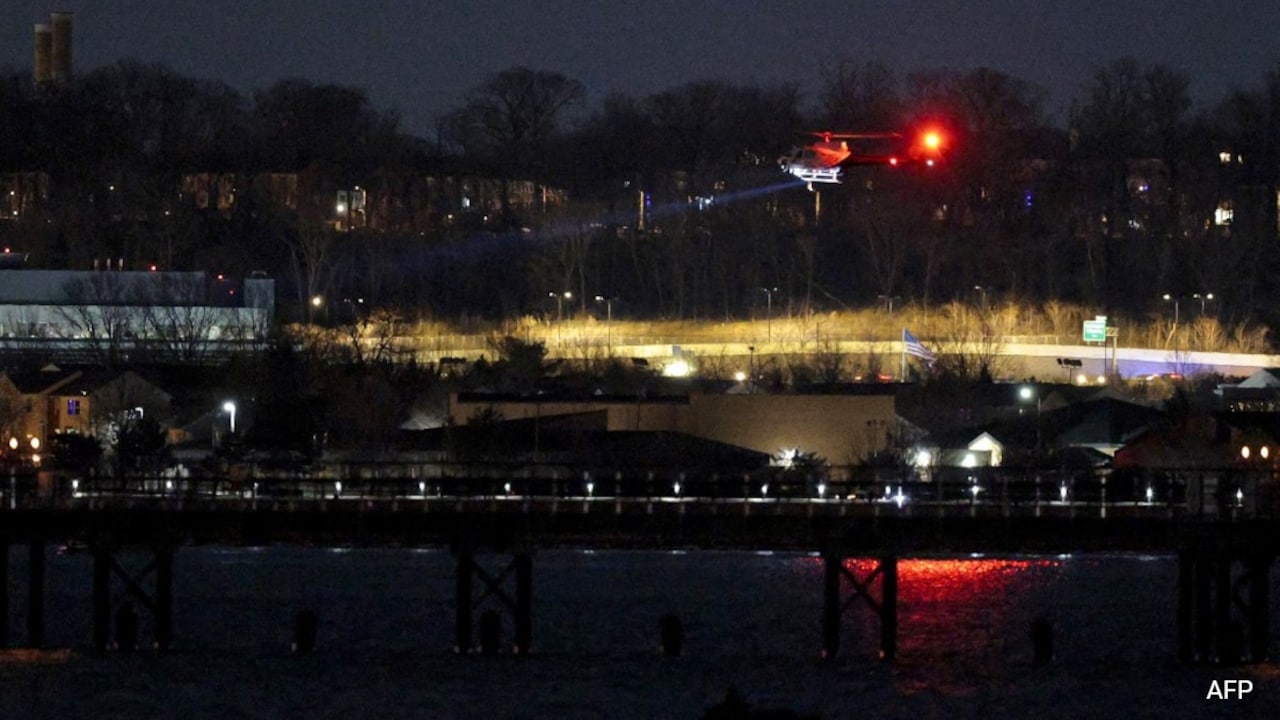
Congress has reached a bipartisan agreement to mandate advanced civilian plane locator technology across commercial and general aviation fleets following the fatal 2025 midair collision over the Potomac River. The legislation closes long-standing regulatory loopholes that allowed aircraft to operate in congested airspace without active, real-time broadcast transponders. Under the new federal rules, airlines and private operators must equip aircraft with upgraded Automatic Dependent Surveillance-Broadcast systems and continuous tracking hardware to prevent blind spots between civilian airliners and military or government flights.
For decades, aviation safety in the United States operated on a reactive cycle. Regulators called it the tombstone mentality. Rules rarely changed until metal hit the ground and families demanded answers on Capitol Hill. The January 2025 collision between a commercial regional jet and a military helicopter near Ronald Reagan Washington National Airport shattered the illusion that American airspace was impervious to catastrophic coordination failures. It forced lawmakers to confront an uncomfortable truth about how aircraft track one another in the busiest corridors of the country.
The Technical Blind Spots in Modern Airspace
Most passengers assume air traffic controllers see every aircraft on a crisp, infallible radar screen with zero latency. That assumption is wrong. Ground-based primary radar relies on radio waves bouncing off physical hulls, a technology dating back to World War II that suffers from sweep delays and terrain interference. To fix those limitations, the Federal Aviation Administration spent billions transitioning the national airspace to ADS-B Out, a satellite-based system where aircraft broadcast their exact GPS coordinates, altitude, and velocity once per second.
The mandate passed in 2020 required ADS-B Out in most controlled airspace, including the busy Class B rings around major hubs. Yet the law left gaping exemptions. Military aircraft conducting sensitive missions, certain federal law enforcement flights, and older general aviation planes flying outside specific altitude shelves could legally fly without broadcasting their positions.
When one aircraft broadcasts its location and another operates dark, the electronic safety net breaks down.
Commercial airliners rely on the Traffic Alert and Collision Avoidance System, known throughout the industry as TCAS. This onboard computer interrogates the transponders of nearby planes and issues audible commands to pilots to climb or descend if a crash is imminent. However, TCAS has operational blind spots. Below 1,000 feet above ground level, the system inhibits resolution advisories to prevent pilots from diving into terrain during final approach. In a low-altitude environment packed with helicopter routes and commercial glide slopes, pilots lose their automated last line of defense.
Why Lawmakers Stalled Until the 2025 Crash
The push for universal civilian plane locators and mandatory ADS-B In—which allows cockpits to receive traffic data directly rather than just sending it—stalled for over a decade due to fierce lobbying and cost disputes. General aviation groups argued that equipping tens of thousands of small piston aircraft with two-way cockpit displays would bankrupt recreational flyers and flight schools. Meanwhile, the Department of Defense guarded its operational exemptions, citing national security concerns over broadcasting military movements on unencrypted civilian frequencies.
Airlines also pushed back against mandating space-based ADS-B and autonomous distress tracking, which beams location data to low-Earth orbit satellites even over oceans and remote mountain ranges. Carriers contended that existing radar and terrestrial receivers were sufficient for domestic routes. They pointed to decades without a major U.S. commercial airline crash as proof that the current architecture worked.
That streak ended in the freezing waters of the Potomac in early 2025. Congressional hearings that followed exposed years of near-miss reports filed by commercial pilots flying into Washington, D.C., Los Angeles, and New York. Controllers admitted to juggling overlapping helicopter corridors and commercial arrivals with shrinking margins for error. The political calculus shifted overnight. Lobbying arguments about avionics installation costs evaporated under the weight of grieving families sitting in the front rows of Senate committee rooms.
Inside the New Federal Mandate
The bipartisan legislation forces sweeping hardware and operational upgrades across multiple sectors of aviation. Lawmakers stripped away ambiguity by setting hard compliance deadlines and eliminating broad administrative waivers.
Universal Broadcast Requirements
The core of the bill requires every aircraft operating within 30 miles of a major commercial airport or inside congested terminal airspace to run active ADS-B Out and ADS-B In hardware. Exceptions for military and federal aircraft are sharply curtailed. Unless a flight is actively engaged in a classified national defense operation certified at the command level, the transponder stays on. Routine training flights, VIP transports, and administrative hops in civilian corridors must broadcast their exact telemetry to surrounding traffic.
Continuous Autonomous Tracking
Borrowed from international standards drafted after the 2014 disappearance of Malaysia Airlines Flight 370, the new U.S. law mandates Autonomous Distress Tracking for all transport-category commercial aircraft. If a plane enters an unusual attitude, experiences rapid uncommanded altitude loss, or loses primary power, an independent locator beacon triggers automatically. This unit transmits GPS coordinates via satellite every minute, ensuring search-and-rescue teams never face a blank map.
Cockpit Display Integration
Broadcasting data means nothing if pilots cannot see it. The mandate accelerates the rollout of Cockpit Display of Traffic Information systems across regional and mainline carriers. Pilots will see a real-time graphical overlay of surrounding helicopters, private planes, and commercial jets directly on their primary navigation screens, complete with vertical trend arrows and closure rates.
The Hidden Costs and Implementation Hurdles
Passing a bill on Capitol Hill is the easy part. Rewiring thousands of airplanes without grounding the national transit network is an industrial bottleneck waiting to happen.
Avionics manufacturers face immediate supply chain pressure. Producing certified, radiation-hardened transponders, multi-function cockpit displays, and satellite antennas requires specialized semiconductors and rigorous FAA Technical Standard Order approvals. Repair stations across the country already suffer from a chronic shortage of licensed airframe and powerplant mechanics. Forcing thousands of aircraft into hangars for multi-day avionics retrofits will inevitably trigger maintenance backlogs and flight cancellations.
Consider a hypothetical example of a regional carrier operating 80 older turboprops or regional jets. Retrofitting a single cockpit with integrated ADS-B In displays and satellite tracking antennas can easily exceed $150,000 per tail once engineering certification, wiring harnesses, and downtime are factored in. Multiply that across a fleet, and a low-margin regional operator faces a multi-million-dollar capital expense that cannot be absorbed without cutting unprofitable routes to smaller cities.
General aviation owners face an even steeper proportional hit. A used Cessna 172 might sell for $90,000 on the open market. Spending $15,000 to upgrade its electrical bus and panel displays represents a massive financial burden for private owners and rural flight schools. While the legislation includes a modest grant program to offset hardware costs for small operators, industry analysts expect thousands of older aircraft to be retired or restricted to rural, uncontrolled airspace rather than upgraded.
Privacy and Cybersecurity Risks of Total Visibility
Making every aircraft visible in real time solves a safety problem while creating a massive data vulnerability. ADS-B signals are unencrypted by design so that any receiver—whether an air traffic control tower or an inexpensive cockpit unit—can decode the broadcast instantly.
High-profile executives, celebrities, and government officials have spent years fighting the public tracking of private jets through open-source flight tracking websites. Under the FAA's existing Limiting Aircraft Data Displayed program, owners could request that public feeds scrub their tail numbers. Yet hobbyists running networks of cheap ground-based receivers routinely bypass those filters by triangulating raw ADS-B broadcasts directly from the sky. Expanding mandatory broadcasts to nearly every aircraft in metropolitan airspace guarantees total transparency to anyone with a $30 software-defined radio dongle.
Security researchers have also warned for years about ADS-B spoofing. Because the protocol lacks cryptographic authentication, a bad actor with a modest transmitter can theoretically broadcast fake aircraft targets, flooding cockpit displays with phantom traffic and triggering false collision alerts. By mandating that pilots rely more heavily on ADS-B In displays for visual separation, regulators are increasing the operational impact of potential signal interference or GPS jamming—a threat already escalating near conflict zones and major ports worldwide.
Why Technology Alone Cannot Fix Broken Airspace Design
The most dangerous trap in aviation regulation is believing that a new piece of hardware fixes a flawed system. Electronic locators are a vital safety layer, not a substitute for disciplined airspace management.
The 2025 Potomac collision did not happen merely because of a transponder gap. It happened because air traffic controllers are chronically overworked, facilities are understaffed, and legacy flight paths squeeze high-speed commercial jets and low-flying helicopters into razor-thin vertical buffers. At Reagan National Airport, the main runway handles more operations per hour than its concrete footprint was ever designed to support. Helicopter routes run directly beneath final approach paths, separated by just a few hundred feet of air.
Adding a cockpit traffic screen gives pilots better situational awareness, yet it also adds visual clutter during the highest-workload phases of flight. During final approach in bad weather, pilots are monitoring airspeed, glide slope, crosswinds, checklist items, and rapid-fire radio calls from approach control. Expecting a two-person crew to simultaneously police a crowded traffic display for errant helicopters shifts the burden of separation from ground controllers onto already saturated cockpits.
True safety requires pairing the civilian plane locator mandate with structural airspace reform. The FAA must untangle intersecting helicopter corridors around major hubs, hire and train thousands of certified controllers to eliminate mandatory six-day workweeks, and enforce strict altitude buffers that do not rely on razor-thin electronic margins.
Avionics manufacturers have 36 months to certify the new hardware before the first compliance deadlines hit commercial carriers, leaving the FAA to prove it can police the skies without breaking the aviation system it is trying to protect.


