Mainstream coverage of the Sudanese civil war has become an exercise in stenography. A rights group issues a press release. Wire services transcribe the casualty count. Readers scroll past another tragedy in West Kordofan, file it under senseless violence, and move on.
That lazy consensus reduces a calculated, industrial-scale logistics war into a random tally of civilian deaths. For another look, see: this related article.
When the Sudanese Armed Forces (SAF) drop barrel bombs or launch precision strikes across West Kordofan, they are not merely failing to avoid civilian casualties. They are executing a deliberate strategy of territorial denial, economic strangulation, and demographic engineering. Treating an airstrike that kills thirteen people as an isolated humanitarian incident misses the cold military logic driving the bomb bay doors open.
If you want to understand why West Kordofan is burning, stop reading casualty tickers like sports scores. Start looking at pipelines, smuggling corridors, and the desperate asymmetry of a conventional army fighting a decentralized militia. Similar reporting on this matter has been shared by NBC News.
The Myth of "Senseless" Violence
Western journalism loves the word senseless when describing African conflicts. It is a linguistic sedative. Calling an airstrike senseless absolves the observer from analyzing the strategic objectives of the generals ordering the sorties.
There is nothing irrational about the SAF's air campaign in West Kordofan.
Following the outbreak of full-scale war in April 2023 between General Abdel Fattah al-Burhan’s SAF and Mohamed Hamdan Dagalo’s Rapid Support Forces (RSF), the ground war rapidly turned against the regular army. The RSF—evolved from the Janjaweed militias of Darfur—possesses superior mobility, hardened light-infantry tactics, and deep tribal recruitment networks across western Sudan. On the open plains and scrublands of Kordofan, conventional SAF armored columns proved slow, vulnerable, and chronically overextended.
Air superiority is the only decisive asymmetric advantage the SAF retains.
In military doctrine, when a conventional force loses ground control to an agile insurgency, it reverts to aerial interdiction. The goal shifts from holding territory to making that territory uninhabitable and ungovernable for the adversary. In West Kordofan, where the RSF draws recruits, fuel, and local legitimacy, airstrikes on markets, transit hubs, and residential clusters serve a brutal operational purpose:
- Disrupting logistics nodes: Markets in rural Kordofan are not just places to buy sorghum; they are dual-use supply hubs where fuel, spare parts, and telecommunications equipment change hands.
- Severing local support: By raising the existential cost of living in RSF-held towns, the SAF attempts to fracture the social contract between the militia and local Arab tribes like the Misseriya.
- Forcing population displacement: Empty towns cannot feed, shelter, or tax an occupying force. Displacement is not a byproduct of the bombing; it is a primary tactical objective.
Reports from monitoring groups like Emergency Lawyers and the Armed Conflict Location & Event Data Project (ACLED) consistently show that strikes hit densely populated areas far from active frontlines. Conventional commentary frames this as incompetence or reckless disregard. In reality, it is classic counter-value warfare—targeting the civilian infrastructure that sustains an enemy force when counter-force operations fail.
Why West Kordofan Is the Real Center of Gravity
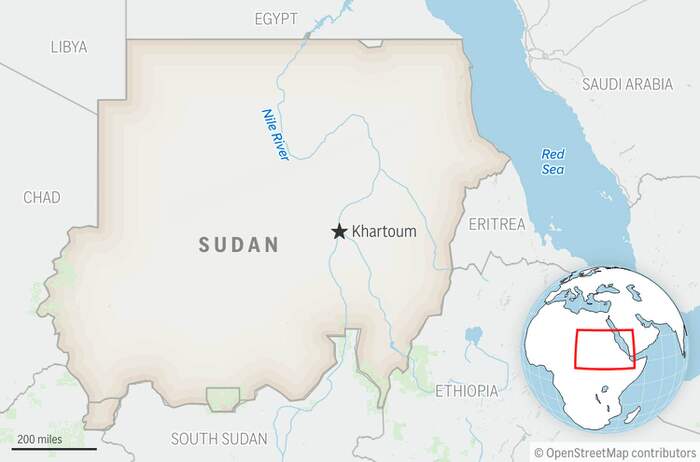
Most international attention remains fixated on Khartoum, Omdurman, or El Fasher in North Darfur. That is a strategic blind spot. West Kordofan is the logistical and economic hinge of the entire conflict.
Control West Kordofan, and you control the arteries connecting Darfur to central Sudan.
First, there is the oil. West Kordofan houses the Heglig and Bamboo oilfields, the most critical remaining hydrocarbon infrastructure in Sudan. Even more importantly, it sits astride the Greater Nile Oil Pipeline, which transports crude from landlocked South Sudan to export terminals at Port Sudan on the Red Sea. Every barrel of South Sudanese oil pumped north generates transit fees that both Juba and Port Sudan desperately need to avoid total state collapse. When fighting or airstrikes threaten West Kordofan, they threaten the financial lifeline of two nations.
Second, West Kordofan is the primary recruitment and staging ground for the RSF. The region is home to the Misseriya, a Baggara Arab pastoralist group heavily represented in RSF ranks. Unlike Darfur, where the RSF faces entrenched non-Arab resistance movements, West Kordofan offers the militia strategic depth, cross-border access to South Sudan, and direct highway links toward El Obeid—the capital of North Kordofan and the gateway to central Sudan.
Third, the state sits directly over the smuggling superhighways moving gold, weapons, and mercenaries from Libya, Chad, and the Central African Republic into the Sudanese interior.
| Strategic Asset | Why It Matters to SAF | Why It Matters to RSF |
|---|---|---|
| Heglig & Bamboo Oilfields | Preserves state revenue and leverage over Juba | Denies Khartoum hard currency; creates extortion leverage |
| Transit Corridors to El Obeid | Prevents RSF encirclement of central Sudan | Essential highway for moving heavy weapons east |
| Misseriya Tribal Networks | Fracturing loyalty weakens RSF manpower | Core reservoir of light infantry and local intelligence |
| South Sudan Border | Blocks illicit arms and fuel inflows | Rear-area sanctuary and cross-border supply line |
When an SAF Antonov or MiG drops ordnance on a town like Al-Fula, Babanusa, or En Nahud, it is not acting randomly. It is attempting to paralyze the connective tissue of the RSF war machine.
The Structural Flaws in Human Rights Reporting
Having tracked conflict verification pipelines across the Horn of Africa and the Sahel for over a decade, I have watched the same analytical failure repeat itself in every theater. Human rights organizations do vital work documenting war crimes, yet their reporting model inadvertently distorts public understanding of how wars actually function.
Local monitoring networks operate under catastrophic conditions. Telecom blackouts—engineered by both warring parties—regularly cut off entire states for weeks. Investigators rely on fragmented eyewitness accounts, blurry smartphone footage, and hospital tallies from facilities operating without electricity or surgical supplies.
Consequently, the numbers reported in headlines—"at least 13 killed"—are almost always severe undercounts, delayed by days or weeks, and stripped of operational context.
More critically, the legalistic framing of human rights reporting creates a false binary: either a strike hit a legitimate military target, or it was an indiscriminate atrocity. Modern irregular warfare refuses to fit inside that neat legal box.
Imagine a scenario where an RSF convoy parks three technicals mounted with ZU-23 anti-aircraft cannons next to a crowded livestock market in West Kordofan to refuel and buy supplies. Six hours later, an SAF aircraft drops unguided munitions from high altitude to avoid man-portable air-defense systems (MANPADS). The convoy moved twenty minutes earlier; thirteen civilians die in the blast.
Was that an intelligence failure, an indiscriminate attack using unguided munitions in a populated area, or a deliberate punitive strike against a community perceived as sympathetic to the RSF? Under international humanitarian law, using unguided area-effect weapons in a civilian center is unlawful regardless of intent. Yet functionally, for the military planner in Port Sudan, the distinction does not matter. The strike still disrupts market activity, terrifies the local population, and degrades the RSF's rear-area security.
By focusing exclusively on the legal violation and the immediate body count, media coverage obscures the cold strategic calculus that makes the violence repeatable.
Dismantling the Wrong Questions
When news of another airstrike breaks, public debate immediately spirals into predictable, unproductive questions.
"Why doesn't the UN enforce a no-fly zone?"
Because nobody is willing to shoot down Sudanese fighter jets. A no-fly zone is not a diplomatic decree; it is an act of war. Enforcing one over a country nearly four times the size of France requires suppressing air defenses, maintaining round-the-clock combat air patrols, securing regional basing rights, and accepting the risk of direct military confrontation with regional powers backing the SAF. Neither Washington, Brussels, nor the African Union has the political appetite to deploy fighter squadrons over Kordofan. Asking for a no-fly zone is a substitute for serious policy.
"Why won't peace talks in Jeddah or Geneva stop the bombing?"
Because negotiations fail when neither side believes it has exhausted its military leverage. Mediation efforts repeatedly treat the SAF and RSF as political actors suffering from a communication breakdown, rather than armed enterprises fighting for total control of state rents, gold mines, and survival. For General al-Burhan, halting airstrikes unilaterally means surrendering his primary military advantage while the RSF consolidates territorial gains on the ground. Until the cost of waging war exceeds the expected payoff of victory, ceasefires will remain tactical pauses for rearmament.
"Aren't airstrikes counterproductive because they turn civilians against the army?"
This assumption comes straight from Western counterinsurgency manuals written for Expeditionary forces trying to win hearts and minds abroad. The SAF is not trying to win elections in West Kordofan. In existential civil wars, armed factions rarely need popular affection; they only need compliance or the physical removal of hostile populations. Terrorizing a civilian base into fleeing across the border into South Sudan or Chad is operationally effective even if it destroys long-term legitimacy.
The Uncomfortable Reality of Air Power in Asymmetric Wars
Let us be candid about the downside of analyzing conflict through pure strategic realism: it sounds callous. Stripping away moral outrage to examine targeting logic risks normalizing atrocities or making war crimes appear inevitable.
They are not inevitable. Every bomb dropped on a residential neighborhood represents a chain of human decisions—from the intelligence officer selecting coordinates to the commander authorizing unguided ordnance.
However, moral condemnation without strategic leverage changes nothing on the ground. If policymakers want to stop the bombardment of West Kordofan, they have to target the specific vulnerabilities that keep the SAF air force flying and the RSF ground forces moving.
- Follow the aviation fuel and spare parts. Fighter jets and transport aircraft cannot operate without specialized jet fuel, hydraulic fluids, tires, and avionics maintenance. Tracking and interdicting the supply chains feeding Port Sudan’s airbases does far more to ground bombers than condemning them at the UN Security Council.
- Expose the regional enablers. Neither the SAF nor the RSF is self-sufficient. Both rely on foreign patrons supplying drones, surface-to-air missiles, ammunition, and diplomatic cover in exchange for gold, agricultural land, and Red Sea port access. Naming and sanctioning the financial networks and front companies facilitating these transfers hits the war economy where it hurts.
- Prioritize cross-border humanitarian corridors over top-down ceasefires. Waiting for generals to sign a national peace accord before delivering aid guarantees mass starvation. Empowering local emergency response rooms—the grassroots Sudanese volunteer networks actually keeping people alive—and opening direct cross-border aid routes from South Sudan bypasses the military checkpoints weaponizing hunger.
The thirteen people killed in West Kordofan are not a footnote to a forgotten war, nor are they victims of random chaos. They are casualties of a deliberate strategy designed to empty land, sever supply lines, and break the economic spine of an adversary.
Stop counting the dead as if the numbers alone will shame the generals into stopping. Follow the fuel, follow the pipelines, and dismantle the supply chains keeping the planes in the air.