A young boy survived a horrific crocodile attack at a wildlife facility, enduring seven surgeries before finally showing signs of recovery. While his family celebrates his resilience, the incident exposes a systematic failure in modern exhibit design and crowd management. It raises a glaring question that industry insiders often avoid. How do supposedly secure operations allow apex predators to breach the line between display and disaster? This is not an isolated piece of bad luck. It is a predictable outcome when public hunger for close-up animal encounters clashes with the realities of captive wildlife management.
The immediate aftermath of a wildlife attack follows a familiar script. Facilities offer prayers, promise internal reviews, and point to a flawless safety record right up until the moment it shatters. But a deep dive into the mechanics of these exhibits reveals that the margins of safety are thinning across the board.
The Illusion of Containment in Modern Exhibits
Zoo architecture has shifted dramatically over the last three decades. The sterile iron bars and concrete pits of the mid-20th century are gone. In their place, facilities now design naturalistic habitats meant to simulate wild environments.
This shift satisfies the public desire for immersive viewing. However, it creates a psychological blind spot for both visitors and staff. When the physical barriers become invisible—replaced by hidden moats, glass panels, or low rock walls—the perceived risk drops to zero.
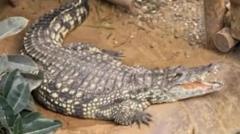
Consider how a standard crocodile enclosure operates. These reptiles rely on ambush tactics. They spend hours motionless, appearing like logs or statues to the untrained eye. This passivity breeds complacency. Visitors routinely lean over railings, hoist small children onto ledges for better photos, or drop objects into the water to provoke a reaction.
The engineering behind these enclosures relies on strict height and depth calculations. If a barrier is designed to withstand a strike from an animal resting at water level, it may fail if the animal gains leverage from a submerged rock or a build-up of debris. Maintenance logs from facilities worldwide show a recurring pattern. Enclosure walls gradually degrade, water levels fluctuate beyond safe parameters, and overhanging vegetation provides unexpected pathways for contact.
The Physics of an Ambush
Crocodiles do not attack like mammalian predators. They do not chase; they launch. A mature crocodilian can propel more than half its body length out of the water in a fraction of a second, utilizing its powerful muscular tail.
When a child is placed near the edge of an enclosure, they occupy a zone that a crocodile perceives as its immediate hunting territory. The speed of the strike leaves zero reaction time for a supervising adult. By the time a bystander registers the movement, the target is already secured in a bite that exerts thousands of pounds of pressure per square inch.
The Medical Reality of Reptilian Trauma
Surviving the initial strike is only the first battle in a long, grueling medical campaign. The boy in this case required seven separate operations to stabilize his condition. To understand why, one must look at the unique pathology of injuries caused by apex reptiles.
A crocodile bite is rarely a clean puncture wound. The trauma involves a combination of crushing forces, severe tearing, and systemic contamination. When a crocodile clamps down, it frequently initiates a rolling motion designed to dismember prey. This inflicts massive damage to soft tissue, muscles, blood vessels, and bone.
+---------------------------------------------------------------+
|             THE THREE-STAGE TRAUMA TIMELINE                   |
+---------------------------------------------------------------+
|  1. Immediate Impact   | Crushing force, compound fractures,  |
|                        | and severe arterial bleeding.        |
+---------------------------------------------------------------+
|  2. Surgical Debridement| Repeated operations to remove dying |
|                        | tissue and deep-seated bacteria.     |
+---------------------------------------------------------------+
|  3. Reconstruction     | Grafting skin, repairing nerves,     |
|                        | and restoring basic mobility.        |
+---------------------------------------------------------------+
The primary complication that drives patients back to the operating room is infection. The mouths of large crocodilians harbor a dense cocktail of pathogenic bacteria, including Aeromonas hydrophila and various anaerobic organisms that thrive in aquatic environments. These bacteria are forced deep into the victim’s tissues and bones during the bite.
Standard antibiotics often fail against these specific strains. Surgeons must perform repeated debridement—the surgical removal of dead, damaged, or infected tissue—to prevent gangrene and sepsis. Each procedure requires general anesthesia, stretching the physical endurance of a young patient to its absolute limit. The physical scars heal slowly, but the orthopedic reconstruction required to restore limb function can take years of physical therapy.
Where Regulatory Oversight Falls Short
The public assumes that government agencies tightly regulate every square inch of a licensed wildlife facility. The reality is far more fragmented. Regulatory bodies focus heavily on animal welfare, tracking dietary schedules, veterinary care, and enclosure sizes.
Public safety often falls between the cracks of state, federal, and local jurisdictions.
- Inspections are infrequent: A facility might receive a thorough infrastructure review only once a year, leaving months for physical barriers to degrade or for staff training standards to slip.
- Voluntary accreditation: Many operations boast memberships in prestigious zoo associations, but these credentials rely heavily on self-reporting and peer reviews rather than unannounced, rigorous safety audits.
- Ambiguous incident reporting: When a non-fatal injury occurs, there is no centralized, mandatory database tracking the specific mechanical failure that allowed the contact. Lessons learned at one facility are rarely integrated into the industry at large.
This regulatory vacuum allows facilities to prioritize visual appeal over redundant safety features. A secondary mesh barrier might save a life, but it ruins a photograph. In the economy of modern wildlife tourism, the photograph frequently wins.
The Myth of Total Staff Control
When an incident occurs, blame is quickly assigned. The public blames the parents for lack of supervision. The facility blames a freak accident or an unpredictable animal behavior. This finger-pointing obscures a deeper truth. No amount of signage or staff monitoring can substitute for foolproof physical engineering.
A typical wildlife park employs a handful of handlers to oversee hundreds of visitors spread across acres of land. These workers are often young, underpaid, and tasked with multiple responsibilities, from guest relations to exhibit cleaning. Expecting a single attendant to monitor every guest's behavior at a crowded crocodile exhibit is an impossible operational strategy.
Relying on human behavior to prevent accidents is a fundamentally flawed approach. A parent blinks. A child slips. A camera drops. If the line between a normal afternoon and a catastrophic medical emergency depends entirely on perfect human vigilance, the system is broken.
Redesigning the Boundaries of Captive Wildlife
Fixing this systemic vulnerability requires a shift in how parks manage the intersection of humans and predators. The industry must move away from optical illusions that make barriers seem nonexistent.
First, facilities must implement mandatory secondary setbacks. A visitor should never be physically capable of reaching the primary barrier of a high-risk enclosure. A simple planter bed or a decorative hedge placed three feet in front of the main viewing window creates a physical buffer that prevents adults from lifting children onto dangerous ledges.
Second, the use of angled glass must replace open-top low walls for predatory reptile exhibits. If the public cannot reach over the top, the risk of a fall or a strike drops toward zero. These changes require capital investment, and they alter the immediate intimacy of the guest experience.
Parks resist these changes because they fear a drop in ticket sales. They worry that if an experience feels too managed, visitors will stay home. But the alternative is an ongoing cycle of preventable tragedies, multi-stage surgeries, and families left to piece their lives back together after a fraction of a second changes everything.
The survival and recovery of a child after an attack is a testament to modern trauma medicine, not proof that a facility's safety systems worked. Relying on the skill of surgeons to correct the design flaws of an exhibition tank is a strategy that guarantees the next emergency is already on the calendar.