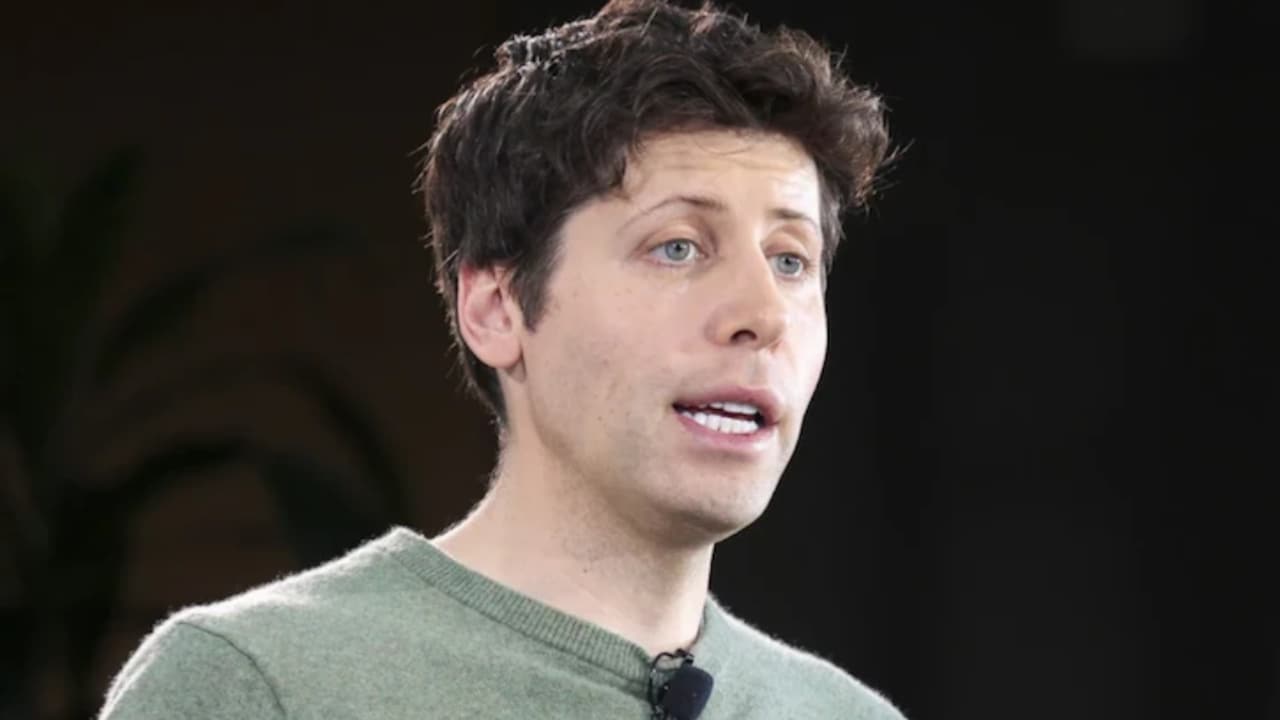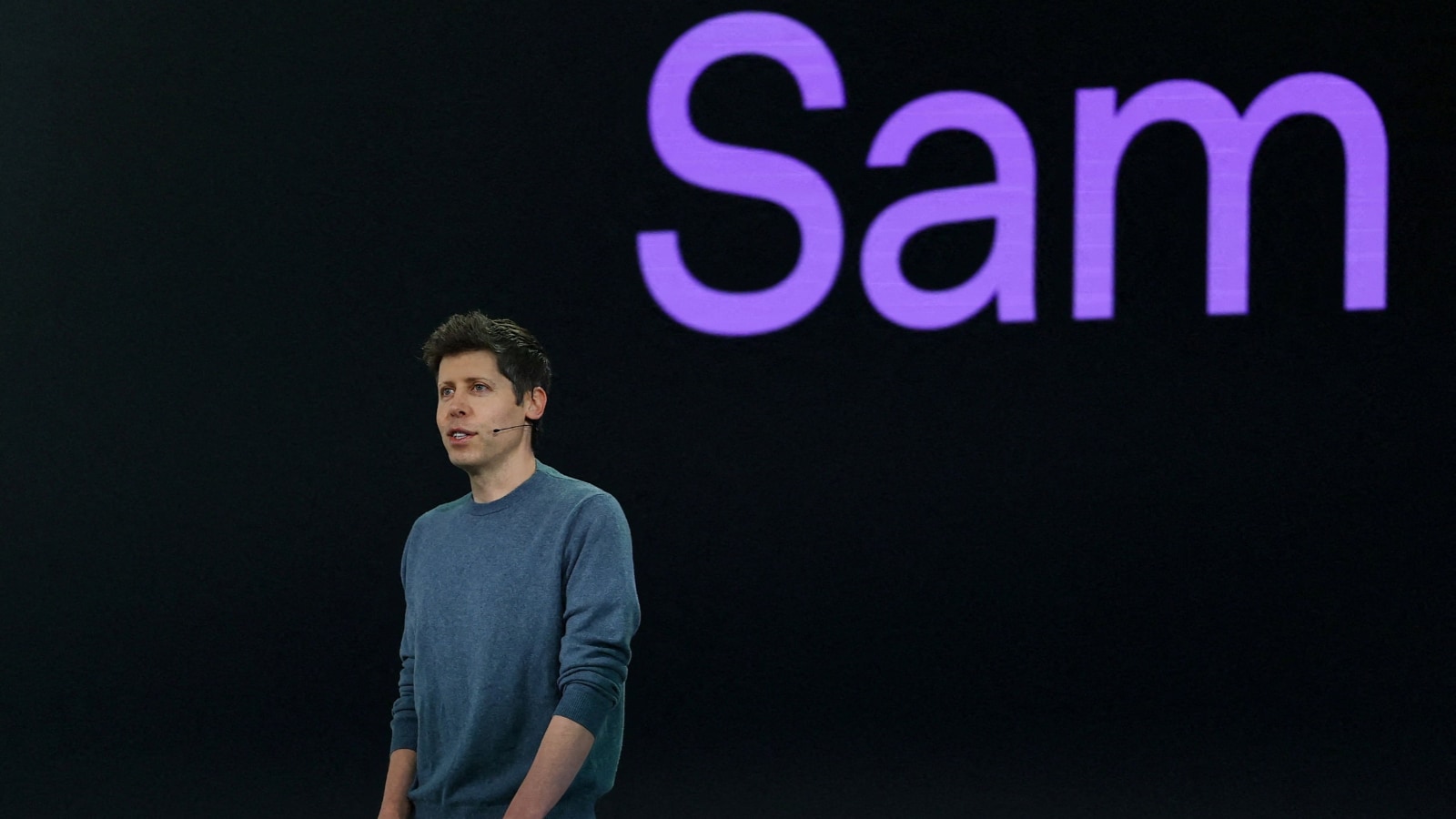
Two letters. That was all it took to ignite a firestorm across two continents and expose a supply chain crisis that is quietly coming for your wallet.
It happened on a Tuesday afternoon when millions of people refreshed their feeds on X and did a double take. The display name at the top of the most powerful account in artificial intelligence no longer read Sam Altman. It read Ram Altman. You might also find this similar coverage insightful: Why Oracle Walking Away From a $7 Billion Tencent Chip Deal Changes Everything for Cloud Brokers.
In Mumbai and New Delhi, where the festival of Diwali had just painted the streets in marigold and light, a ripple of affectionate amusement spread through group chats. Was the architect of ChatGPT offering a subtle nod to Lord Ram? Was this a cheeky cultural wink from Silicon Valley to its fastest-growing user base? People took screenshots. Memes bloomed within minutes. For an hour, the internet treated it like a harmless holiday Easter egg.
They were wrong. Dead wrong. As discussed in latest coverage by Gizmodo, the implications are widespread.
The joke was not religious, and it was not warm. It was an inside-out confession from a man sitting atop a multibillion-dollar hardware bottleneck. RAM. Random Access Memory. The unglamorous, microscopic silicon chips that allow your phone to keep twelve tabs open without crashing, and the exact same raw material that giant data centers are currently swallowing whole at a pace the global economy cannot sustain.
A Name Change With Sharp Edges
To understand why changing three letters in a social media profile provoked both laughter and genuine anger, you have to stand in two different rooms at once.
In the first room is a young software engineer in Bengaluru, let us call him Vikram. Hypothetically, Vikram has spent the last six months saving up to build a workstation for freelance video editing. He checks hardware prices every Friday night like a day trader watching ticker tape. Over the past few months, he has watched the price of standard DDR5 memory sticks creep upward, week after week, with no ceiling in sight. When Vikram sees the CEO of OpenAI playfully rebrand himself as Ram Altman, Vikram does not laugh. He feels the cold pinch of someone who has been priced out of the future by the very people building it.
In the second room is the executive suite of a hyperscale AI lab in San Francisco. Here, the metric that governs life and death is not the price of a consumer memory stick. It is High Bandwidth Memory, or HBM, the stacked, ultra-fast silicon wafers welded directly onto the sides of Nvidia and AMD processors. Without HBM, modern frontier models choke. They starve for data. They sit idle while burning millions of dollars an hour in electricity.
When Sam Altman typed those three letters into his profile, he was winking at the insiders who knew that OpenAI was locked in a brutal, multi-billion-dollar cage match for memory allocation. He was turning an existential supply squeeze into a dad joke.
The Invisible Hunger Inside the Machine
Most of us think of artificial intelligence as something ethereal. We talk about the cloud as if our prompts float up into a soft, weightless mist and drift back down as poetry or Python code.
Nothing could be further from the physical truth.
I remember the first time I walked onto the floor of a tier-three data center in Northern Virginia. The noise hits you first—a deafening, chest-rattling roar of industrial chillers fighting to keep thousands of server racks from melting into slag. The air smells faintly of ozone and hot copper. Beneath your boots, miles of thick blue fiber-optic cables snake through perforated floor tiles like the nervous system of a sleeping giant.
Inside every single one of those racks sits a frantic relay race. The processor—the GPU—is a sprinter capable of performing trillions of calculations per second. But a sprinter cannot run if nobody hands them the baton. Memory is the runner passing that baton. If the memory is too slow, or if there simply is not enough of it, the billion-dollar processor stands around with its hands on its hips, waiting.
As AI models grew from parlor tricks into reasoning engines capable of processing entire codebases and hours of video in a single prompt, their appetite for memory exploded. A decade ago, a high-end server needed a few gigabytes of RAM. Today, a single AI training cluster demands petabytes of the fastest, most complex memory humanity has ever engineered.
Here is the catch that nobody in Silicon Valley likes to say out loud. Silicon wafers are a zero-sum game.
One Factory Floor and Two Masters
Only three companies on earth control the overwhelming majority of global DRAM and High Bandwidth Memory production: SK Hynix, Samsung, and Micron. Every single day, executives inside cleanrooms in South Korea, Taiwan, and Idaho face a simple, ruthless math problem.
A single silicon wafer—a shimmering, mirror-polished disc of pure crystal the size of a dinner plate—can be sliced and etched in one of two ways. It can become standard DDR5 memory destined for a student's laptop, a hospital's diagnostic terminal, or a family's next smartphone. Or, it can be stacked vertically, layer upon delicate layer, through microscopic copper pillars to become High Bandwidth Memory for an AI data center.
Manufacturing HBM is wildly difficult. It takes longer to produce, suffers from lower yields when microscopic defects ruin an entire stack, and consumes roughly three times the wafer capacity of conventional memory for the same amount of storage. Yet, the profit margins on HBM are astronomical. Tech giants are writing blank checks, buying up entire years of factory output before a single wafer is even poured.
Think of it like a city's sole flour mill realizing that luxury artisanal bakeries will pay fifty dollars for a single croissant, while neighborhood families can only afford three dollars for a loaf of sandwich bread. You do not need an economics degree to guess where the flour goes.
Why the Internet Turned Sour
When the dust settled on the Ram Altman stunt, the backlash did not come from people who missed the pun. It came from people who understood it all too well.
Hardware enthusiasts, PC builders, and independent developers flooded the replies with charts showing DRAM contract prices surging by double digits quarter after quarter. Small businesses trying to upgrade office servers found themselves staring at lead times stretching into months. Gamers watched mid-range graphics cards and system memory bundles climb back toward the dark days of the pandemic crypto boom.
To the average consumer, watching the billionaire head of a company valued in the hundreds of billions of dollars joke about a memory shortage felt like watching Marie Antoinette wear a necklace made of brioche.
Let us be honest about how confusing and unsettling this moment feels for anyone who relies on technology to make a living. For thirty years, the iron law of computing was simple: every eighteen months, hardware got faster, smaller, and cheaper. We built our careers, our creative workflows, and our household budgets around the assumption that tomorrow's computer would give us twice the power for the same money.
That social contract just broke.
The Anatomy of a Modern Hardware Squeeze
To see how deeply this shortage cuts, consider what happens inside a normal consumer electronics supply chain when AI labs corner the memory market.
- Contract allocations shift overnight. Memory makers quietly inform PC and smartphone manufacturers that their quarterly allotment of standard DRAM chips has been reduced because cleanroom lines have been converted to HBM production.
- Spot market panic sets in. Secondary distributors realize inventory is tightening, immediately raising prices on existing warehouse stock before the new shipments even arrive.
- Device makers pass the bill to you. Faced with higher component costs, laptop and phone brands either raise retail prices by fifty to a hundred dollars or quietly downgrade base specifications, shipping new devices with eight gigabytes of memory when modern software desperately needs sixteen.
- Software bloat collides with hardware scarcity. Operating systems and browsers continue demanding more memory every year, forcing older machines to slow down right as replacing them becomes painfully expensive.
Look at that chain reaction. None of it requires a conspiracy. It is simply the cold gravity of capital flowing toward the highest bidder. OpenAI, Microsoft, Google, and Meta are locked in an arms race where falling behind by six months feels like corporate death. When your survival depends on securing tens of thousands of memory-packed accelerators, you do not haggle over the price of a silicon wafer. You buy the whole factory's output and worry about the optics later.
The Cultural Collision Nobody Planned
What made the Ram Altman episode uniquely electric was the collision between Silicon Valley insider humor and global cultural reality.
In India, Sam Altman is not an abstract corporate figure. He is a household name in tech hubs from Hyderabad to Pune, a frequent visitor who speaks openly about the country's massive developer community and its role in shaping the future of AI. When his profile changed during a season of sacred celebration, millions of people naturally read it through the lens of their own lives and traditions.
When it became clear that the stunt was actually a nerdy flex about semiconductor supply chains—a nod to the industry shorthand for Random Access Memory—the dissonance was jarring. It revealed a profound blind spot in how tech leaders communicate with the rest of the world.
Inside the bubble of San Francisco, hardware bottlenecks are treated like an exciting technical puzzle, a badge of honor proving that demand for intelligence is infinite. Outside that bubble, in the bedrooms of students coding on aging laptops and the offices of small clinics running local databases, a memory crisis is not a meme. It is a tax on ambition.
Living With the Silicon Hangover
So where does that leave the rest of us? We cannot build our own wafer fabrication plants in the backyard, and we certainly cannot outbid a sovereign wealth fund buying up server racks.
If you are planning to buy a laptop, build a workstation, or upgrade your home studio over the next year, the smartest move is to stop waiting for the traditional holiday price drops that used to define the tech calendar. Memory prices move in long, stubborn waves, and the current tide is still rising. Buying the machine you need today—with enough RAM to comfortably carry you through the next four years—will almost certainly save you from paying an inflated scarcity premium six months from now.
More importantly, we need to start looking at every sleek AI chatbot window with clearer eyes. Every instant answer, every generated image, and every summarized document carries a physical receipt written in copper, electricity, and ultra-pure silicon.
Late that evening, after the jokes had faded and the tech blogs had filed their explainers, Sam Altman quietly changed his display name back to normal. The three letters vanished from his profile as quickly as they had appeared.
Somewhere across the Pacific, inside a sterile, yellow-lit cleanroom humming at a constant seventy degrees, a robotic arm lifted another shimmering silicon wafer out of an etching bath, stacked it into a block destined for an AI data center, and left one more empty slot on a store shelf half a world away.