Dirt gets under your fingernails and stays there for days, a stubborn reminder of an honest day's labor. My grandfather taught me that soil is not just dirt. It is a living, breathing archive of seasons past. He could smell rain coming hours before the clouds gathered on the horizon, simply by turning a spade of dark loam into his palm.
Lately, though, that smell has changed.
The rain comes too hard, too fast, turning the topsoil into a muddy torrent that washes away months of sweat in a single afternoon. Then comes the silence. Weeks of baking heat that turns that same earth into concrete, cracking open like dried bone. Farming has always been a gamble with the sky, but the dice feel loaded now. The old rules no longer apply.
Every autumn across the country, millions of farmers face the exact same agonizing ritual. They climb down from the cabs of massive tractors, reach into the furrow, and pull up handfuls of earth. They are looking for answers that traditional methods can no longer provide. For generations, the script was simple. Till the ground. Drop the seed. Spray. Harvest. Repeat. It was a high-octane cycle designed to squeeze every ounce of productivity from the land. But that cycle demands a heavy toll. Every time a plow tears through the earth, it exposes the underground web of life to the sun, releasing stored carbon into the atmosphere and breaking apart the natural architecture that holds moisture in place.
We built our modern food supply on an annual reset button.
Think about it. Wheat, corn, soybeans—the foundational pillars of human caloric intake—are annuals. They live fast, die young, and leave the ground naked and shivering every single winter. They are botanical sprinters in a marathon world. And when extreme weather strikes, sprinters collapse.
Now, look out across certain experimental plots in the Midwest and the rolling plains, and you will see something radically different. Green fields that refuse to die when the first frost hits. Fields that stay lush, vibrant, and deeply rooted through the freezing winds of January and the scorching droughts of July.
This is the quiet emergence of perennial grains.
Unlike their fragile annual cousins, perennial crops like Kernza or intermediate wheatgrass stick around. Their root systems do not die off after the grain is harvested. Instead, they plunge downward, sometimes sinking ten, twelve, or even fifteen feet into the subterranean dark.
Imagine a skyscraper built on a shallow concrete slab versus one anchored to bedrock that reaches deep into the core of the earth. That is the difference between annual wheat and perennial grains.
When a torrential downpour unleashes its fury on a traditional wheat field, the water strips the bare topsoil away, carrying nitrogen and phosphorus straight into local rivers. When that same storm hits a field of deep-rooted perennials, the roots act like a dense, subterranean sponge. They drink up the excess moisture before it can cause floods. They hold the soil in a vice grip of organic matter. And when the inevitable summer drought arrives, those same roots reach deep water tables that annual plants can only dream of touching.
The math of agriculture is shifting under our feet.
Farmers are notoriously pragmatic people. They do not care about buzzwords or trendy movements. They care about yield, equipment costs, and whether they can pay off their operating loans before the bank calls. Transitioning to perennial grains is not an easy choice. It requires a fundamental rewiring of how a farm operates.
For starters, the seeds are new. The supply chains are in their infancy. Milling a grain that looks and behaves differently than standard red winter wheat takes specialized equipment and patience. Bakers have to learn how to work with a flour that has a nutty, complex flavor profile—delicious, but unfamiliar to a public raised on highly refined, bleached white flour.
Yet, necessity is a fierce teacher.
Talk to growers experimenting with these crops, and you hear a common refrain. They are tired of running on a treadmill of escalating input costs. Fertilizer prices spike. Pesticide resistance grows. Fuel prices fluctuate wildly. Every year, they spend more money just to stay in the exact same place.
Perennial grains offer an off-ramp from that frantic highway. Because they come back year after year, farmers do not have to buy and plant new seed every single spring. They do not have to tear up the soil with heavy machinery, saving thousands of dollars in diesel, tractor wear, and labor.
The savings are real, but the ecological dividend is staggering.
Soil is not an inert manufacturing floor. It is a biological metropolis. A single teaspoon of healthy soil contains more living organisms than there are human beings on the planet. Bacteria, fungi, nematodes, earthworms—all working in a silent, ceaseless symphony to trade nutrients with plant roots.
Annual tillage shatters that metropolis every single year. It is the ecological equivalent of dropping an atomic bomb on a city every twelve months and expecting the survivors to rebuild overnight. Perennial agriculture allows that city to grow, stabilize, and thrive. Mycorrhizal fungi weave vast underground trading networks, delivering water and minerals to the plants in exchange for sugars.
The carbon sequestration potential alone changes the conversation entirely. While annual crops lock away carbon only temporarily before harvest and tilling release it back into the air, deep-rooted perennials pump carbon deep underground, locking it away for decades or centuries.
We are standing at a strange crossroads in human history. We possess more technological firepower than any civilization that came before us. We can map genomes, launch rockets to Mars, and simulate complex weather patterns on supercomputers. Yet, for all our brilliance, we forgot the most basic truth of our existence.
We eat dirt. Or rather, everything we eat comes from the thin, fragile skin of topsoil that covers this planet.
For a long time, we treated that skin as an infinite resource to be exploited rather than a living partner to be nurtured. The extreme weather events rolling across the globe—the historic floods, the brutal megadroughts, the unseasonal freezes—are not anomalies anymore. They are the new baseline.
The old ways of farming are buckling under the pressure.
When you drive past a modern monoculture farm, it looks orderly from the highway. Clean rows stretching to the horizon. But beneath that green veneer lies a system on life support, propped up by synthetic fertilizers and chemical defenses that grow less effective with every passing season.
Perennial grains whisper of a different future.
They ask us to look backward in order to move forward. They mimic the resilience of the native prairies that covered this continent before the plow arrived—ecosystems that survived ice ages, fires, and mega-droughts without a single bag of synthetic fertilizer.
Change in agriculture happens slowly, then all at once. It happens when a skeptical neighbor leans over the fence, looks at a field that survived a brutal drought untouched, and asks the ultimate question: How did you do that?
The answer is growing silently in the dark, stretching its roots further down into the earth, anchoring not just the soil, but our future with it.
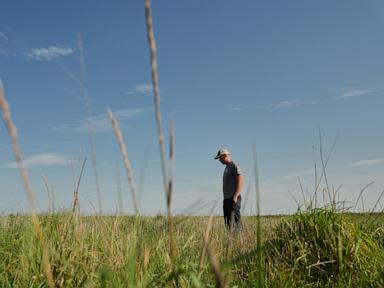
The wind sweeps across the open fields, rustling the green stalks of a crop that will still be standing next year, and the year after that, holding fast against the storm.