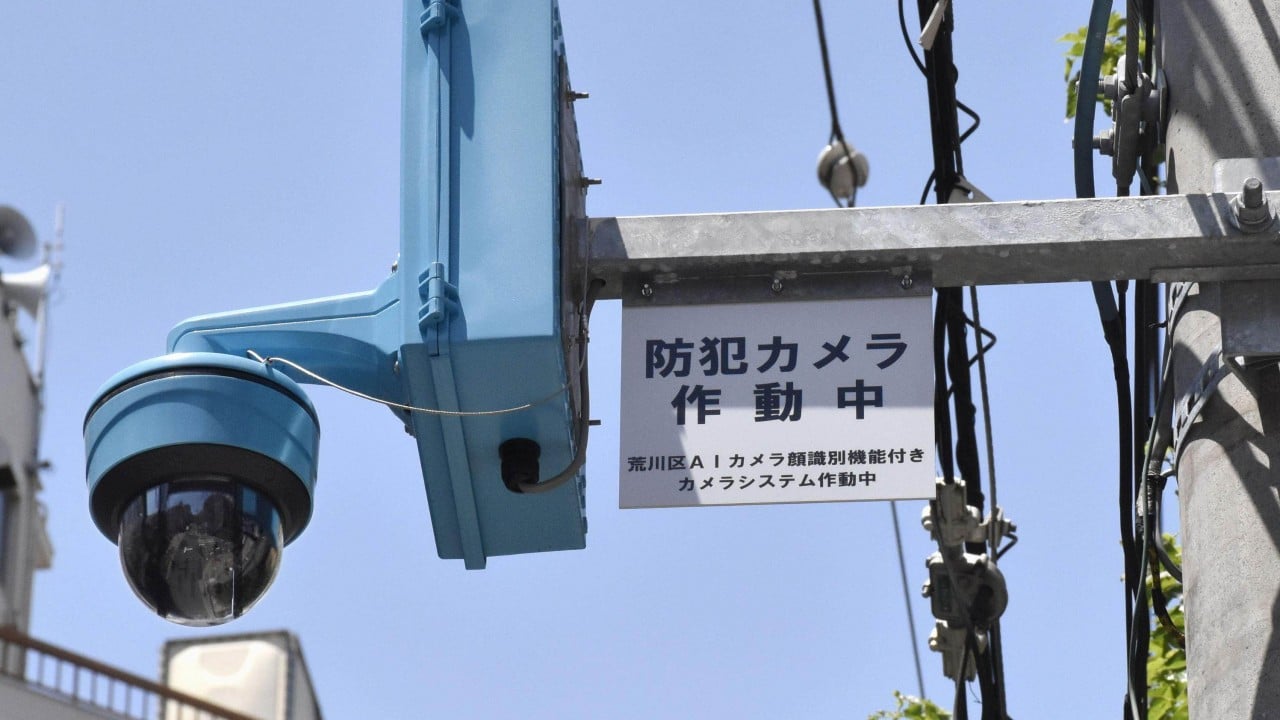
Modern autocracies face a fundamental architectural contradiction: the identical digital networks constructed to enforce domestic populations control simultaneously serve as high-precision targeting beacons for hostile foreign intelligence services. The recent modification of security protocols by the Russian Federal Protective Service (FSO), specifically the selective deactivation of closed-circuit television (CCTV) systems protecting high-level officials, represents a calculated response to this systematic vulnerability. This operational shift demonstrates that the marginal risk of foreign cyber-infiltration and metadata exploitation now outweighs the marginal benefit of domestic physical surveillance.
To analyze why state-level actors are disabling their own security infrastructure, the threat must be disassembled into explicit technical and operational components. This structural vulnerability is not a product of simple software bugs, but rather an emergent property of modern data fusion, machine learning, and signal intelligence. Meanwhile, you can explore other events here: Why Mapping the Indian Brain Still Matters in 2026.
The Mechanized Espionage Framework: How Hacked Infrastructure Displaces Human Intelligence
The operational changes executed by the Kremlin follow the assassination of Iranian Supreme Leader Ayatollah Ali Khamenei in Tehran. Western and Israeli intelligence services penetrated Iran’s municipal and domestic CCTV networks, transforming a defensive domestic surveillance apparatus into an offensive targeting asset.
The mechanism of this vulnerability relies on three distinct operational layers. To explore the full picture, check out the recent report by CNET.
1. The Proximity Extraction Layer
Foreign intelligence agencies do not require a direct visual feed of a primary target to confirm their location. Instead, machine learning algorithms parse millions of hours of public and private video footage to track the secondary and tertiary nodes of the target's ecosystem.
By mapping the license plates, facial biometrics, and routine transit vectors of bodyguards, cooks, drivers, and administrative staff, hostile actors can construct a highly accurate predictive model of a leader's movements. When multiple secondary nodes converge on a single geographic coordinate in real time, the primary target's presence is verified mathematically, bypassing the need for direct visual identification.
2. Network-Level Backdoors and Firmware Exploitations
Industrial surveillance hardware relies heavily on consolidated global supply chains. Firmware vulnerabilities, legacy software backdoors, and unencrypted data transmission protocols allow external actors to intercept video feeds at the network switch level.
Once a municipal or governmental camera network is compromised, the state owning the infrastructure loses exclusive data sovereignty. The network begins serving a dual purpose: local law enforcement views the front-end output, while foreign cyber units ingest the raw data back-end stream for algorithmic analysis.
3. The Pattern-of-Life Attack Surface
High-value targets maintain highly regimented schedules due to the logistical complexity of moving state leaders. Human analysts struggle to find anomalies or hidden patterns within thousands of simultaneous video feeds.
However, AI-driven geospatial analysis tools excel at identifying subtle variations in behavioral baselines. A minor shift in the deployment pattern of an escort vehicle or an unusual gathering of security personnel at a specific facility signals an upcoming high-level meeting. This automated pattern detection drastically compresses the time required to plan and execute a precision strike.
[Domestic Surveillance Capture] ---> [Foreign AI Ingestion/Parsing] ---> [Pattern Convergence Identification] ---> [Kinetic Targeting Command]
The Cost Function of Asymmetric Digital Warfare
The decision to deactivate specific surveillance grids is best understood through an adversarial cost function. Autocratic leaders maintain security by maximizing domestic visibility while minimizing external exposure. The digitizing of surveillance infrastructure has broken this equilibrium, altering the balance between protective utility and operational risk.
| Security Variable | Legacy Analog Utility | Modern Networked Risk |
|---|---|---|
| Physical Access Control | High; verified via manual identification and isolated analog feeds. | Moderate; compromised by digital credential spoofing and network mapping. |
| Data Sovereignty | Absolute; localized tape storage prevented remote data exfiltration. | Low; cloud-linked storage and networked routers introduce persistent remote access vectors. |
| Target Isolation | High; physical movement could be obscured via basic visual counters. | Low; peripheral data aggregation (smartphones, IoT, vehicle telemetry) creates a digital signature trail. |
The vulnerabilities exposed by modern data fusion cannot be solved by installing software patches. They are systemic flaws built into the architecture of the internet-of-things (IoT) era. When security infrastructure is connected to a network, its code can be read, its data can be redirected, and its physical location can be mapped.
For high-value targets, an unmonitored physical space has become safer than a space monitored by a system that could be compromised by an adversary.
The Bottleneck of Tactical Decoupling
The FSO's current mitigation strategy involves a process of tactical decoupling: stripping away digital layers from the physical security perimeter. This manifests in the banning of smartphones and internet-connected devices from the immediate vicinity of top officials, shifting communications back to isolated wireline networks, and blacking out camera feeds covering sensitive transit routes and residences.
However, this structural adjustment creates an immediate operational bottleneck. By removing digital surveillance and automated tracking systems, the state reduces its exposure to foreign cyber-intelligence but severely degrades its own domestic situational awareness.
- Information Deficit: Security personnel must rely on human couriers and manual verification protocols, which slows down response times to localized internal threats or military coup coordination.
- Resource Reallocation: The physical manpower required to manually secure parameters previously covered by automated systems increases exponentially, straining elite protection units.
- Internal Blind Spots: Deactivating cameras within the residential and workspace environments of senior aides limits the regime’s ability to monitor its own inner circle for signs of defection or internal plotting.
This defensive posture assumes that the primary threat vector has shifted from domestic insurrections to foreign-guided standoff munitions and drone strikes. By optimizing the security apparatus exclusively against the latter, the regime inherently increases its vulnerability to the former.
The strategy rests on a fragile assumption: that the internal political architecture will remain stable enough to tolerate a significant drop in domestic monitoring capability.
The Analytical Forecast
The tactical deactivation of surveillance networks is a temporary stopgap, not a permanent equilibrium. Over a twenty-four-month horizon, nation-states will abandon commercially derived, globally networked security hardware for high-value protection.
Expect a bifurcated development path: public spaces will see intensified, AI-driven domestic monitoring using state-controlled, air-gapped infrastructure, while the immediate physical ecosystems of national leadership will transition toward absolute digital silence.
The elite security architectures of the future will not be hyper-connected; they will be aggressively analog, relying on physical isolation, mechanical redundancy, and localized signal jamming to sever the data loops that modern precision weaponry requires to find its mark.
The technical realities of modern electronic warfare and data-driven targeting are further explored in The Evolution of AI-Driven Espionage, which details the exact mechanisms intelligence agencies use to turn commercial traffic cameras into military targeting grids.